Posts Tagged ‘Words’
Two Ways To Look At It
 September 9th, 2026
 See something TO say something.
Say something TO do something.
Gotta get it right TO gotta give it a try.
Progress BEFORE perfection.
I failed TO I learned.
Can’t be done TO here’s how.
It might not work TO I’ll do it anyway.
Progress AT THE EXPENSE OF perfection.
Me TO we.
My way or the highway TO what do you think?
Why BEFORE what.
This will be difficult AND we’ll do it together.
Them TO us.
Condemnation TO best intention.
Don’t do that TO why not try this?
This is what I expect BEFORE this is not good.
You messed up TO how can I help?
What BEFORE how.
Do this TO what should we do?
Finish BEFORE starting.
Quiet criticism TO public praise.
Image credit — Fraser Mummery
 Posted in Authentic, Clarity, How To, Seeing Things As They Are, Trust |
  Tags: Words |
  No Comments »
Hearing, Talking, and Listening
August 19th, 2026
 Hearing is not listening.
You can hear and choose not to listen.
But if you don’t hear, you can’t listen.
Listening is an active process.
Listening requires energy.
Listening is a choice.
Talking and listening are partners.
Talking appreciates listening and listening appreciates talking.
Talking before listening gets the conversation going.
Continued talking without listening isn’t a conversation.
Skillful talking is informed by listening.
Measure twice and cut once, and it’s the same for listening and talking.
When you talk, you can only hear yourself. Don’t you already know what you know?
Well-timed talking starts after well-timed listening.
Talk less, and you’ll listen more.
And listening helps you say more while you talk less.
Image credit — David Salafia
Ways To Improve Your Team’s Communication Skills
April 8th, 2026
 To help your team members communicate more effectively, teach them to put their argument on one page. Teach them what to leave off the page and explain why those things should be omitted. Teach them what’s at the top of the page and explain why. Help them identify the central element and show them how to make it fill the center of the page.
Teach them that the professionals distill.
They will have difficulty stripping away the clutter. They will have difficulty shedding the details. They will have difficulty raising the level of abstraction. Their fear is typically that people (the leadership team) will think they don’t know what they’re doing because their one-pager doesn’t contain all the details. It’s your job to help them think otherwise. You have to help them understand that capable people know how to distill their argument to its essence and answer questions about the details when asked.
To help your team members get the tone right, teach them about snarl words and no purr words. Snarling and purring create a manipulative tone that devalues the argument. Teach them to use the fewest, clearest, non-judgmental words. And no blaming words. Explain that “they” and “them” signal that there are competing factions that aren’t working well together.
Teach them that words matter.
To help your team communicate a complicated process, system, or approach, teach them to create a hand sketch that represents the complicated idea. The hand sketch method is like the verbal decluttering described above, but teaching them to create a hand sketch takes the distillation to the next level. The hand sketch is not the process itself; it represents the process. The sketch doesn’t describe the system in full; it focuses on the main pillars. And it doesn’t describe the approach in a flow chart way; it elevates the novel elements. And to further raise the bar, limit the number of words to an unreasonable number like six or twelve.
Teach them that a sketch demonstrates understanding.
This one-page approach can also be used for problems, planning, and prioritization, but that’s for another time.
Image credit — Tambaco The Jaguar
Coach? Mentor? Consultant? It’s not the name that matters.
April 1st, 2026
 Coach? Mentor? Consultant? What’s the right word?
Subject matter expertise. However they categorize themselves, they must have subject matter expertise. If you work in the hardware space, they should have experience in hardware. If you work in the software space, they must have software experience. Ask if they have solved a similar problem in a similar space.
People and Teams. Whatever they call themselves, they must know how to create the conditions for effective team performance to emerge. Yes, there is a need to help individual leaders elevate their game. That’s the minimum entry criterion. But it’s not enough to guide one person. Big growth objectives require engaged teams that work together and pull in the same direction. Have they pushed a team in a skillful way to elevate the work and have the team stand taller because of it? Ask them for objective evidence. Have they helped an engineering team obsolete their best work? This is a high bar because the team must see their best work as something that can be made irrelevant, see themselves as a team that can elevate their work, and be fully engaged in the go-forward challenge.
Systems, not point solutions. Regardless of how they identify, it’s not enough to create a solution for today’s problem. Anyone can create a narrow solution for today’s specific problem. Have they created the systems, processes, tools, and built out the roles/responsibilities to prevent a broader, more global class of problems?
In the trenches. Bottom line, no matter their label, they must have done similar work in a hands-on way. Not in an advisory way, not in an oblique way, not in a thought-leader way, but in an in-the-trenches way. In a I-did-it-myself way. Ask them what their role was. Ask them what they did. And if they can’t be specific with you, don’t hire them.
It doesn’t matter what they call themselves. But they must have subject matter expertise, they must have helped teams elevate their game and stand tall, put preventive systems in place, and worked in a hands-on way.
Image credit — Paul VanDerWerf
Posted in Authentic, Fundementals |
Tags: Competitiveness, Fix Manufacturing, Lessons Learned, Problems, Words |
No Comments »
How To Create The Conditions For Good Things To Happen
February 4th, 2026
 Reduce the energy cost of virtue so it’s less than the energy cost of sin. (Dave Snowden)
Said another way – make it easy to do the right thing.
Don’t push through. Move obstacles out of the way.
Don’t tell people about their problem. Ask people about their problem.
Try small experiments and do more of what works and less of what doesn’t.
Don’t tell people they have a problem. Volunteer to help them.
Instead of Ready, Fire, Aim, try Ready, Aim, Fire.
Before trying to improve things, define the system as it is.
When two competing theories cause disagreement, agree to try both.
Slow down to go faster.
Say no so you can say yes.
Give praise in public and give criticism in private.
Say nothing negative unless you’ve exhausted all other possibilities.
Build trust BEFORE you need it.
These are good ways to create the conditions for good things to happen.
Image credit — Peter Addor – The monkey that makes a monkey of us.
Posted in Clarity, Intellectual Intertia, Level 5 Courage, Positivity, Seeing Things As They Are, Trust |
Tags: People, Words |
No Comments »
Do More Than Keep The Score
July 16th, 2025
 Sometimes when I have a good idea, my body recognizes it before my mind does. I believe my body has been doing this since I was young, but only over the last five years have I developed sufficient body awareness to recognize the sensation my body generates. And now that I know the sensation is a signal, I know my body knows more than I do.
My body’s signaling system is usually triggered during a conversation with someone I trust. While they are speaking to me, one or two of their words help my body flip the “knowing switch” and send its signal. Sometimes I stop listening and wait for the idea to come to my awareness. Sometimes I say out loud, “My body thinks there’s something important in what you said.” Sometimes the signal and idea come as a pair, and I tell my friend about the idea after they finish their sentence. All this takes some time for my coworkers and friends to understand and become comfortable.
My body can also send signals when it recognizes wrong paths or approaches that will cause conflict or confusion. It’s a colder sensation than the one described above, and the coldness distinguishes it as a signal of potential wrongness, conflict, or confusion. Like above, it’s usually triggered during a conversation where a coworker’s words help my body flip its knowing switch and send the cold sensation. Sometimes I stop listening and wait for the knowing to arrive. Sometimes I acknowledge I just received a knowing signal. And sometimes I tell my friend about the knowing as soon as there’s an opening. This, too, takes time for others to understand and become comfortable.
For my body to be able to do this for me, it must be well-rested, well-exercised, and grounded. To do this, my body must be standing on emotional bedrock.
I think I’m more effective because I can connect with my body’s signals. I can become aware of better ideas, I can become aware of skillful approaches, and I can become aware of ways to protect my friends from conflict and confusion.
Bessel van der Kolk says The Body Keeps The Score, and I agree. And with deep calm and awareness, I think the body can do much more.
Image credit — darkday
Posted in Authentic, Clarity, Decisions, Meaning, Seeing Things As They Are |
Tags: Words |
No Comments »
How I Develop Engineering Leaders
May 14th, 2025
For the past twenty-five years, I’ve actively developed engineering leaders. Here is the curriculum in the form of How Tos:
How to build trust. This is the first thing. Always. Done right, the trust-based informal networks are stronger than the formal organization chart. Done right, the informal networks can protect the company from bad decisions. Done right, the right information flows among the right engineers at the right time so the right work happens in the right way.
How to decide what to do next. This is a broad one. We start with a series of questions: What are we doing now? What’s the problem? How do you know? What should we do more of? What should we do less of? What resources are available? When must we be done?
How to map the current state. We don’t define the idealized future state or the North Star, we start with what’s happening now. We make one-page maps of the territory. We use drawings, flow charts, boxes/arrows, and the fewest words. And we take no action before there’s agreement on how things are. The value of GPS isn’t to define your destination, it’s to establish your location. That’s why we map the current state.
How to build momentum. It’s easy to jump onto a moving steam train, but a stationary one is difficult to get moving. We define the active projects and ask – How might we hitch our wagon to a fast-moving train?
How to start something new. We start small and make a thought-provoking demo. The prototype forces us to think through all the elements, makes things real, and helps others understand the concept. If that doesn’t work, we start smaller.
How to define problems so we can solve them easily. We define problems with blocks and arrows, and limit ourselves to one page. The problem is defined as a region of contact between two things, and we identify it with the color red. That helps us know where the problem is and when it occurs. If there are two problems on a page, we break it up into two pages with one problem. Then we decide to solve the problem before, during, or after it occurs.
How to design products that work better and cost less. We create Pareto charts of the cost of the existing product (cost by subassembly and cost by part) and set a cost reduction goal. We create Pareto charts of the part count of the existing product (part count by subassembly and part count by individual part number) and define a goal for part count reduction. We define test protocols that capture the functionality customers care about. We test the existing product and set performance improvement goals for the new one. We test the new product using the same protocols and show the data in a simple A-B format. We present all this data at formal design reviews.
How to define technology projects. We define how the customer does their work. We then define the evolutionary history of our products and services, and project that history forward. For lines of goodness with trajectories that predict improvement, we run projects to improve them. For lines of goodness with stalled trajectories, we run projects to establish new technologies and jump to the next S-curve. We assess our offerings for completeness and create technologies to fill the gap.
How to file the right patents. We ask these questions: How quickly will the customer notice the new functionality or benefit? Once recognized, will they care? Will the patent protect high-volume / high-margin consumables? There are more questions, but these are the ones we start with. And the patent team is an integral part of the technology reviews and product development process.
How to do the learning. We start with the leader’s existing goals and deliverables and identify the necessary How Tos to get their work done. There are no special projects or extra work.
If you’re interested in learning more about the curriculum, send me an email at mike@shipulski.com.
Image credit — Paul VanDerWerf
Posted in A/B Data, Allocating Cost, Bottom Line Growth, Clarity, Cost Savings, Design Engineers, DFA, DFMA, Engineering Leaders, Fundementals, How To, Innovation, Maps, One Page Thinking, Part Count Reduction, Problems, Product Development, Product Robustness, Technology, The Future, Trust |
Tags: Cost Reduction, Cost Savings, Design for Assembly, Engage Design; Product Design; Cost Savings, Fear, Part Count, Problem Definition, Problems, Product Design, Product Development Engine, Trust-based approach, Understanding Physics, Words |
No Comments »
It’s not about failing fast; it’s about learning fast.
January 22nd, 2025

No one has ever been promoted by failing fast. They may have been promoted because they learned something important from an experiment that delivered unexpected results, but that’s fundamentally different than failure. That’s learning.
Failure, as a word, has the strongest negative connotations. Close your eyes and imagine a failure. Can you imagine a scenario where someone gets praised or promoted for that failure? I think not. It’s bad when you fail to qualify for a race. It’s bad when you fail to get that new job. It’s bad when driving down the highway the transmission fails fast. If you squint, sometimes you can see a twinkle of goodness in failure, but it’s still more than 99% bad.
When it’s bad for people’s careers, they don’t do it. Failure is like that. If you want to motivate people or instill a new behavior, I suggest you choose a word other than failure.
Learning, as a word, has highly positive connotations. Children go to school to learn, and that’s good. People go to college to learn, and that’s good. When people learn new things they can do new things, and that’s good. Learning is the foundation for growth and development, and that’s good.
Learning can look like failure to the untrained eye. The prototype blew up – FAILURE. We thought the prototype would survive the test, but it didn’t. We ran a good test, learned the weakest element, and we’re improving it now – LEARNING. In both cases, the prototype is a complete wreck, but in the FAILURE scenario, the team is afraid to talk about it, and in the LEARNING scenario they brag. In the LEARNING scenario, each team member stands two inches taller.
Learning yes; failure no.
The transition from failure to learning starts with a question: What did you learn? It’s a magic question that helps the team see the progress instead of the shattered remains. It helps them see that their hard work has made them smarter. After several what-did-you-learns, the team will start to see what they learned. Without your prompts, they’ll know what they learned. Then, they’ll design their work around their desired learning. Then they’ll define formal learning objectives (LOs). Then they’ll figure out how to improve their learning rate. And then they’re off to the races.
You don’t break things for the sake of breaking them. You break things so you can learn.
Learning yes; failure no. Because language matters.
Image credit — mining camper
Effective Interactions During Difficult Times
December 22nd, 2021
 When times are stressful, it’s more difficult to be effective and skillful in our interactions with others. Here are some thoughts that could help.
Decide how you want to respond, and then respond accordingly.
Before you respond, take a breath. Your response will be better.
If you find yourself responding before giving yourself permission, stop your response and come clean.
Better responses from you make for even better responses from others.
If you interrupt someone in the middle of their sentence so you can make your point, you made a different point.
If you find yourself preparing your response while listening to someone, that’s not listening.
If you recognize you’re not listening, now there are at least two people who know the truth.
When there are no words coming from your mouth, that doesn’t constitute listening.
The strongest deterrent to listening is talking.
If you disagree with one element of a person’s position, you can, at the same time, agree with other elements of their position. That’s how agreement works.
If you start with agreement, even the smallest bit, disagreement softens.
Before you can disagree, it’s important to listen and understand. And it’s the same with agreement.
It’s easy to agree if that’s what you want to accomplish. And it’s the same for disagreement.
If you want to move toward agreement, start with understanding.
If you want to demonstrate understanding, start with listening.
If you want to demonstrate good listening, start with kindness.
Here are three mantras I find helpful:
Talk less to listen more.
Before you respond, take a breath.
Kindness before agreement.
“Rock-em” by REL Waldman is licensed under CC BY-SA 2.0
Words To Live By
April 29th, 2020
 What people think about you is none of your business.
If you’re afraid to be wrong, you shouldn’t be setting direction.
Think the better of people, as they’ll be better for it.
When you find yourself striving, pull the emergency brake and figure out how to start thriving.
If you want the credit, you don’t want to make a difference.
If you’re afraid to use your best judgment, find a mentor.
Family first, no exceptions.
When you hold a mirror to the organization, you demonstrate that you care.
If you want to grow people and you invest less than 30% of your time, you don’t want to grow them.
When someone gives you an arbitrary completion date, they don’t know what they’re doing.
When the Vice President wants to argue with the physics, let them.
When all else fails, use your best judgment.
If it’s not okay to tell the truth, work for someone else.
The best way to make money is not the best way to live.
When someone yells at you, that says everything about them and nothing about you.
Trust is a result. Think about that.
When you ask for the impossible, all the answers will be irrational.
No one can diminish you without your consent.
If you don’t have what you want, why not try to want what you have?
When you want to control things, you limit the growth of everyone else.
People can tell when you’re telling the truth, so tell them.
If you find yourself watching the clock, find yourself another place to work.
When someone does a great job, tell them.
If you have to choose between employment and enjoyment, choose the latter.
If you’re focused on cost reduction, you’re in a race to the bottom.
The best way to help people grow is to let them do it wrong (safely).
When you hold up a mirror to the organization, no one will believe what they see.
If you’re not growing your replacement, what are you doing?
If you’re not listening, you’re not learning.
When someone asks for help, help them.
If you think you know the right answer, you’re the problem.
When someone wants to try something new, help them.
Whatever the situation, tell the truth, and love everyone.
Image credit — John Fife
Posted in Authentic, Culture, Fear, Intellectual Intertia, Level 5 Courage, Seeing Things As They Are, Trust |
Tags: Fear, Learning, Lessons Learned, Words |
No Comments »
Why not choose the right words?
December 12th, 2018
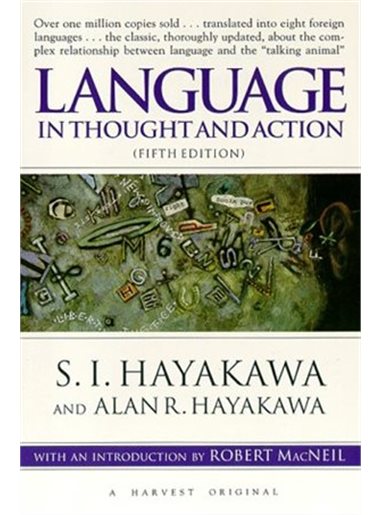 We all want to make progress. We all want to to do the right thing. And we all have the best intentions. But often we don’t pay enough attention to the words we use.
There are pure words that convey a message in a kind soothing way and there are snarl words that convey a message in a sharp, biting way. It’s relatively easy, if you’re paying attention, to recognize the snarl and purr. But it’s much more difficult to take skillful action when you hear them used unskillfully.
A purr word is skillful when it conveys honest appreciation, and it’s unskillful when it manipulates under the banner of false praise. But how do you tell the difference? That’s where the listening comes in. And that’s where effective probing can help.
If you sense unskillful use, ask a question of the user to get at the intent behind the language. Why do you think the idea is so good? What about the concept do you find so interesting? Why do you like it so much? Then, use your judgment to decide if the use was unskillful or not. If unskillful, assign less value to the purr language and the one purring it.
But it’s different with snark words. I don’t know of a situation where the use of snarl words is skillful. Blatant use of snarl words is easy to see and interpret. And it looks like plain, old-fashioned anger. And the response is straightforward. Call the snarler on their snarl and let them know it’s not okay. That usually puts an end to future snarling.
The most dangerous use of snarl words is passive-aggressive snarling. Here, the snarler wants all the manipulative benefit without being recognized as a manipulator. The pros snarl lightly to start to see if they get away with it. And if they do, they snarl harder and more often. And they won’t stop until they’re called on their behavior. And when they are called on their behavior, they’ll deny the snarling altogether.
Passive-aggressive snarling can block new thinking, prevent consensus and stall hard-won momentum. It’s nothing short of divisive. And it’s difficult to see and requires courage to confront and eviscerate.
If you see something, say something. And it’s the same with passive-aggressive snarling. If you think it is happening, ask questions to get at the underlying intent of the words. If it turns out that it’s simply a poor choice of words, suggest better ones and move on. But if the intent is manipulation, it must be stopped in its tracks. It must be called by name, its negative implications must be be linked to the behavior and new behavioral norms must be set.
Words are the tools we use to make progress. The wrong words block progress and the right ones accelerate it.
Why not choose the right words?
 Mike Shipulski