Archive for the ‘Seeing Things As They Are’ Category
Two Ways To Look At It
 September 9th, 2026
 See something TO say something.
Say something TO do something.
Gotta get it right TO gotta give it a try.
Progress BEFORE perfection.
I failed TO I learned.
Can’t be done TO here’s how.
It might not work TO I’ll do it anyway.
Progress AT THE EXPENSE OF perfection.
Me TO we.
My way or the highway TO what do you think?
Why BEFORE what.
This will be difficult AND we’ll do it together.
Them TO us.
Condemnation TO best intention.
Don’t do that TO why not try this?
This is what I expect BEFORE this is not good.
You messed up TO how can I help?
What BEFORE how.
Do this TO what should we do?
Finish BEFORE starting.
Quiet criticism TO public praise.
Image credit — Fraser Mummery
 Posted in Authentic, Clarity, How To, Seeing Things As They Are, Trust |
  Tags: Words |
  No Comments »
Map The Territory Before Improving It
August 26th, 2026
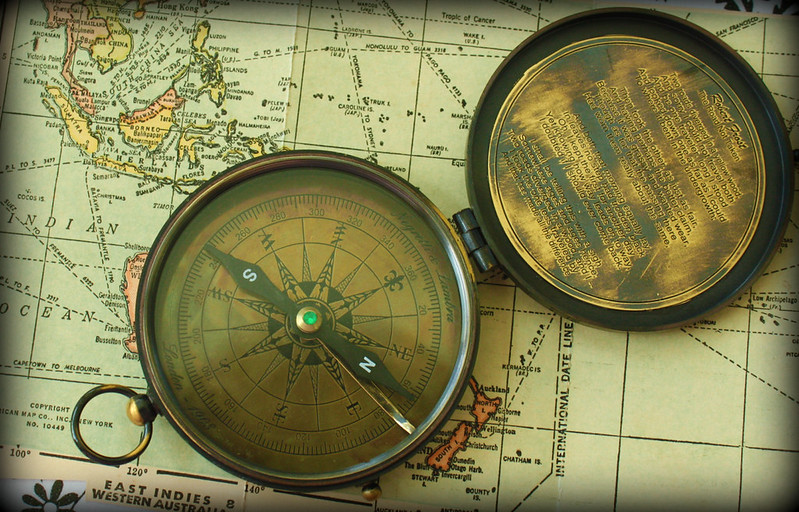 I had the best teachers. They taught me to assess the situation as it is before trying to improve it. Early in my career, my leaders did not understand the importance of spending the time to define the current state. Hurry up and fix it! Why are you spending time analyzing the existing product? Why do you want to create a functional analysis of the product we want to obsolete? Why do you want to understand why customers purchased our legacy products?
By assessing the system/products as they are, I learned how to identify the elements to reuse, to improve, and to reinvent. This has been a great way to focus the resources on the most important elements and increase the intensity the allocated resources. When you don’t spend time on the 50% of the system that can be reused, you double the resource intensity over a complete redesign.
So, I ask you – how do you decide what can be reused, what must be improved, and what must be reinvented?
Regardless of the system’s size or scope of the project, assessing the current state is the right first step. For example, there is great interest in improving the business model. First question (that no one can answer) – What is our business model? There are tools to define business models visually to show the partners, competitors, customers, data flow, money flow, product flow. The tools show who does what to whom and how, who helps whom and how, and what’s missing. One of the tools I like is Wardley Maps. While Simon (Wardley) doesn’t talk much about mapping business models, I’ve misused his maps for business model mapping.
A rule for business models: If you can’t describe your business model visually on one page, you don’t know what your business model is and you can’t improve it.
And assessing the current state is effective at the leaf-level (the lowest level). Mapping the system functionally (functional decomposition with Axiomatic Design) and defining a problem rigorously (TRIZ), allows the team to place the problem in the context of the whole system AND to define the problem at the smallest level possible (think telescope to microscope).
A rule for problems – There’s nothing worse than solving the wrong problem, so you better be sure you’re solving the right one.
A long time ago, I led a project that took the time to assess the baseline product (existing product) for cost, part count, and part type. Using DFMA, ee knew where the parts were, and we designed them out and we knew where the cost was and we designed it out. It took a “long time” to do that work, but we radically improved the profitability of the new product (7X improvement in profit per square foot of the factory). We also did a full functional decomposition on the baseline product and learn that there was one subsystem that caused trouble with all the electronic systems and created problems for customers. We hardened the design against that subsystem’s devilish energy. And we created robustness tests where we tested the baseline product and demonstrated improved robustness on the new product. (We used TRIZ to solve the right problems.) Those efforts reduced warranty cost per unit by 4X.
Rigorously assessing the current state (products, processes, systems, business models) seems too slow and a big waste of time. It is my experience, though, that it’s faster and improves the outcomes of the new product development and improvement projects.
But don’t take my word for it. Give it a try. And if you need some help, let me know.
Image credit – Calsidyrose
Posted in Business Model, Cost Savings, DFMA, Downstream Savings, Fundementals, How To, Manufacturing Competitiveness, Product Development, Product Robustness, Seeing Things As They Are, TRIZ |
Tags: Design for Assembly, DFMA Culture, Manufacturing Competitveness, Part Count, Problem Definition, Product Development Engine |
No Comments »
Changing Your Perspective
August 5th, 2026

From: Caring about what others think about you.
To: Caring about what you think about you.
From: Seeing what you didn’t accomplish.
To: Seeing what you accomplished.
From: Feeling for others.
To: Feeling with others.
From: Doing things others want you to do.
To: Doing what you think is right.
From: Feeling stuck with how things are.
To: Seeing things as impermanent and taking comfort in that.
From: Making your world small.
To: Helping others.
From: Judging others through your lens.
To: Accepting people as they are.
From: Wanting things to be different.
To: Appreciating what you have.
From: Pushing through illness.
To: Resting so your body can heal.
From: Being too busy.
To: Saying no.
From: Judging yourself negatively.
To: Loving yourself.
Image credit — Jay Huang (Frame)
Posted in Authentic, Clarity, Fundementals, Seeing Things As They Are |
Tags: kindness |
No Comments »
Designing your new product starts by understanding your existing one.
July 29th, 2026
 Everything starts from what’s been done before. Designing a new product starts with assessing the subassemblies of your existing product. Here’s how the assessments go for the subassemblies.
First, make two Pareto charts: cost by subassembly and part count by subassembly. Prioritize the subassemblies on the left of both charts.
If the functionality is sufficient and the cost is right, reuse it as-is. This allows you to spend your time and energy elsewhere.
If the cost is right but the functionality needs to be adjusted, adjust it and move on. The technical risk is low, and the cost will still be right. Spend your energy where the problems are.
If functionality is good and the cost is high, simplify the product using part count reduction. Create a bench test to verify functionality and robustness are better than the old one.
If the functionality is insufficient and the cost is too high, spend your energy here. Create a bench test to quantify the performance of the existing subassembly. Turn up the dials to increase the stress on the subassembly until it breaks. Fix the part that breaks. Repeat until you run out of time. Create two Pareto charts for the subassembly: cost by part and part count by part type (main part, fastener, connector, protection, label). Design out the highest cost parts and redesign the highest cost parts that remain. Design out fasteners, connectors, protection parts, and labels.
Create a functional test for the product as a whole (think miles per gallon for a new car) and test the old one until it breaks. Build the new product with the new subassemblies and test it until it breaks. The performance must be better, and it must perform under stress longer than the baseline product. Break the new product, fix the weakest link, and retest. Do this until you run out of time and launch it.
This is The Way.
Image credit — George Redgrave
Posted in Clarity, Cost Savings, DFA, DFMA, Floor Space, Fundementals, How To, Manufacturing Competitiveness, Part Count Reduction, Product Development, Product Robustness, Risk, Seeing Things As They Are, Seven Wastes, Top Line Growth |
Tags: Design for Assembly, DFA, DFMA Culture, Downstream Savings, Engage Design; Product Design; Cost Savings, Manufacturing Competitveness, Product Design, Understanding Physics |
No Comments »
Elevating the performance of engineering teams is the most rewarding work for me.
July 15th, 2026
 I’ve built engineering teams that developed the world’s most successful products in their space.
At the start of the team’s migration to greatness, they don’t believe in themselves. And that’s why you, as their leader, have to believe in them. Every day, you must tell them why you believe in them. Every day, you must give them examples of their behaviors that justify your belief in them. At the start of the journey, they don’t know how to do their work differently. And that’s why you, as their leader, must show them how. You can’t simply tell them how to do the new work because they won’t believe you. And that’s why you must show them. There are no half measures here. You’ve got to be all in.
As their leader, you must set exceptionally challenging goals. They cannot be impossible goals, but they can be almost impossible. And when the team pushes back on your almost impossible request, you must explain HOW you will help them do the almost impossible.
None of this is free. You must create the tools, training, and time for the exceptional performance to emerge. You must give them the new tools, the training, and you must give them the time to learn the tools and use them appropriately.
Pro Tip: If you don’t give the team the tools, training, and time to use them, you’ll get what you got last time.
At the earliest sign of the new behaviors, you must praise them publicly. “This is what I’m talking about! This is great! I like how you used the new tools. Thank you.” Tell everyone what they did. Tell their spouse or partner. Tell their kids. Be proud.
And as the new behaviors build on each other (and they will), continue to show them your happiness. Turn up your excitement for their remarkable work. Tell them what they did because they won’t know. Tell them why it was so good. And push them for more. Tell them you know they can do more. And now they’ll believe you because they’ve seen what’s possible. And they’ll believe in themselves. And once they believe in themselves, it’s off to the races.
The products will work better, will sell more, will cost less, and won’t break. They will be easy to build, easy to test, and easy to troubleshoot. And they will be profitable as hell. But that’s not the real value. The real value is that you helped build a team that believes they can do it better next time.
I have helped engineering teams do work they could not imagine. I have helped technicians elevate their performance and outperform engineers. I have helped Ph.Ds. learn from customers. And I have helped engineers grow into Principal Engineers, Engineering Directors, GMs, and CEOs.
This has been the most rewarding work of my life.
Image credit — Mikhail Esteves – Piggy Back
Posted in Authentic, Fundementals, How To, Leadership, Seeing Things As They Are, Trust |
Tags: Engineering Mindset, Product Development Engine, Trust-based approach |
2 Comments »
Is it time for a new course heading?
July 8th, 2026
 I’m tired of hearing about North Stars and Idealized Future States. I much prefer to define the current state.
I want to move from “let’s do this!” to “how are we doing it today?”
Stop: Imaging what could be. Start: Defining what’s going on right now.
Every journey starts with a first step. And that first step is taken from where you are.
Location before destination, that’s what I say.
Where are you?
Before you can decide if you need a course change, you’ve got to know your direction of travel.
Instead of arguing about a new course heading, analyze the current direction of travel.
To determine your direction of travel, look where you were three years ago, two years ago, and one year ago. From the past, draw a line through today and onward. That’s your trajectory.
Before you can know where you’re going, you’ve got to know where you’ve been.
Where have you been?
Now that you know where you were, where you are, and where you’re going, you’re ready to run small experiments to find the fertile design space.
Mari Dallavara — small cairn
Posted in Fundementals, How To, Seeing Things As They Are, The Future, Uncertainty |
Tags: Destination |
No Comments »
Observations On My Writing
June 24th, 2026
 Sometimes I have nothing to write about. Generally, that means I’m run down. Too much going on, not enough exercise, no clarity.
I struggle to choose a topic. I start to advance a theme, and then I tell myself no one will care about it, or it’s not meaningful. I choose another line of thinking, and my brain does the same thing again.
I quiet myself and scribble on a piece of paper. I give myself some time and a deadline. I start writing at 8:00 PM on Wednesday and complete my post by 10:00 PM. A deadline helps. It may not be the best post, but it will be done by 10:00 PM.
To start my writing process, I reflect on what I’ve read and the podcasts I’ve listened to. I remember conversations and struggles. I smile at interactions I’ve had with people I care about.
I usually end up writing about people/teams and often choose images of animals to reinforce the sentiment. The people element is important to me. Companies are run by people. Processes are run by people. Decisions are made by people, at least until AI makes the decisions. That will be a sad and dangerous day.
I sometimes spend an hour looking for the right image to accompany the post. I like it when the image gives an off-kilter example of the post’s major theme. I like to think that readers will try to figure out the connection between the image and the words. Like a good crossword clue, the connection should be challenging, but not too challenging.
I used to write long introduction paragraphs. Now I get right to it.
Often, the first sentence I write is short, tight, and formalizes the blog post’s main point. After writing that first sentence, I usually want to stop writing. I tell myself there’s no need to write more sentences because I just wrote the whole thing in one sentence. Then I move that first sentence to the end of the post and write the sentences that provide context for the (now) final sentence.
I like to build a story within the body of the post and twist you around with the final sentences. I like to catch you off guard and make a different point than the one you thought I’d make. I don’t always pull that off, but I often try.
I think my best posts are those that share something personal. I’ll try to do more of that.
Image credit – Tambako The Jaguar (Hybrid Owl)
Start From Where You Are
June 10th, 2026
 Progress is made through the processes you have, so it’s helpful to define your processes
Work is done with the tools you have, so make a list of your tools.
Teams are made from the people you have, so create a spreadsheet of the people you have and their knowledge, skills, and abilities.
Projects are completed with processes, tools, and people you have, so measure the goodness and timeliness of your projects.
Improvements of your processes start with the processes you have.
Improvements of your tools start with the tools you have.
Improvements of your projects start with processes, tools, and people you have.
Improvements in your progress are measured against how you do it now.
We get caught up in creating idealized future states and North Stars. I think it’s more effective to define things as they are and set a direction from there.
Journeys start from where you are, so why not figure out where you are?
Image credit — JOP
Ground Your Team In The Current State
May 13th, 2026
 This is the first in a series of blog posts on changes that make a difference. And the first change I will discuss is elevating the importance of the current state and deprioritizing the future state, especially the idealized future state.
Future State To Current State
I bet you are asking to see an idealized future state and the work needed to get there. Truth is, by definition, you cannot achieve the idealized future state. You can use it as a navigation aid, but you’ll never get there (H/T Dave Snowden). At best, it’s aspirational; at worst, the team knows you think it’s achievable (you asked them for a plan to get there). This makes for a despondent team. Do you really want that?
And there are other problems with the idealized future state. Firstly, there is no universal ideal. Your ideal is not my ideal. Whose ideal is right? Who decides? And how do you know it’s ideal? The team knows there’s no universal ideal. They know the ideal is arbitrary. And they know you’re asking them to go after this “ideal” state as if it’s truly ideal. Outwardly, they behave like it’s ideal, and inside, they know it isn’t. Why do you want to do this to the team that you need to create your next products?
Secondly, the idealized future state is defined in the present moment. And since your journey is long, things will change along the way. And these changes make it impossible to predict the idealized future state. The technology will change, the market will change, the laws will change, the regulatory requirements will change, the people will change, and geopolitics will change. The team knows the future cannot be predicted, and they know the prediction you made is wrong. They won’t tell you that, but they know. Why do you want to create the conditions for the team to withhold their thoughts and feelings?
Everyone knows the future cannot be predicted. Why not behave that way?
I think it’s more effective to create a shared understanding of the current state. To do that, you and the team must agree on your location (current state) at the expense of agreeing on your destination (future state). All my journeys started from where I was, and all my future journeys will start from where I will be. Everything starts from where you are. And I think it’s the same with companies. And when the team agrees on the current state, they are comfortable and confident. I think it’s in your and your company’s best interest to put the team in that headspace. It’s good for the team and good for business.
And all journeys start from where you are. Why not figure out where you are?
If you are curious about mapping in this domain, here are three posts about mapping:
- If you want to make progress, make a map. (2023)
- The Half-Life of Our Maps (2014)
- Situational Awareness (Winter Is Coming) (2018)
Next week, I’ll discuss how to move from Dilution to Focus.
Image credit – Peter Addor – Tree and Birds go in the same direction
Posted in Clarity, Maps, Seeing Things As They Are |
Tags: Lessons Learned, Manufacturing Competitveness |
No Comments »
AI makes it more difficult to be an Engineering Leader.
April 29th, 2026
 AI may be wonderful in some contexts, but AI makes it more difficult to be an effective engineering leader. Using AI in engineering elevates the training, development, and mentorship requirements that companies must address to make their engineering leaders successful.
When asked questions, AI gives answers. The answers may be correct or not. In day-to-day life, that’s not such a big deal. But in engineering, that’s not good enough. In engineering, the answers must be right. Not almost right. Not maybe right. Not kinda right. The answers must be right. When engineering leaders design products, those products must work, function as advertised, satisfy customers’ needs, meet the cost target, and not hurt people. If an engineering leader follows AI blindly, there’s no guarantee the product will be successful, profitable, or safe.
When asked the wrong question, AI gives an incorrect answer to the question that should have been asked. If an engineering leader misunderstands the context, there’s a good chance they’ll ask the wrong question. And they won’t know it. At best, this will create rework and project delays. And in the worst case, the company could launch a product that hurts people.
And there’s an even more troubling situation: when the engineering team presents solutions to the engineering leader without informing the leader that AI was used to generate the solutions. To protect against this failure mode, the engineering leader must recognize when AI has been used and dig into the questions/prompts the AI was given. From there, the engineering leader must use their knowledge of the design context to decide whether the prompts were valid and whether the answer is useful or viable. This is a heavy lift and requires highly capable engineering leaders who have been trained to recognize AI use and verify the validity of its solutions.
Can your engineering leaders use their knowledge of the design context to provide the right prompts to an AI?
Can your engineering leaders challenge the applicability of an AI’s answer even when they think they’ve provided good prompts to the AI?
Can your engineering leaders detect when their teams have used AI to generate solutions?
Can your engineering leaders challenge the engineering teams when they suspect AI has misled the engineering team?
I hope the answer to those four questions is yes.
Image credit — Richard
Posted in Assumptions, Decisions, Fundementals, How To, Leadership, Seeing Things As They Are |
Tags: Lessons Learned, Product Design |
No Comments »
Some Things I’ve Learned
March 11th, 2026

Slow down to go fast.
Progress over activity.
Effectiveness before efficiency.
Finish at the expense of starting.
Location is more important than destination.
See the system as it could be, not how it should be.
Brown field designs are real; green field designs are not.
What could go right is more important than what could go wrong.
Uncertainty is flexible, certainty is dangerous.
Learning before scaling.
People first.
Image credit — mhobl
Posted in Assumptions, Clarity, Maps, Seeing Things As They Are |
Tags: Learning, Lessons Learned |
No Comments »
 Mike Shipulski