Posts Tagged ‘Product Design’
Product design is limiting the next level of profits.
 September 2nd, 2026
 Process, process, process. Everything has been about process improvement over the last decade. And Lean has had a good run. But let’s face it. Its improvements have diminished, and it has largely hit a wall. And yet, we are doubling down on this tired old horse.
S-curves are real. Improvements are slow in the early stages, steep in mid-life, and they roll off as the system hits its asymptotic constraint. And that’s where Lean is now. It has hit its physical constraints defined by the product design. Yes, I said the product is the constraint. And without a radical change to the product, the next level of process improvement is blocked from coming to be. But it’s not as bad as it seems. In a sense, the bad news is the good news.
Over the last couple of decades, we forgot that the total cost is largely defined by the product design, not the manufacturing process. The design engineering community has been let off the hook and has not been tasked with designing the product with less material cost or designing it in a way that opens up space for the next generation of process simplification (Lean). The bad news is the product design has not changed and is blocking the next evolution of Lean. The good news is that because the product design hasn’t changed, it’s ripe for radical cost reduction. And the better news – changing the product itself can reduce material cost, and the material cost is at least 75% of the total cost. And, by definition, Lean, in its current and future embodiments, cannot reduce material cost. The only way to reduce material cost is to change the product design.
Lean has saved money, but because it cannot make changes to the product itself, it can only reduce labor cost. Here’s the math. If material cost is 75% of total cost, overhead is 5%, and labor cost is 20%, the domain of Lean’s savings has always been limited to about 20% of total cost. (There has never been a project that successfully reduced overhead, so that’s always off limits.) When the product itself becomes open to change, the potential for cost reduction is almost four times larger (20% to 70%). And that’s the good news. But the good news is also the bad news.
Yes, if the design can be changed, cost savings can be astronomical. But the bad news – there are no engineering leaders who know how to do it. And without engineering leaders advocating for, cajoling, prodding, and teaching product simplification, the engineering team cannot and will not pull it off.
The tools for product simplification exist, but the appreciation for their power has aged out with the previous generation of engineering leaders. And the knowledge of how to wield the tools has also aged out.
If you want to open up the next level of company profitability, you’ve got to simplify the product. Full stop. And if you want to achieve those 4X savings, you’ve got to hire an old pro who has done it before. Yes, I said old. (Maybe “experienced” is a better word?)
And before you get the bad idea to research the history of product simplification and the associated tools in the hopes of doing it on your own, don’t. More than anything, this journey is an emotional journey. You have to create the right conditions for the engineers to succeed, and that knowledge is not captured in the history books.
If you want to succeed, you’ll have to hire an old pro. This is The Way.
Image credit — Crosa
Designing your new product starts by understanding your existing one.
July 29th, 2026
 Everything starts from what’s been done before. Designing a new product starts with assessing the subassemblies of your existing product. Here’s how the assessments go for the subassemblies.
First, make two Pareto charts: cost by subassembly and part count by subassembly. Prioritize the subassemblies on the left of both charts.
If the functionality is sufficient and the cost is right, reuse it as-is. This allows you to spend your time and energy elsewhere.
If the cost is right but the functionality needs to be adjusted, adjust it and move on. The technical risk is low, and the cost will still be right. Spend your energy where the problems are.
If functionality is good and the cost is high, simplify the product using part count reduction. Create a bench test to verify functionality and robustness are better than the old one.
If the functionality is insufficient and the cost is too high, spend your energy here. Create a bench test to quantify the performance of the existing subassembly. Turn up the dials to increase the stress on the subassembly until it breaks. Fix the part that breaks. Repeat until you run out of time. Create two Pareto charts for the subassembly: cost by part and part count by part type (main part, fastener, connector, protection, label). Design out the highest cost parts and redesign the highest cost parts that remain. Design out fasteners, connectors, protection parts, and labels.
Create a functional test for the product as a whole (think miles per gallon for a new car) and test the old one until it breaks. Build the new product with the new subassemblies and test it until it breaks. The performance must be better, and it must perform under stress longer than the baseline product. Break the new product, fix the weakest link, and retest. Do this until you run out of time and launch it.
This is The Way.
Image credit — George Redgrave
 Posted in Clarity, Cost Savings, DFA, DFMA, Floor Space, Fundementals, How To, Manufacturing Competitiveness, Part Count Reduction, Product Development, Product Robustness, Risk, Seeing Things As They Are, Seven Wastes, Top Line Growth |
  Tags: Design for Assembly, DFA, DFMA Culture, Downstream Savings, Engage Design; Product Design; Cost Savings, Manufacturing Competitveness, Product Design, Understanding Physics |
  No Comments »
Product-First Thinking – A Way To Accelerate Growth
May 27th, 2026

This is the third in a series of blog posts on transformation (changes that make a difference). The first post described the power and benefit of focusing on the current state at the expense of the future state. The second post described moving from dilution to distillation, where resources focus on fewer things to create intensity of resource allocation. The topic of this third post is moving from process to product.
There is immense pressure on company leaders to grow their businesses. And with new competitors and a faster pace of change, it’s harder than ever to grow. The growth from process-first thinking (Lean Manufacturing and Six Sigma) has reached maturity, and the returns have diminished. It’s time to take a product-first approach.
Lean improves our processes by simplifying them; Six Sigma improves our processes by reducing variation. But customers don’t buy our processes; they buy our products. Bad process and good product – sale. Good process and bad product – no sale. And more sales create top-line growth.
Products solve problems for customers and help them make progress, which is why customers buy our products. Customers buy our products, not our processes, and that’s why I think we should take a product-first approach.
When your product works better than the competition, you sell more. When your internal process is better than the competition, customers don’t really care, and you don’t sell more. Sell more, grow more.
The sales-driven growth described above is all about the top line. And for top-line growth, I think product-first is far better than process-first. But product-first is also far better for bottom-line growth.
Lean can reduce labor costs by 30%. Labor cost is likely about 5% of your product cost. Do the math, and that’s a cost reduction of 1.5%. Note – labor savings can be realized only when people lose their jobs. I won’t bother calculating the savings from Six Sigma because they are less than the savings from Lean.
Product simplification through part count reduction can reduce material cost by 20-40%, and material cost is likely around 80% of your product cost. Do the math, and that’s a 16-32% cost reduction for the entire product. This level of cost reduction can grow profit per unit by 50-100% (not a typo). That is radical bottom-line growth. Product beats process hands-down.
I bashed process-first thinking to make the point that product-first is more important. But process thinking IS important, though I think it should come after product thinking. Softening the message I delivered above, I think it’s product BEFORE process.
Here’s my recommendation. Improve product function, design out half the parts, and introduce a low-waste design into the production system. Then, use Lean to streamline the process, and then use Six Sigma to reduce variation.
Here’s the magic sequence that delivers growth: product function, product simplification, process waste reduction, process variation reduction.
This is The Way.
Image credit – Ray in Manila
Posted in Bottom Line Growth, DFA, DFMA, Lean, Product Development, Six Sigma, Top Line Growth |
Tags: Design for Assembly, DFMA Culture, Part Count, Product Design |
No Comments »
Double-Barreled Profitability
May 6th, 2026
 The need to grow revenue and profit is ever-present. And as the pace of change accelerates and competitors elevate their game, it’s getting more difficult.
Growth must be built on top of your best work. To grow, you must develop new products and services that make your customers swap out the old offering they just bought from you for the new one you just launched. And you must develop the new product with the team that developed the old one. This is difficult. You need to create the conditions for the team to see their best work as crap and prevent them from seeing themselves as crap.
For customers to replace an existing product with a new one, the new product must help customers make more progress than the old one. In a word, the new one must be better, or customers won’t buy it. And if they don’t buy the new one, there can be no growth. But here’s the difficult part – when the team built the old one, they designed in as much goodness as possible, yet your task is to help the team design a better one. Hey Team, congratulations on the wonderful success of the existing product. You did new work in new ways; you stretched; you hustled; you sprinted. Now, you must outdo yourselves, even though you just did that. This is quite the balancing act for the engineering leader.
Growth comes when the team designs a product that works better than the one they designed last time.
Designing a new product that works better is only half of the profitability recipe. It must also cost less. Yes, it must work better AND cost less. Yes, I said AND. Most teams don’t believe they can design a new product that costs less, and they think you’re crazy when you tell them the new one must work better and cost less. But this type of double-barreled profitability improvement is possible and proven. But only if the engineering leader believes it. And most don’t.
Growth is realized when the team designs a new product that works better AND costs less.
You can radically improve profitability with this double-barreled approach. I’ve used it to more than double the profit per square foot of the assembly area. And that makes the CFO smile and gets you lunch with the CEO. It’s good for profitability and better for your career.
Radical growth comes from obsoleting your best work, but only if you think it’s possible.
Image credit — Don Miller – double rainbow
AI makes it more difficult to be an Engineering Leader.
April 29th, 2026
 AI may be wonderful in some contexts, but AI makes it more difficult to be an effective engineering leader. Using AI in engineering elevates the training, development, and mentorship requirements that companies must address to make their engineering leaders successful.
When asked questions, AI gives answers. The answers may be correct or not. In day-to-day life, that’s not such a big deal. But in engineering, that’s not good enough. In engineering, the answers must be right. Not almost right. Not maybe right. Not kinda right. The answers must be right. When engineering leaders design products, those products must work, function as advertised, satisfy customers’ needs, meet the cost target, and not hurt people. If an engineering leader follows AI blindly, there’s no guarantee the product will be successful, profitable, or safe.
When asked the wrong question, AI gives an incorrect answer to the question that should have been asked. If an engineering leader misunderstands the context, there’s a good chance they’ll ask the wrong question. And they won’t know it. At best, this will create rework and project delays. And in the worst case, the company could launch a product that hurts people.
And there’s an even more troubling situation: when the engineering team presents solutions to the engineering leader without informing the leader that AI was used to generate the solutions. To protect against this failure mode, the engineering leader must recognize when AI has been used and dig into the questions/prompts the AI was given. From there, the engineering leader must use their knowledge of the design context to decide whether the prompts were valid and whether the answer is useful or viable. This is a heavy lift and requires highly capable engineering leaders who have been trained to recognize AI use and verify the validity of its solutions.
Can your engineering leaders use their knowledge of the design context to provide the right prompts to an AI?
Can your engineering leaders challenge the applicability of an AI’s answer even when they think they’ve provided good prompts to the AI?
Can your engineering leaders detect when their teams have used AI to generate solutions?
Can your engineering leaders challenge the engineering teams when they suspect AI has misled the engineering team?
I hope the answer to those four questions is yes.
Image credit — Richard
Posted in Assumptions, Decisions, Fundementals, How To, Leadership, Seeing Things As They Are |
Tags: Lessons Learned, Product Design |
No Comments »
How I Develop Engineering Leaders
May 14th, 2025

For the past twenty-five years, I’ve actively developed engineering leaders. Here is the curriculum in the form of How Tos:
How to build trust. This is the first thing. Always. Done right, the trust-based informal networks are stronger than the formal organization chart. Done right, the informal networks can protect the company from bad decisions. Done right, the right information flows among the right engineers at the right time so the right work happens in the right way.
How to decide what to do next. This is a broad one. We start with a series of questions: What are we doing now? What’s the problem? How do you know? What should we do more of? What should we do less of? What resources are available? When must we be done?
How to map the current state. We don’t define the idealized future state or the North Star, we start with what’s happening now. We make one-page maps of the territory. We use drawings, flow charts, boxes/arrows, and the fewest words. And we take no action before there’s agreement on how things are. The value of GPS isn’t to define your destination, it’s to establish your location. That’s why we map the current state.
How to build momentum. It’s easy to jump onto a moving steam train, but a stationary one is difficult to get moving. We define the active projects and ask – How might we hitch our wagon to a fast-moving train?
How to start something new. We start small and make a thought-provoking demo. The prototype forces us to think through all the elements, makes things real, and helps others understand the concept. If that doesn’t work, we start smaller.
How to define problems so we can solve them easily. We define problems with blocks and arrows, and limit ourselves to one page. The problem is defined as a region of contact between two things, and we identify it with the color red. That helps us know where the problem is and when it occurs. If there are two problems on a page, we break it up into two pages with one problem. Then we decide to solve the problem before, during, or after it occurs.
How to design products that work better and cost less. We create Pareto charts of the cost of the existing product (cost by subassembly and cost by part) and set a cost reduction goal. We create Pareto charts of the part count of the existing product (part count by subassembly and part count by individual part number) and define a goal for part count reduction. We define test protocols that capture the functionality customers care about. We test the existing product and set performance improvement goals for the new one. We test the new product using the same protocols and show the data in a simple A-B format. We present all this data at formal design reviews.
How to define technology projects. We define how the customer does their work. We then define the evolutionary history of our products and services, and project that history forward. For lines of goodness with trajectories that predict improvement, we run projects to improve them. For lines of goodness with stalled trajectories, we run projects to establish new technologies and jump to the next S-curve. We assess our offerings for completeness and create technologies to fill the gap.
How to file the right patents. We ask these questions: How quickly will the customer notice the new functionality or benefit? Once recognized, will they care? Will the patent protect high-volume / high-margin consumables? There are more questions, but these are the ones we start with. And the patent team is an integral part of the technology reviews and product development process.
How to do the learning. We start with the leader’s existing goals and deliverables and identify the necessary How Tos to get their work done. There are no special projects or extra work.
If you’re interested in learning more about the curriculum, send me an email at mike@shipulski.com.
Image credit — Paul VanDerWerf
Posted in A/B Data, Allocating Cost, Bottom Line Growth, Clarity, Cost Savings, Design Engineers, DFA, DFMA, Engineering Leaders, Fundementals, How To, Innovation, Maps, One Page Thinking, Part Count Reduction, Problems, Product Development, Product Robustness, Technology, The Future, Trust |
Tags: Cost Reduction, Cost Savings, Design for Assembly, Engage Design; Product Design; Cost Savings, Fear, Part Count, Problem Definition, Problems, Product Design, Product Development Engine, Trust-based approach, Understanding Physics, Words |
No Comments »
How To Reduce the Tariff Signature of Your Supply Chain
April 9th, 2025
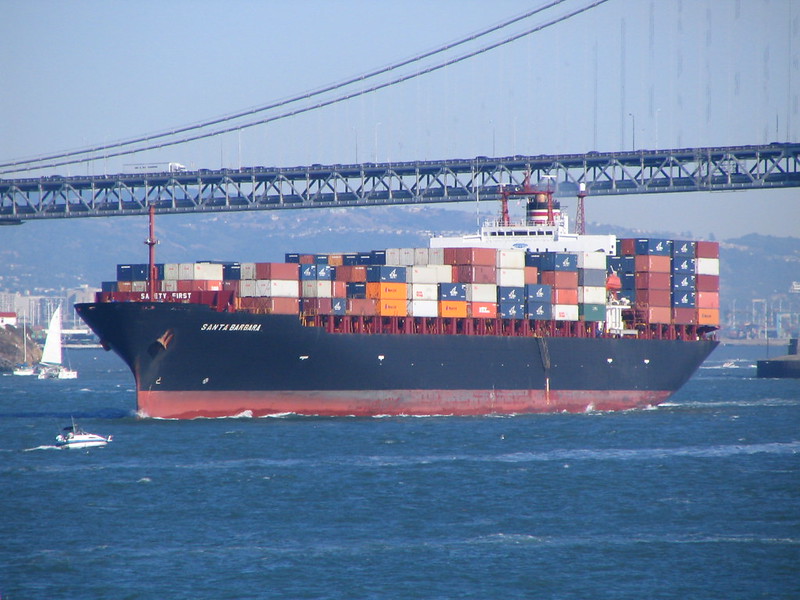 Supply chains have taken it on the chin, first from COVID-19 and now from tariffs (or the threat of them). For the second time in several years, we have objective evidence there is more to a supply chain than implementing the lowest-cost way to meet predictable demand. Tariffs have highlighted the cost of an inflexible supply chain because we can quantify the savings from moving parts to countries with lower tariffs.
With tariffs, Lean’s mantra of “make it where you sell it” has sharper teeth.
At the most fundamental level, supply chains are governed by the parts. Big parts, big factories; small parts, small machines; high part volume, high volume processes; low part volume, low volume processes; specialized coatings on the parts, specialized suppliers; parts with proprietary materials, sole source supplier. The supply chain is defined by its parts. And when you try to move the manufacture of parts from one country to another, these part-based constraints are the very thing that creates supply chain inflexibility. Said another way, if you want to improve a supply chain’s flexibility, you’ve got to start with the parts. If you want to reduce the tariffs of your supply chain, start with the parts.
All the parts in the supply chain are important but with tariffs, some parts are more important than others. You can make significant improvements in your supply chain’s tariff signature if you know the handful of parts that will deliver the largest tariff reduction. For each part within your supply chain calculate
(material cost x volume x tariff percentage)
and sort the product from largest to smallest. For the top ten parts assess the part-specific constraints that governed the original decision of the supplier and country. For each part identify a country with lower tariffs and pair it with the part-specific constraints. You now have a list of the top ten opportunities to reduce the tariff signature, what must change in the design to move to a lower tariff location, and the entitlement savings. The DFM-based tariff savings for each part is
(part cost x volume x difference in tariff percentage).
Take your top ten list to the product owner and show them the potential savings and ask to meet with the design community so you can explain how each part must change so it can move to a lower tariff country. And tell them how much the company will save if those constraints are overcome. This is like classic Design for Manufacturing (DFM) where the part is changed to reduce the cost to make the part, but, instead, the part is changed to reduce the cost of tariffs.
You now have a playbook for the top ten parts, the estimated tariff savings, and the work required to realize those savings. You don’t have to implement the playbook, but you can. And you can repeat the process for the next ten most important parts (11-20). Now you have a playbook for twenty parts and the estimated savings. You can continue the process as needed and step through the list ten parts at a time.
The process I describe is a good way to reduce the cost of tariffs. But to make a dent in the universe, there’s a much better way. It’s called Design For Assembly, or DFA, which is all about product simplification through part elimination. 35% reductions in the number of parts are typical. With DFA, high-tariff parts aren’t changed, they’re eliminated. But where classic DFA prioritizes eliminating the highest-cost parts, tariff-based DFA prioritizes eliminating parts with the highest tariff costs. The calculations to prioritize DFA-based tariff reduction are similar to those for DFM, but the savings are far more severe – the entire tariff and the part cost are saved. The DFA savings are
(part cost x volume x tariff percentage) + (part cost x volume)
Run the calculation for the parts in your supply chain and sort the results from largest to smallest. Take the list of the top ten to the design community and show them how much they can save if they eliminate the parts. Tell them they’ll be the Heros of the Company if they pull it off. Tell them you help them get the tools and training they’ll need. Repeat for the second group of the ten most important parts (11-20).
DFM and DFA are wildly profitable and with the added savings of tariffs, the savings are beyond wild. If there was ever a time to do DFM and DFA, it’s is now.
Image credit — Derell Licht
Posted in Cost Savings, DFA, DFMA, Fundementals, How To, Lean, Manufacturing Competitiveness, New Normal, Seven Wastes |
Tags: Design for Assembly, DFA, DFMA Culture, Engineering Capability, Product Design |
No Comments »
If you want to make a difference, change the design.
October 9th, 2024
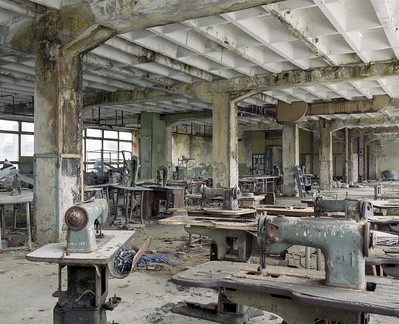 Why do factories have 50-ton cranes? Because the parts are heavy and the fully assembled product is heavier. Why is the Boeing assembly facility so large? Because 747s are large. Why does a refrigerator plant have a huge room to accumulate a massive number of refrigerators that fail final test? Because refrigerators are big, because volumes are large, and a high fraction fail final test. Why do factories look as they do? Because the design demands it.
Why are parts machined? Because the materials, geometries, tolerances, volumes, and cost requirements demand it. Why are parts injection molded? Because the materials, geometries, tolerances, volumes, and cost requirements demand it. Why are parts 3D printed? For prototypes, because the design can tolerate the class of materials that can be printed and can withstand the stresses and temperature of the application for a short time, the geometries are printable, and the parts are needed quickly. For production parts, it’s because the functionality cannot be achieved with a lower-cost process, the geometries cannot be machined or molded, and the customer is willing to pay for the high cost of 3D printing. Why are parts made as they are? Because the design demands it.
Why are parts joined with fasteners? It’s because the engineering drawings define the holes in the parts where the fasteners will reside and the fasteners are called out on the Bills Of Material (BOM). The parts cannot be welded or glued because they’re designed to use fasteners. And the parts cannot be consolidated because they’re designed as separate parts. Why are parts held together with fasteners? Because the design demands it.
If you want to reduce the cost of the factory, change the design so it does not demand the use of 50-ton cranes. If you want to get by with a smaller factory, change the design so it can be built in a smaller factory. If you want to eliminate the need for a large space to store refrigerators that fail final test, change the design so they pass. Yes, these changes are significant. But so are the savings. Yes, a smaller airplane carries fewer people, but it can also better serve a different set of customer needs. And, yes, to radically reduce the weight of a product will require new materials and a new design approach. If you want to reduce the cost of your factory, change the design.
If you want to reduce the cost of the machined parts, change the geometry to reduce cycle time and change to a lower-cost material. Or, change the design to enable near-net forging with some finish machining. If you want to reduce the cost of the injection molded parts, change the geometry to reduce cycle time and change the design to use a lower-cost material. If you want to reduce the cost of the 3D printed parts, change the design to reduce the material content and change the design and use lower-cost material. (But I think it’s better to improve function to support a higher price.) If you want to reduce the cost of your parts, change the design to make possible the use of lower-cost processes and materials.
If you want to reduce the material cost of your product, change the design to eliminate parts with Design for Assembly (DFA). What is the cost of a part that is designed out of the product? Zero. Is it possible to wrongly assemble a part that was designed out? No. Can a part that’s designed out be lost or arrive late? No and no. What’s the inventory cost of a part that’s been designed out? Zero. If you design out the parts is your supply chain more complicated? No, it’s simpler. And for those parts that remain use Design for Manufacturing (DFM) to work with your suppliers to reduce the cost of making the parts and preserve your suppliers’ profit margins.
If you want to sell more, change the design so it works better and solves more problems for your customers. And if you want to make more money, change the design so it costs less to make.
How Startups Can Move Prototypes Out Of The Lab And Onto The Factory Floor
June 19th, 2024
 Startups are good at making something work in the lab for the first time. However, startups are not good at moving their one-in-a-row prototypes to the manufacturing floor. But if startups are to scale, that’s exactly what they must do. For startups to be successful, they must continually change the design to enable the next level of production volume.
To do that, I propose a 10, 100, 1000 approach.
After the one-in-a-row prototypes, how will you make 10? Can the crude assembly process produce 10 prototypes? If so, use the same crude assembly process. The cost of the prototypes is not a problem at this stage, so there’s no need to change the manufacturing processes to reduce the cost of the components. And at these low volumes, it’s unlikely the existing assembly process is too labor intensive (you’re only making 10) so there’s likely no need to change the process from a “time to build” perspective. But if the variation generated by the assembly process leads to prototypes that don’t function properly, the variation of the assembly process must be controlled with poke-yoke measures. Add only the controls you need because that work takes money and time which you don’t have as a startup. Otherwise, build the next 10 like you built the first one.
After the first 10, how will you make the next 100? Building 100 units doesn’t sound like a big deal, but 100 is a lot more than 10. Do you have suppliers who will sell you 100 of each part? Do you have the factory space to store the raw materials? Do you have the capability and capacity to inspect the incoming material? Do you have the money to buy all the parts? If the answer to all these questions is yes, it’s time to ask the difficult questions.
The cost of the units is likely still not a problem because the volumes are still small. There’s likely no need to change the manufacturing process (e.g., moving from machining to casting) to reduce the cost of the units. And it’s unlikely the time to build the units is becoming a problem because a super long build time isn’t all that problematic when building 100 units. So it’s not time to reduce the number of parts in the product (product simplification through part count reduction – aka, Design for Assembly). But it’s likely time to reduce the variation of the assembly process and eliminate the rework-inspect-test loop that comes when each unit that emerges from the production process is different. It’s time for assembly instructions, assembly fixtures, dedicated tools at each workstation, measurement tools to inspect the final product, and a group of quality professionals to verify the product is built correctly.
After the first 100, how will you make the next 1000? If you can, avoid changing the design, the manufacturing processes, or the assembly process. Keep everything the same and build 1000 units just as you built the first 100. But that’s unlikely because the cost will be too high and the assembly time will be too long. For the most expensive parts, consider changing the manufacturing process to one that can support higher volumes at a lower cost. You likely will have to buy the parts from another supplier who specializes in the new process and for that, you’ll need a purchasing professional with a quality background. To reduce build time, do Design for Assembly (DFA) to eliminate parts (fasteners and connectors). And for the processes that generate the highest rework times and scrap, add the necessary process controls to reduce variation and eliminate defects. Do the minimum (lowest investment dollars and design time) to achieve the appropriate cost and quality levels and declare success.
After 1000 units, it’s time to automate and move to new manufacturing processes. For the longest assembly processes, change the design (the parts themselves) to enable automated assembly processes. For the highest cost parts, change the parts (the design itself) to enable the move to manufacturing processes with lower cost signatures. The important idea is that the design and its parts must change to automate and enable lower-cost manufacturing processes. You’ll need new suppliers and purchasing professionals to bring them on board. You’ll need quality professionals to verify the quality of the incoming parts and the output of the assembly process. You’ll need manufacturing and automation engineers to simplify and automate the manufacturing processes.
The 10, 100, 1000 process is rather straightforward but it’s difficult because it requires judgement. At what production volume do you move to higher volume manufacturing processes to reduce costs? At what production volumes do you change the design to automate the assembly process to reduce assembly time? At what point do you add assembly fixtures to reduce variation? Which assembly processes do you improve and which do you leave as-is? When do you spend money on improvements and when do you buckle down and grind it out without making improvements?
The answer to all these questions is the same – hire a pro who has done it before. Hire a pro who knows when (and how) to do Design for Manufacturing and when to keep the design as it is. Hire a pro who knows when (and how) to add poke-yoke solutions and when to keep the assembly process as it is and rework the defects because that’s the lowest cost and fastest way to go. Hire a pro who knows when to change the design to reduce assembly time (Design for Assembly) and when to change the design and invest in automated assembly. Hire a pro who knows how (and when) to implement a full-blown quality system.
When it’s time to move from the lab to the factory floor, it’s time to hire a pro.
Image credit — Jim Roberts Gallery
Posted in Assembly Time Reduction, DFA, DFMA, Part Count Reduction, Seven Wastes |
Tags: Design for Assembly, DFMA Culture, Part Count, Product Design |
No Comments »
Function first, no exceptions.
September 6th, 2023
 Before a design can be accused of having too much material and labor costs, it must be able to meet its functional specifications. Before that is accomplished, it’s likely there’s not enough material and labor in the design and more must be added to meet the functional specifications. In that way, it likely doesn’t cost enough. If the cost is right but the design doesn’t work, you don’t have a viable offering.
Before the low-cost manufacturing process can be chosen, the design must be able to do what customers need it to do. If the design does not yet meet its functional specification, it will change and evolve until it can. And once that is accomplished, low-cost manufacturing processes can be selected that fit with the design. Sure, the design might be able to be subtly adapted to fit the manufacturing process, but only as much as it preserves the design’s ability to meet its functional requirements. If you have a low-cost manufacturing process but the design doesn’t meet the specifications, you don’t have anything to sell.
Before a product can function robustly over a wide range of operating conditions, the prototype design must be able to meet the functional requirements at nominal operating conditions. If you’re trying to improve robustness before it has worked the first time, your work is out of sequence.
Before you can predict when the project will be completed, the design must be able to meet its functional requirements. Before that, there’s no way to predict when the product will launch. If you advertise the project completion date before the design is able to meet the functional requirements, you’re guessing on the date.
When your existing customers buy an upgrade package, it’s because the upgrade functions better. If the upgrade didn’t work better, customers wouldn’t buy it.
When your existing customers replace the old product they bought from you with the new one you just launched, it’s because the new one works better. If the new one didn’t work better, customers wouldn’t buy it.
Function first, no exceptions.
Image credit — Mrs Airwolfhound
Posted in Axiomatic Design, Decisions, Fundementals |
Tags: Competitiveness, Lessons Learned, Product Design |
No Comments »
Radical Cost Reduction and Reinvented Supply Chains
October 26th, 2022
 As geopolitical pressures rise, some countries that supply the parts that make up your products may become nonviable. What if there was a way to reinvent the supply chain and move it to more stable regions? And what if there was a way to guard against the use of child labor in the parts that make up your product? And what if there was a way to shorten your supply chain so it could respond faster? And what if there was a way to eliminate environmentally irresponsible materials from your supply chain?
Our supply chains source parts from countries that are less than stable because the cost of the parts made in those countries is low. And child labor can creep into our supply chains because the cost of the parts made with child labor is low. And our supply chains are long because the countries that make parts with the lowest costs are far away. And our supply chains use environmentally irresponsible materials because those materials reduce the cost of the parts.
The thing with the supply chains is that the parts themselves govern the manufacturing processes and materials that can be used, they dictate the factories that can be used and they define the cost. Moving the same old parts to other regions of the world will do little more than increase the price of the parts. If we want to radically reduce cost and reinvent the supply chain, we’ve got to reinvent the parts.
There are methods that can achieve radical cost reduction and reinvent the supply chain, but they are little known. The heart of one such method is a functional model that fully describes all functional elements of the system and how they interact. After the model is complete, there is a straightforward, understandable, agreed-upon definition of how the product functions which the team uses to focus the go-forward design work. And to help them further, the method provides guidelines and suggestions to prioritize the work.
I think radical cost reduction and more robust supply chains are essential to a company’s future. And I am confident in the ability of the methods to deliver solid results. But what I don’t know is: Is the need for radical cost reduction strong enough to cause companies to adopt these methods?
“Zen” by g0upil is licensed under CC BY-SA 2.0.
 Mike Shipulski