Archive for the ‘Level 5 Courage’ Category
I see dead people.
 December 15th, 2010
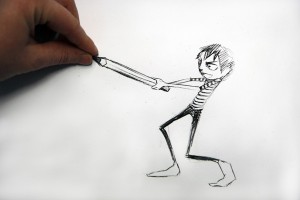 Seeing things as they are takes skill, but doing something about it takes courage. Want an example? Check out movie The Sixth Sense directed by M. Night Shyamalan.
At the start of the film Dr. Malcolm Crowe, esteemed child psychologist, returns home with his wife to find his former patient, Vincent Grey, waiting for him. Grey accuses Crowe of failing him and shoots Crowe in the lower abdomen, then shoots himself.
Cut to a scene three months later where Crowe councils Cole Sear, a troubled, isolated nine year old. Over time, Crowe gains the boy’s trust. The boy ultimately confides in Crow telling him he “Sees dead people that walk around like regular people.” (Talk about seeing things as they are.) Later in the film the boy confides in his mother telling her what he sees. Understandably, his mother does not believe him. But imagine his pain when, after sharing his disturbing reality, his only parent does not support him. (And we get upset when co-workers don’t support our somewhat off-axis realities.) And imagine his courage to move forward.
It takes level 5 courage for him to talk about such a disturbing reality, but Cole Sear is up to the challenge. He so badly wants to change his situation, to shape his future, he does what it takes. Not just talk, but actions. He defines his new future and defines the path to get there. He defines his fears and decides to work through them to create his new future where he is no longer afraid of the dead who seek him out. He changes his go-forward behavior. Instead of hiding, he talks with the dead, understands what they want from him, and helps them. He walks the path.
Ultimately he creates a future that works for him. He convinces his mom that his reality is real; she believes him and supports him and his reality. (That’s what we all want, isn’t it?) His relationships with the dead are non-confrontational and grounded in mutual respect. His stress level is back to mortal levels. His reality is real to people he cares about. But Cole Sear is not done yet.
***** SPOILER ALERT – IF YOU HAVE NOT SEEN THE SIXTH SENSE, READ NO FURTHER ****
In Shyamalan’s classic finish-with-a-twist style, Cole Sear, the scared nine year old boy with his bizarre reality, masterfully convinces his psychologist that his I see dead people reality is real and convinces the psychologist that he’s dead. All along, when the psychologist thought he was helping the boy see things as they are, the boy was helping the psychologist. The little boy who saw dead people convinced the dead psychologist that his seemingly bizarre reality was real.
As Cole demonstrated, seeing things for what they are and doing something about can make a difference in someone’s life.
 Posted in
Our fear is limiting DoD’s Affordability Quest
December 1st, 2010
 The DoD wants to save money, but they can’t do it alone. But can they possibly succeed? Do they have fighting a chance? Can they get it done? Wrong pronouns.
Can we possibly succeed?
Do we have a fighting chance?
Can we get it done?
In difficult times it’s easy to be critical of others, to make excuses, to look outside. (They, they, they.) In difficult times it’s hard find the level 5 courage to be critical ourselves, to take responsibility, to look inside. (We, we, we.) But we must look inside because that’s where the answer is. We know our work best; we’re the only ones who can reinvent our work; we’re the ones who can save money; we’re responsible.
Changing our actions, our work, is scary, but that’s what the DoD is asking for; we must overcome our fear. But to overcome it we must acknowledge it, see it as it is, and work through it.
Here’s the DoD’s challenge: “Contractors – provide us more affordable systems.” There are two ways we can respond.
The fear-based response (the they response): The DoD won’t accept the changes. In fact, they’ve never liked change. They’ll say no to any changes. They always have.
The seeing things as they are response (the we response): We must try, since not trying is the only way to guarantee failure. Things are different now. Change is acceptable. However, the facts are we don’t know what changes to propose, we don’t know what creates cost, and we don’t know how to design low cost, low complexity systems. We were never taught. We need to develop our capability if we’re to be successful.
The they response: Their MIL specs dictate the design and they won’t budge on them. They’ll say no to any changes. They always have.
The we response: We must try, since not trying is the only way to guarantee failure. Things are different now. Change is acceptable. However, the facts are we don’t know why we designed it that way, we don’t know all that much about the design, we don’t know what creates cost, and we don’t know how to design low cost, low complexity systems. We were never taught. We need to develop our capability if we’re to be successful.
The they response: All they care about is performance. They are driving the complexity. And when push comes to shove, they don’t care about cost. They’ll say no to any changes. They always have.
The we response: We must try, since not trying is the only way to guarantee failure. Things are different now. Change is acceptable. However, the facts are we don’t know what truly controls performance, we don’t know what we can change, we don’t know the sensitivities, we don’t know what creates cost, and we don’t know how to design low cost, low complexity systems. We were never taught. We need to develop our capability if we’re to be successful.
The DoD has courageously told us they want to overcome their fear. Let’s follow their lead and overcome ours. It will be good for everyone.
Rage against the fundamentals
November 3rd, 2010
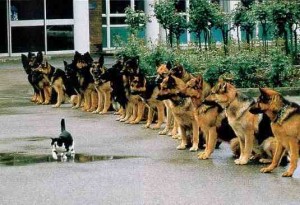 We all have computer models – economic models, buying models, voting models, thermal, stress, and vibration. A strange thing happens when our models reside in the computer: their output becomes gospel, unchallengeable. And to set the hook, computerized output is bolstered by slick graphics, auto-generated graphs, and pretty colors.
Model fundamentals are usually well defined, proven, and grounded – not the problem. The problem is applicability. Do the fundamentals apply? Do they apply in the same way? Do different fundamentals apply? We never ask those questions. That’s the problem.
New folks don’t have the context to courageously challenge fundamentals and more experienced folks have had the imagination flogged out of them. So who’s left to challenge applicability of fundamentals? You know who’s left.
It’s smart folks with courage that challenge fundamentals; it’s people willing to contradict previous success (even theirs) that challenge fundamentals; it’s people willing to extend beyond that challenge fundamentals; it’s people willing to risk their career that challenge fundamentals.
Want to challenge fundamentals? Hire, engage, and support smart folks with courage.
Doing New
October 20th, 2010
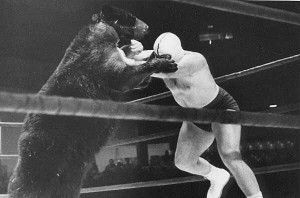 Doing new is hard and starting new is particularly hard. Once fear is overcome and new is started, doing new becomes a battle with discouragement. Not managed, discouragement can stop new.
Slumped shoulders and a head hung low are the signs and a mismatch with expectations is the source. Expectations are defined in the form of a project plan, but, since the work is new, expectations are not grounded, not calibrated. How long will it take to do something we’ve never dreamed of doing? Yet when disguised as a project plan, uncalibrated expectations become a hard deadline.
When you want to do new, you give the project to your best. When they use the right tools, the latest data, and the best processes, yet new does not come per the plan, your best can become discouraged. But this discouragement is misplaced. Sure, the outcome is different from the plan, but reality isn’t the problem, it’s the plan, the expectations. They did everything right, so tell them. Tell them the expectations are out of line. Tell them you think their doing a good job. Tell them if it was easy, you’d have given the project to someone else. Tell them they can feel discouraged for five more minutes, but then they’ve got to go back, look new in the eye, and kick its ass.
Inspiring Work
October 6th, 2010
 Inspiring work is art.
Inspiring work is rare.
Inspiring work is scary.
Inspiring work is thrilling.
Inspiring work is the reward.
Inspiring work is life changing.
Inspiring work is easy to recognize.
Inspiring work is difficult to recognize.
Inspiring work is an acknowledgment of self.
Inspiring work’s magnitude is proportional to the fear.
 Tags:
Tags: Level 5 Courage
June 16th, 2010
 Level 5 Courage is hard to describe and even harder to recognize. What is it? Who has it? What is it good for? To understand it, look to the rodeo clown.
You’ve seen the rodeo clown. A strange looking thing – funny clothes that don’t fit, a silly hat that doesn’t stay on, and bright red suspenders meant for bulls, not pants. He’s all fun and games on the surface but as serious as a heart attack when seen at depth. Underneath the clownness, he does serious, meaningful work for the benefit of others.
Surely the cowboy needs gumption to sit atop a big, angry bull, a bull whose sole purpose is to use his raging bullness to eject his unwelcomed rider enthusiastically. Certainly, the cowboy has courage. But is it Level 5 Courage? Maybe.
What’s the first thing the cowboy does after being pitched to the dirt? He gets up and runs like hell away from the bull. And the clown? He runs like hell toward the bull. When everything natural says run away, the unnatural rodeo clown runs toward. And he runs with purpose, with precision, with intent. He runs at the pointy parts, and he runs to re-aim them. Level 5 Courage – guaranteed.
This cannot be taught – rodeo clowns are born, not made.
When the crowd sits in the grandstand, they want to see the cowboy. But when the cowboy sits on the bull, he wants to see the clown. Sitting atop an angry, frothing bull, knowing the fury to follow, the cowboy finds comfort in the funny clothes hiding behind the barrel. With the briefest eye-to-eye connection, the pact is made. The cowboy knows it will be all right. No matter what, the clown will be there – guaranteed -even at the expense of personal safety. The clown gets meaning from this work. This is why he is a clown.
There is a powerful bond between clown and cowboy. And cowboys always buy the beer. Always. Cowboys understand clowns are special, and clowns like to be appreciated for what they are. It works for both.
Cowboys are right – rodeo clowns are special. But they’re hard to recognize; you must look deeply to see them. So keep an eye out. Once you recognize them, let them keep their funny clothes and suspenders. Appreciate them for what they are, and they will make things all right.
Level 5 Courage – guaranteed.
 Mike Shipulski