Archive for the ‘Level 5 Courage’ Category
Put Yourself Out There
 June 4th, 2014
 Put yourself out there. Let it hang out. Give it a try. Just do it. The reality is few do it, and fewer do it often. But why?
In a word, fear. But it cuts much deeper than a word. Here’s a top down progression:
What will they think of your idea? If you summon the courage to say it out loud, your fear is they won’t like it, or they’ll think it’s stupid. But it goes deeper.
What with they think of you? If they think your idea is stupid, your fear is they’ll think you’re stupid. But so what?
How will it conflict with what you think of you? If they think you’re stupid, your fear is it will conflict with what you think of you. Now we’re on to it – full circle.
What do you think of you? It all comes down to your self-image – what you think is it and how you think it will stand up against the outside forces trying to pull it apart. The key is “what you think” and “how you think”. Like all cases, perception is reality; and when it comes to judging ourselves, we judge far too harshly. Our severe self-criticism deflates us far below the waterline of reality, and we see ourselves far shallower than our actions decree.
You’re stronger and more capable than you let yourself think. But no words can help with that; for that, only action will do. Summon the courage to act and take action. Just do it. And to calm yourself before you jump, hold onto this one fact – others’ criticism has never killed anyone. Stung, yes. Killed, no. Plain and simple, you won’t die if you put yourself out there. And even the worst bee stings subside with a little ice.
I’m not sure why we’re so willing to abdicate responsibility for what we think of ourselves, but we do. So where you may have abdicated responsibility in the past, in the now it’s time to take responsibility. It’s time to take responsibility and act on your own behalf.
Fear is real, and you should acknowledge it. But also acknowledge you give fear its power. Feel the fear, be afraid. But don’t succumb to the power you give it.
Put yourself out there. Do it tomorrow. You won’t die. And I bet you’ll surprise others.
But I’m sure you’ll surprise yourself more.
 Posted in Fear, How To, Level 5 Courage, Negativity, Risk, Seeing Things As They Are |
  Tags: Fear |
  No Comments »
How Things Really Happen
May 7th, 2014
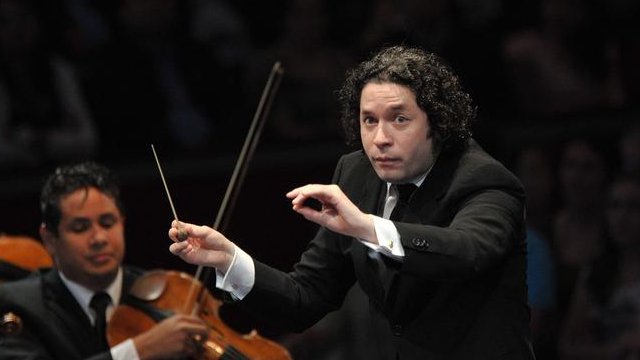
From the outside it’s unclear how things happen; but from the inside it’s clear as day. No, it’s not your bulletproof processes; it’s not your top down strategy; and it’s not your operating plans. It’s your people.
At some level everything happens like this:
An idea comes to you that makes little sense, so you drop it. But it comes again, and then again. It visits regularly over the months and each time reveals a bit of its true self. But still, it’s incomplete. So you walk around with it and it eats at you; like a parasite, it gets stronger at your expense. Then, it matures and grows its voice – and it talks to you. It talks all the time; it won’t let you sleep; it pollutes you; it gets in the way; it colors you; and finally you become the human embodiment of the idea.
And then it tips you. With one last push, it creates enough discomfort to roll over the fear of acknowledging its existence, and you set up the meeting.
You call the band and let them know it’s time again to tour. You’ve been through it before and you all know deal. You know your instruments and you know how to harmonize. You know what they can do (because they’ve done it before) and you trust them. You sing them the song of your idea and they listen. Then you ask them to improvise and sing it back, and you listen. The mutual listening moves the idea forward, and you agree to take a run at it.
You ask how it should go. The lead vocalist tells you how it should be sung; the lead guitar works out the fingering; the drummer beats out the rhythm; and the keyboardist grins and says this will be fun. You all know the sheet music and you head back to your silos to make it happen.
In record time, the work gets done and you get back together to review the results. As a group you decide if the track is good enough play in public. If it is, you set up the meeting with a broader audience to let them hear your new music. If it’s not, you head back to the recording studio to amplify what worked and dampen what didn’t. You keep re-recording until your symphony is ready for the critics.
Things happen because artists who want to make a difference band together and make a difference. With no complicated Gantt chart, no master plan, no request for approval, and no additional resources, they make beautiful music where there had been none. As if from thin air, they create something from nothing. But it’s not from thin air; it’s from passion, dedication, trust, and mutual respect.
The business books over-complicate it. Things happen because people make them happen – it’s that simple.
Posted in Authentic, Fear, Innovation, Intellectual Intertia, Level 5 Courage, New Thinking, The Future |
Tags: Competitiveness, Creativity, Product Development Engine |
No Comments »
The Ladder Of Your Own Making
April 30th, 2014
 There’s a natural hierarchy to work. Your job, if you choose to accept it is to climb the ladder of hierarchy rung-by-rung. Here’s how to go about it:
Level 1. Work you can say no to – Say no to it. Say no effectively as you can, but say it. Saying no to level 1 work frees you up for the higher levels.
Level 2. Work you can get someone else to do – Get someone else to do it. Give the work to someone who considers the work a good reach, or a growth opportunity. This isn’t about shirking responsibility, it’s about growing young talent. Maybe you can spend a little time mentoring and the freed up time doing higher level work. Make sure you give away the credit so next time others will ask you for the opportunity to do this type of work for you.
Level 3. Work you’ve done before, but can’t wiggle out of – Do it with flair, style, and efficiency; do it differently than last time, then run away before someone asks you to do it again. Or, do it badly so next time they ask someone else to do it. Depending on the circumstance, either way can work.
Level 4. Work you haven’t done before, but can’t wiggle out of – Come up with a new recipe for this type of work, and do it so well it’s unassailable. This time your contribution is the recipe; next time your contribution is to teach it to someone else. (See level 2.)
Level 5. Work that scares others – Figure out why it scares them; break it into small bites; and take the smallest first bite (so others can’t see the failure). If it works, take a bigger bite; if it doesn’t, take a different smallest bite. Repeat, as needed. Next time, since you’ve done it before, treat it like level 3 work. Better still, treat it like level 2.
Level 6. Work that scares you – Figure out why it scares you, then follow the steps for level 5.
Level 7. Work no one knows to ask you to do – You know your subject matter better than anyone, so figure out the right work and give it a try. This flavor is difficult because it comes at the expense of work you’re already signed up to do and no one is asking you to do it. But you should have the time because you followed the guidance in the previous levels.
Level 8. Work that obsoletes the very thing that made your company successful – This is rarified air – no place for the novice. Ultimately, someone will do this work, and it might as well be you. At least you’ll be able to manage the disruption on your own terms.
In the end, your task, if you choose to accept it, is to migrate toward the work that obsoletes yourself. For only then can you start back at level 1 on the ladder of your own making.
Posted in Authentic, Fear, Intellectual Intertia, Level 5 Courage, New Thinking, Risk, Technology |
Tags: Competitiveness, Engineering Mindset |
No Comments »
Summoning The Courage To Ask
April 16th, 2014

I’ve had some great teachers in my life, and I’m grateful for them. They taught me their hard-earned secrets, their simple secrets. Though each had their own special gifts, they all gave them in the same way – they asked the simplest questions.
Today’s world is complex – everything interacts with everything else; and today’s pace is blistering – it’s tough to make time to understand what’s really going on. To battle the complexity and pace, force yourself to come up with the simplest questions. Here are some of my favorites:
For new products:
- Who will buy it?
- What must it do?
- What should it cost?
For new technologies:
- What problem are you trying to solve?
- How will you know you solved it?
- What work hasn’t been done before?
For new business models:
- Why are you holding onto your decrepit business model?
For problems:
- Can you draw a picture of it on one page?
- Can you make it come and go?
For decisions:
- What is the minimum viable test?
- Why not test three or four options at the same time?
For people issues:
- Are you okay?
- How can I help you?
For most any situation:
- Why?
These questions are powerful because they cut through the noise, but their power couples them to fear and embarrassment – fear that if you ask you’ll embarrass someone. These questions have the power to make it clear that all the activity and hype is nothing more than a big cloud of dust heading off in the wrong direction. And because of that, it’s scary to ask these questions.
It doesn’t matter if you steal these questions directly (you have my permission), twist them to make them your own, or come up with new ones altogether. What matters is you spend the time to make them simple and you summon the courage to ask.
Image credit — Montecruz Foto.
Retreating From Activity To Progress
March 19th, 2014
 Every day is a meeting-to-meeting sprint with no time for some of the favorite fundamentals like the bathroom and food. Though crazy, it’s the norm and no longer considered crazy. But it is crazy. When you’re too busy to answer emails that’s one thing, but when you’re too busy to realize answering email isn’t progress, that’s a problem.
Our in-boxes are full; our plates are full; our calendars are full. But our souls are empty.
You’re clear on what must get done over the next 48 hours, but the pace is too fast to know why the work is important in the first place. (One of the fastest way to complete a task is to deem it unimportant and don’t do it – all of the done with none of the work.) But it’s worse. It’s too fast to do the work no one is asking you to do, and it’s too fast to do the work you were born to do.
We have confused activity with progress; and with all the activity, we’ve forgotten what it feels like to think. We need a retreat.
The perfect retreat eliminates distractions and gives people time to think. After a nice Sunday flight into Boston, it’s a calm two hour coach ride to rural New Hampshire. (Done right, a coach is soothing.) After pickup it’s a fifteen minute drive to a remote trail head. With a pack on your back, it’s a five minute walk to a big, remote cabin. No cell service, no power, no interruptions.
As you enter the cabin, you unload all your electronics into bin (Yes, your smart phone goes in the bin.) which is locked away for the remainder of the retreat. You race to get the best bunk, drop your gear, and share a meal with your fellow over achievers. (Y es, the non-disclosures are signed so you can actually talk to each other.)
The first day is all about recognizing the discomfort that comes with no distractions and your natural tendency to create distraction to sooth your discomfort. The objective is to help you remember what if feels like to have more than 30 seconds of uninterrupted time. Then, once you remember, it’s time to actually think.
There are no video conferencing capabilities (or electricity) in the cabin, so all work is done the old-fashioned way – face-to-face. The objective is to help you remember the depth, complexity, and meaning that come when working with actual faces. Yes, there’s good facilitated discussion, but the topics aren’t as important as remembering how to share and trust.
There is ritualistic work of cooking, cleaning, splitting the wood, and stoking the fire. The objective is to remember what it feels like to connect the mind to the body and to connect with others. And, there’s a group hike every day to remember what it feels like to be grounded in the natural world. (Sometimes we forget the business world is actually part of the natural world.)
After the rituals and hikes have done their magic, the right discussions start to emerge, and deep contemplation dances with deep conversation. Though there’s a formal agenda, no matter. With the group’s awaking, the right agenda emerges.
At the end of the retreat, there’s immense sadness. This is a sign of importance and deep learning. And after the hugs and tears, there’s a spontaneous commitment to do it next year. With eyes dried, it’s off the bus station and then to the airport.
You don’t have to wait for the perfect retreat to start your journey. Start your practice by carving out an hour a day and set a recurring meeting with yourself and turn off your email. And start by asking yourself why. Those two tricks will set you on your way.
And if you’re interested in a real retreat, let me know.
Posted in Authentic, Culture, Intellectual Intertia, Level 5 Courage, Seeing Things As They Are, The Future |
Tags: Competitiveness, Creativity, meaning |
No Comments »
Look Inside, Take New Action, Speak New Ideas.
February 19th, 2014
 There’s a lot buzz around reinvention and innovation. There are countless articles on tools and best practices; many books on the best organizational structure, and plenty on roles and responsibilities. There’s so much stuff that it’s tough to define what’s missing, even when what’s missing is the most important part. Whether its creativity, innovation, or doing new, the most important and missing element is your behavior.
Two simple rules to live by: 1) Look inside. 2) Then, change your behavior.
To improve innovation, people typically look to nouns for the answers – meeting rooms, work spaces, bean bag chairs, and tools, tools, tools. But the answer isn’t nouns, the answer is verbs. Verbs are action words, things you do, behaviors. And there are two behaviors that make the difference: 1.) Take new action. 2) Speak new ideas.
To take new action, you’ve got to be perceptive, perceptive about what’s blocking you from taking new action. The biggest blocker of new action is anxiety, and you must learn what anxiety feels like. Thought the brain makes anxiety, it’s easiest to perceive anxiety in the body. For me, anxiety manifests as a cold sinking feeling in my chest. When I recognize the coldness, I know I’m anxious. Your task is to figure out your anxiety’s telltale heart.
To learn what anxiety feels like, you’ve got to slow down enough to actually feel. The easiest way for overbooked high performers to make time to slow down is to schedule a recurring meeting with yourself. Schedule a recurring 15 minute meeting (Daily is best.) in a quiet place. No laptop, no cell phone, no paper, no pencil, no headphones – just you and quiet sitting together. Do this for a week and you’ll learn what anxiety feels like.
To take new action, you’ve got to be receptive, receptive to the anxiety. You’ll naturally judge anxiety as bad, but that’s got to change. Anxiety isn’t bad, it’s just unpleasant. And in this case, anxiety is an indicator of importance. When you block yourself from taking an important action, you create anxiety. So when you feel anxiety, be receptive – it’s your body telling you the yet-to-be-taken action is important.
After receptive, it’s time to be introspective. Look inside, turn toward your anxiety, and understand why the task is important. Typically it’s important because it threatens the status quo. Maybe it would dismantle your business model, or maybe it will unglue the foundation of your company, or maybe something smaller yet threatening. Once you understand its importance, it’s time to use the importance as the forcing function to start the task first thing tomorrow morning.
The second magic behavior is to speak new ideas. To speak new ideas, you’ve got to be perceptive to the reason you self censor. Before you can un-censor, you’ve got to be aware you self censor. It’s time to get in touch with your unsaid ideas. Now that you no longer need the 15 minute meeting for taking new action, change the agenda to speaking new ideas. Again, no laptop, cell phone, and headphones, but this time it’s you and quiet figuring out what if feels like right before you self-censor.
In your meeting, remember back to a brainstorming session when you had a crazy idea, but decided to bury it. Get in touch with what your body felt like as you stopped yourself from speaking your crazy idea. That’s the feeling you want to be aware of because it’s a leading indicator of your self censoring behavior.
Next, it’s time to be receptive, receptive to the idea that just as you choose to self censor, you can choose to stop your self censorship, and receptive to the idea that there’s a deep reason for your behavior.
Now, it’s on to introspective. When you have a crazy idea, why do you keep your mouth shut? Turn toward the behavior and you may see you self censor because you don’t want to be judged. If you utter a crazy idea, you may be afraid you’ll be judged as crazy or incompetent. Likely, you’re afraid saying your idea out loud will change something – what other people think of you.
There are a couple important notions to help you battle your fear of judgment. First, you are not your ideas. You can have wild ideas and be highly competent, highly valued, and a good person. Second, other people’s judgment is about them, not you. They are threatened by your idea, and instead of looking inside, they protect themselves by trying to knock you down.
There’s a lot of nuance and complexity around creativity and innovation, but it doesn’t have to be that way. Really, it comes down to four things: own your behavior, look inside, take new action, and speak new ideas. It’s that simple.
Posted in Authentic, Fear, Feelings, Innovation, Level 5 Courage, Seeing Things As They Are |
Tags: Creativity |
No Comments »
The Half-Life of Our Maps
February 5th, 2014
 The early explorers had maps, but they were wrong – sea monsters, missing continents, and the home country at the center. Wrong, yes, but the best maps of their day. The early maps weren’t right because the territory was new, and you can expect the same today. When you work in new territory, your maps are wrong.
As the explorers’ adventures radiated further from home, they learned and their maps improved. But still, the maps were best close to home and diverged at the fringes. And over the centuries the radius of rightness grew and the maps converged on the territory. And with today’s GPS technology, maps are dead on. The system worked – a complete map of everything.
Today you have your maps of your business environment and the underlying fundementals that ground them. Like the explorers you built them over time and checked them along the way. They’re not perfect (more right close to home) but they’re good. You mapped the rocks, depths, and tides around the trade routes and you stay the course because the routes have delivered profits and they’re safe. You can sail them in your sleep, and sometimes you do.
But there’s a fundamental difference between the explorers’ maps and yours – their territory, the physical territory, never changed, but yours is in constant flux. The business trade winds shift as new technologies develop; the size of continents change as developing countries develop; and new rocks grow from the sea floor as competitors up their game. Just when your maps match the territory, the territory changes around you and diverges from your maps, and your maps become old. The problem is the maps don’t look different. Yes, they’re still the same maps that guided you safely along your journey, but they no longer will keep you safely off the rocks and out of the Doldrums.
But as a new age explorer there’s hope. With a healthy skepticism of your maps, frequently climb the mast and from the crow’s nest scan the horizon for faint signs of trouble. Like a thunder storm just below the horizon, you may not hear trouble coming, but there’ll be dull telltale flashes that flicker in your eyepiece. Not all the crew will see them, or want to see them, or want to believe you saw them, so be prepared when your report goes unheeded and your ship sales into the eye of the storm.
Weak signals are troubling for several reasons. They’re infrequent and unpredictable which makes them hard to chart, and they’re weak so they’re tough to hear and interpret. But worst of all is their growth curve. Weak signals stay weak for a long time until they don’t, and when they grow, they grow quickly. A storm just over the horizon gives weak signals right up until you sail into gale force winds strong enough to capsize the largest ships.
Maps are wrong when the territory is new, and get more right as you learn; but as the territory changes and your learning doesn’t, maps devolve back to their natural wrongness. But, still, they’re helpful. And they’re more helpful when you remember they have a natural half-life.
My grandfather was in the Navy in World War II, though he could never bring himself to talk about it. However, there was one thing he told me, a simple saying he said kept him safe:
Red skies at night, sailor’s delight; red skies in morninng, sailor takes warning.
I think he knew the importance of staying aware of the changing territory.
Posted in Innovation, Level 5 Courage, Seeing Things As They Are, The Future |
Tags: Competitiveness, Grandfather |
1 Comment »
Decide To Tackle The Impossible
January 29th, 2014
 Doing the impossible doesn’t take a long time, starting does. More precisely, what takes a long time is getting ready to start. Getting ready is the gating item. So what’s in the way?
The big deal about starting is other people will see you do it and they’ll judge you. Your brain tells stories about how people will think you’re silly or incompetent for trying the outrageous. It takes a long time to build the courage to start. But where starting is scary, getting ready is safe and comfortable. Getting ready is done in the head – it’s a private process. And because you do it in your head, you can do it without being judged, and you can do it for as long as you like. And you can take comfort in getting ready because you rationalize you’re advancing the ball with your thinking. (Hey, at least you’re thinking about it.) But the real reason for staying in the getting ready domain is starting the fear around being judged for starting.
After you finally mustered the courage to start, you’ll get welcomed with all sorts of well-intentioned, ill-informed criticism. The first one – We tried that before, and it didn’t work. Thing is, it was so long ago no one remembers what was actually tried. Also, no one remembers how many approaches were tried, and even fewer know why it didn’t work. But, everyone’s adamant it won’t work because it didn’t work. Your response – That was a long time ago, and things have changed since then. There are new technologies to try, new materials that may work, new experimental methods, and new analytical methods to inform the work.
Now that you dismissed the we-already-tried-that’s, the resource police will show up at your door. They’ll say – That’s a huge project and it will consume all our resources. You can’t do that. Your response – Well, I’m not eating the whole enchilada, I only taking the right first bite. And for that, I don’t need any extra resources. You see, my friends and I really want to do this and we pooled our resources and narrowly defined the first bite. So, as far as resources, I’m all set.
Now the alignment officers will find you. They’ll say – Your off-topic mission impossible will confuse and distract our organization and we can’t have that. You know there’s no place for passion and excitement around here. Can you imagine engineers running around doing things that could disrupt our decrepit business model? We’ll no longer have control, and we don’t like that. Please stop. Your response – Let’s set up a meeting with the CEO who’s on the hook to create new businesses, and you can deliver that message face-to-face. You want me to set up the meeting?
Lastly, the don’t-rock-the-boaters will nip at your heels. They’ll say – Things are going pretty well. Did you hear we’re laying off fewer people this quarter? And, we’re losing less money this quarter. Things are looking up. And here you are trying something new, and scaring everyone half to death. You’ve got to stop that nonsense. Your response – Though it may be scary, I have a hunch this crazy stuff could create a whole new business and help secure the company’s future. And I have kids going to college in a couple years, and the company’s future is important to me.
When doing the impossible, the technical part is the easy part. Once you decide to try, what you thought impossible comes quickly. What’s difficult is the people part. Doing the impossible is unpredictable, and it cuts across grain of our culture of predictability. For years it’s been well defined projects with guaranteed profits and completion dates etched in stone. And after years of predictability injections people become the antibodies that reject the very work the company needs – the work that delivers the impossible.
No kidding – once you start the impossible, your organization will make it difficult for you. But, that’s nothing compared to the difficulty of getting ready because in that phase, you must overcome the most powerful, sly, dangerous critic of all – yourself.
Posted in Culture, Fear, Imagination, Intellectual Intertia, Level 5 Courage, Seeing Things As They Are, The Future |
Tags: Competitiveness, Trust-based approach |
No Comments »
Gifts Are For The Giver
December 25th, 2013
 I’ve read emails from engineering students telling me I whipped them into a fervor over engineering.
I’ve received notes from engineering leaders that, based on a single line of a post, reinvented the cost signature of their products.
I’ve been sent messages from folks who were stuck in a rut, and after reading my post, were able to work through their self-imposed constraints.
My inbox has let me know a reader, after thinking about my thinking, tried something that truly scared them.
They all thanked me for what I gave them, but, really, I want to thank them for what they gave me.
They listened; they thought; they changed their behavior. There can be no bigger gift.
I know not everyone celebrates my holiday, but, nonetheless, I want to share it with you.
Merry Christmas, and thanks for your gifts.
Posted in Fear, Level 5 Courage, Meaning, Positivity |
Tags: Independence, Trust-based approach |
1 Comment »
Weak Signals And The Radical Fringe
December 18th, 2013

We strive to get everyone on the same page, to align the crew in a shared direction. The thinking goes – If we’re all pulling in the same direction, we’ll get there faster and more efficiently. Yes, the destination will come sooner, but what if it’s not there when we get there?
There’s implicit permanence to our go-forward travel plans. We look out three years and plan our destination as if today’s rules and fundamentals will still apply. We think – That imaginary tropical vacation spot will be beautiful in three years because it looks beautiful through the kalidascope of today’s success. But as the recent natural disasters have taught us, whole islands can be destroyed in an instant. But still, the impermenance of today’s tried-and-true business models is lost on us, and we see the unknowable future as statically as the unchangeable map of the continents.
Thing is, all around us there are weak indications the fundamental tradewinds have started to shift – weak signals of impermenance that may invalidate today’s course heading. But weak signals are difficult to hear – the white noise of yesterday’s success drowns out the forward-looking weak signals. And more problematic, once heard, weak signals are easily dismissed because their song threatens the successful status quo.
You feel weak signals in your chest. It could be a weak signal when your experience tells you things should go one way and they actually go another. Martin Zwilling (Forbes) has some great examples. (Thanks to Deb Mills-Scofield [@dscofield] for retweeting the article.)
100% alignment reduces adaptability because it deadens us to weak signals, and that’s a problem in these times of great impermanence. To counter the negative elements of alignment, there must be a balancing injection of healthy misalignment. This is an important and thankless task falls on the shoulders of a special breed – the radical fringe. They’re the folks smart enough to knit disjointed whispers into coherent ideas that could unravel everything and brave enough to test them.
Disruptive movements and revolutions build momentum quietly and slowly. But if you can recognize them early, there’s a chance you can get into position to ride their tsunami instead of being ambushed and scuttled by it. But you’ve got to listen closely because these young movements are stealthy and all they leave in their wake are weak signals.
Posted in Assumptions, Complexity, Imagination, Level 5 Courage, Seeing Things As They Are, The Future |
Tags: weak signals |
1 Comment »
Choose Yourself
November 6th, 2013
 We’ve been conditioned to ask for direction; to ask for a plan; and ask for permission. But those ways no longer apply. Today that old behavior puts you at the front of the peloton in the great race to the bottom.
The old ways are gone.
Today’s new ways: propose a direction (better yet, test one out on a small scale); create and present a radical plan of your own (or better, on the smallest of scales test the novel aspects and present your learning); and demonstrate you deserve permission by initiating activity on something that will obsolete the very thing responsible for your success.
People that wait for someone to give them direction are now a commodity, and with commodities it always ends in the death spiral of low cost providers putting each other out of business. As businesses are waist deep in proposals to double-down on what hasn’t worked and are choking on their flattened S-curves, there’s a huge opportunity for people that have the courage to try new things on their own. Today, if you initiate you’ll differentiate.
[This is where you say to yourself – I’ve already got too much on my plate, and I don’t have the time or budget to do more (and unsanctioned) work. And this is where I tell you your old job is already gone, and you might as well try something innovative. It’s time to grab the defibrillator and jolt your company out of its flatline. ]
It’s time to respect your gut and run a low cost, micro-experiment to test your laughable idea. (And because you’ll keep the cost low, no one will know when it doesn’t go as you thought. [They never do.]) It’s time for an underground meeting with your trusted band of dissidents to plan and run your pico-experiment that could turn your industry upside down. It’s time to channel your inner kindergartener and micro-test the impossible.
It’s time to choose yourself.
Posted in Decisions, Fear, Imagination, Innovation, Level 5 Courage, Manufacturing Competitiveness, Risk, Seeing Things As They Are, The Future |
Tags: Creativity, Trust-based approach |
No Comments »
 Mike Shipulski