Posts Tagged ‘Trust-based approach’
Choose Yourself
 November 6th, 2013
 We’ve been conditioned to ask for direction; to ask for a plan; and ask for permission. But those ways no longer apply. Today that old behavior puts you at the front of the peloton in the great race to the bottom.
The old ways are gone.
Today’s new ways: propose a direction (better yet, test one out on a small scale); create and present a radical plan of your own (or better, on the smallest of scales test the novel aspects and present your learning); and demonstrate you deserve permission by initiating activity on something that will obsolete the very thing responsible for your success.
People that wait for someone to give them direction are now a commodity, and with commodities it always ends in the death spiral of low cost providers putting each other out of business. As businesses are waist deep in proposals to double-down on what hasn’t worked and are choking on their flattened S-curves, there’s a huge opportunity for people that have the courage to try new things on their own. Today, if you initiate you’ll differentiate.
[This is where you say to yourself – I’ve already got too much on my plate, and I don’t have the time or budget to do more (and unsanctioned) work. And this is where I tell you your old job is already gone, and you might as well try something innovative. It’s time to grab the defibrillator and jolt your company out of its flatline. ]
It’s time to respect your gut and run a low cost, micro-experiment to test your laughable idea. (And because you’ll keep the cost low, no one will know when it doesn’t go as you thought. [They never do.]) It’s time for an underground meeting with your trusted band of dissidents to plan and run your pico-experiment that could turn your industry upside down. It’s time to channel your inner kindergartener and micro-test the impossible.
It’s time to choose yourself.
 Posted in Decisions, Fear, Imagination, Innovation, Level 5 Courage, Manufacturing Competitiveness, Risk, Seeing Things As They Are, The Future |
  Tags: Creativity, Trust-based approach |
  No Comments »
Build A Legacy Of Trust
July 10th, 2013
 We set visions, define idealized future states, define metrics, and create tools and processes to realize them. It’s all knit together, the puzzle pieces fight tightly, and it leaves out the most important part – people and their behavior.
Metrics represent the all-important output of our tools and processes, and we’re so fascinated by metrics because customers pay for outputs they stand for. The output of the product development process is the recipe for the product, and the output of the manufacturing process is product itself. We’re muscle bound with metrics because these outputs are vitally important to profitability. Here’s a rule: the processes and tools we deem most important have the most metrics.
Metrics measure outputs, and managing with output metrics is like driving a car while looking in the rear view mirror. But that’s what we do. But what about managing the inputs?
The inputs to tools are people and their behaviors. People use tools, and how they use them – their behavior – governs the goodness of the output. Sometimes we behave otherwise, but how people use the tools (the inputs) is more important than the tools. But don’t confuse the sequence of steps with behaviors.
All the steps can be intricately defined without capturing the desired behavior. 1.) Load the solid model – see Appendix C. 2.) Set up the boundary conditions using the complicated flow chart in Appendix D. 3.) Run the analysis. 4.) Interpret the results. (Which is far too complicated to capture even in the most complicated appendix.) But the steps don’t define the desired behavior. What’s the desired behavior if the flowchart doesn’t come up with boundary conditions that are appropriate? What’s the behavior to decide if they’re inappropriate? What’s the behavior if you’re not sure the results are valid? What’s the behavior to decide if an analysis is needed at all?
The desired behaviors could go something like this: If the boundary conditions don’t make sense, trust your judgment and figure out why it doesn’t make sense. Don’t spend all day, but use good judgment on how long to spend. If you’re still not sure, go ask someone you trust. Oh, and if you think an analysis isn’t needed, trust your judgment and don’t do one.
And it’s the same for processes – a sequence of steps, even the most complete definition, doesn’t capture the desired behavior when judgment is required.
To foster the desired behavior, people must feel they can be trusted – trusted to use their best judgment. But for people to feel trusted, they have to be trusted. And not trusted once, or once in a while, consistently trusted over time.
Computers and their software tools quickly predictably crank through millions of ultra-defined process steps. But when their processes require judgment, even their hyper-speed can’t save them. When things don’t fit, when it hasn’t been done before, when previous success no longer applies, it’s people and their judgment that must carry the day.
Everyone has the same computers and the same software tools – there’s little differentiation there. People are the big differentiators. And there’s a huge competitive advantage for those companies that create the culture where their people error on the side of exercising their judgment. And for that, you have to build a legacy of trust.
The Illusion of Control
June 12th, 2013
 When things don’t go as planned, you have a choice – look outside or look inside. Looking outside is about control and looking inside is about lack of control.
When you look outside, what you’re saying is the universe didn’t behave per the plan, and you’re going to teach it a lesson. You’re going to tighten the screws until it does what you want; you’re going to add personal energy (probably all your energy) to lock things down; you’re going to control what must be controlled so the universe follows your plan.
The look outside approach can work, for a while. You can put your fingers and toes in all the holes; you can make sure everyone does their job; and you can be the master scheduler for the universe, but only for a while because the universe has limitless energy and you don’t. And while your control-the-world strategy looks like it’s working, it’s not – not even in the short term. The universe is playing you – it’s sucking your energy while you tread water. The universe isn’t stupid – it knows you can’t last. But at its core, the universe likes to teach; and when you fight it head-to-head, it wants to teach you about opportunity cost. While you spend all your energy wresting it to a draw, it prevents you from moving forward. It wants you to learn you have finite energy and to be thoughtful about how you spend it.
When you look inside, what you’re saying is the universe didn’t behave per the plan, and didn’t think it would. You’re going to learn from the universe and work with it; you’re going to surf the wave of the universe’s energy and carve a cross product with its momentum; you’re going to adjust your plan because you have a lack of control over the universe and most other things.
The look inside approach is effective in the long term because it works with the natural trade winds of the universe. Sailing downwind takes far less energy than tacking into the teeth of the cosmic winds, and it’s faster. This is the lesson the universe wants you to learn. But it’s not that easy. The universe constantly tests you. It changes wind direction without our consent and watches. Will you look outside or inside? Will you tack into the wind or change course and throw a huge bow wave as you go?
The toughest part isn’t the wind; it’s the other sailors. They’ve been trained over the years to tack quickly and tack often, to sail directly toward the destination regardless of the wind, even if they must grab the oars and break their backs into the wind. For those sailors, a course change is a sign of weakness – real sailors battle the wind; real sailors stay the course even if the great circle route is faster.
Thing is, plans never happen as planned, and yours is no different. Yes, control things that can be controlled, but remember – the uncontrollable can’t be controlled just because you want them to be. The universe has been around a long time and knows the ropes. It knows you don’t have control over it; it knows you only have control over how you respond to it.
When you work hand-in-hand with the universe, it rewards you, though it does so obliquely. So if your winds suddenly change and you have to sail away from your grand destination, don’t despair – that’s the universe rewarding good behavior. Double the watch and scan the horizon for the uncharted island with far more treasure than you thought possible. The universe calls that karma.
Image courtesy of YachtPals.com
Posted in Positivity, Seeing Things As They Are, The Future |
Tags: Trust-based approach |
No Comments »
Hearts Before Minds
March 13th, 2013
 We often forget, but regardless of industry, technology, product, or service, it’s a battle for hearts and minds.
The building blocks of business are processes, machines, software, and computers, but people are the underpinning. The building blocks respond in a repeatable way – same input, same output – and without judgment. People, however, not so much.
People respond differently depending on delivery – even small nuances can alter the response, and when hot buttons are pushed responses can be highly nonlinear. One day to the next, people’s responses to similar input can be markedly different. Yet we forget people are not like software or machines, and we go about our work with expectations people will respond with highly rational, highly linear, A-then-B logic. But in a battle between rational and emotional, it’s emotional by a landslide.
Thankfully, we’re not just cogs in the machine. But for the machine to run, it’s imperative to win the hearts and minds. (I feel a little silly writing this because it’s so fundamental, but it needs to be written.) And it’s hearts then minds. The heart is won by emotion, and once the emotional connection is made, the heart tells the mind to look at the situation and construct logic to fit. The heart clears the path so the mind can in good conscience come along for the ride.
Hearts are best won face-to-face, but, unfortunately today’s default mode is PowerPoint-to-face. We don’t have to like it, but it’s here to stay. And so, we must learn to win hearts, to make an emotional connection, to tell stories with PowerPoint.
To tell a story with PowerPoint, we must bring ourselves to the forefront and send PowerPoint to the back. To prevent ourselves from hiding behind our slides, take the words off and replace them with a single, large image – instead of a complex word-stuffed jumble, think framed artwork. While their faces look at the picture, tell their hearts a story. Eliminate words from the slides and the story emerges.
[There’s still a place for words, but limit yourself to three words per slide, and make them big – 60 point font. And keep it under ten slides. More than that and you haven’t distilled the story in your head.]
Whatever business you’re in, you’re in the people business. Win hearts and minds follow. And so do profits.
Lasting Behavioral Change
December 19th, 2012
 Whether it’s innovation, creativity, continuous improvement, or discontinuous improvement, it’s all about cultural change, and cultural change is about change in behavior.
With the police state approach, detailed processes are created and enforced; rules are created and monitored; and training is dealt out and attendance taken. Yes, behavior is changed, but it’s fleeting. Take your eye off the process, old behavior slips through the fence; look the other way from the rules, old behavior clips the barbed wire and climbs over the wall. To squelch old behavior with the police state approach, gulag energy must be consistently applied.
To squelch is one thing, but to create lasting behavior change is another altogether. But as different as they are, there’s a blurry line of justice that flips innocent to guilty. And to walk the line you’ve got to know where it is:
- Apply force, yes, but only enough to prevent backsliding – like a human ratchet. Push much harder and heels dig in.
- The only thing slower than going slow is going too fast. (Remember, you’re asking people to change the why of their behavior.) Go slow to go fast.
- Set direction and stay the course, unless there’s good reason to change. And when the team comes to you with a reason, deem it a good one, and the cornerstone of trust is laid. (This is a game of trust, not control.)
But there are some mantras to maximize:
- Over emphasize the positive and overlook the negative.
- Praise in public.
- Don’t talk, do.
The first two stand on their own, but the third deserves reinforcement.
This isn’t about your words, it’s about your behavior. And that’s good because you have full authority over your behavior. Demonstrate the new behavior so everyone knows what it looks like. Lead the way with your actions. Show them how it’s done. For lasting change, change your behavior.
Even if changing your behavior influences only one person, you’re on your way. The best prison riots start with a single punch.
Prototype the Unfamiliar
December 12th, 2012
 Today’s answer to everything is process and tools. Define the desired outcome; create the process; create the tools. Problem solved.
But if the desired outcome is lasting change, deterministic processes and static tools won’t get us there. Lasting change comes from people and their behavior.
Going forward, instead of creating process, create an environment of trust so people will investigate the unfamiliar; and instead of creating tools, create time – time for people to prototype the unfamiliar.
Posted in Culture, Fear, How To, Innovation, Positivity |
Tags: Trust-based approach, Understanding Physics |
No Comments »
Why Tough Choices Are Tough
November 21st, 2012
 This week my son made a difficult choice – he chose between two things he loves.
The easy choice was to say yes to both, but in reality, there was not enough time. And in reality, the easy yes was a masquerade. It was really a slow, painful no with rippling consequences to his future. The tough choice did not come immediately and it did not come easy. But in the end, he was ready to make it because he saw things not as he wanted them to be, but as they were.
Once he decided he was going to choose, he had to decide which to choose. A tough choice made tougher because one is mainstream and the other on the fringe. It was clear there were far more overt repercussions with a no to the mainstream. Simply put, the powerful mainstream would not understand. But to his credit, he recognized the mainstream cares about itself, not him. Also, it was clear the fringe accepts him for him. So he sat himself in the future, figured out what was best for the soon-to-be him, and chose the fringe.
Once he decided which to chose, he had to decide how to choose. The easy choice was to slink quietly into the fringe never to be seen again. This was another masquerade. It was really an opportunity to self-devalue his decision and a setup for never ending ridicule over the remainder of his high school career. Instead, he made the tough choice to speak truth to the mainstream authority – face-to-face.
He got up early and met the coach in his office. The gist of the meeting – I’m sad, but this is my choice and why I’m choosing.
To the coach’s great credit, though disappointed, he understood and thanked Ethan for meeting face-to-face. And though emotionally wobbly after the meeting, because he declared his choice and was validated, he stood taller. And once validated by the head of the mainstream, there was no room for ridicule.
This week my son showed me what courage is. And he taught me an important lesson – tough decisions are tough, but we’re better off for making them.
I’m proud of him.
Posted in Authentic, Fear, Feelings, Level 5 Courage, Seeing Things As They Are |
Tags: Trust-based approach |
2 Comments »
Choose Your Path
April 11th, 2012
 There are only three things you can do:
1. Do what you’re told. This is fine once in a while, but not fine if you’re also told how.
2. Do what you’re not told. This is the normal state of things – good leaders let good people choose.
3. Do what you’re told not to. This is rarified air, but don’t rule it out.
Of Sound Mind and Body
April 4th, 2012
 As professionals we get paid to think. But unlike professional athletes, we’ve forgotten the importance of mind and body.
Clearly, mind is connected to body. (I’m not talking about a metaphysical connection, I’m talking about a physical physical connection.) There are electromechanical connections (nerves) that pass information between the two and hydromechanical connections (blood vessels) that pass chemistry (oxygen and glucose, among others). The coupling is clear – what happens in one influences the other, then the other retorts. This back-and-forth ringing is complex and real. From the outside, our system architecture is highly coupled, yet from the inside we forget.
Professional athletes want high performance, and they get it through hard work, good food, regimented eating schedules, and rest. From the outside it seems they’re all about body, but on the inside they’re all whole system optimization – mind and body. (Yogi Berra – baseball is 90% mental and the other half physical.) They know food and rest influence the body, but they also know it influences the mind. They remember, we forget.
As a professional thinker, I urge you to do all you can to think well. Eat well, eat regularly, and get rest. The cost of a bad decision is high, and they’re more likely when blood sugar is low and you’re tired. If you don’t do it for your career, do it for your company – remember, they’re paying you to think.
(Image credit: iStockphoto)
Posted in Decisions, Level 5 Courage, Positivity, Seeing Things As They Are |
Tags: mind and body, Trust-based approach |
No Comments »
Win Hearts and Minds
March 28th, 2012
 As an engineering leader you have the biggest profit lever in the company. You lead the engineering teams, and the engineering teams design the products. You can shape their work, you can help them raise their game, and you can help them change their thinking. But if you don’t win their hearts and minds, you have nothing.
Engineers must see your intentions are good, you must say what you do and do what you say, and you must be in it for the long haul. And over time, as they trust, the profit lever grows into effectiveness. But if you don’t earn their trust, you have nothing.
But even with trust, you must be light on the tiller. Engineers don’t like change (we’re risk reducing beings), but change is a must. But go too quickly, and you’ll go too slowly. You must balance praise of success with praise of new thinking and create a standing-on-the-shoulders-of-giants mindset. But this is a challenge because they are the giants – you’re asking them to stand on their own shoulders.
How do you know they’re ready for new thinking? They’re ready when they’re willing to obsolete their best work and to change their work to make it happen. Strangely, they don’t need to believe it’s possible – they only need to believe in you.
Now the tough part: There’s a lot of new thinking out there. Which to choose?
Whatever the new thinking, it must make sense at a visceral level, and it must be simple. (But not simplistic.) Don’t worry if you don’t yet have your new thinking; it will come. As a seed, here are my top three new thinkings:
Define the problem. This one cuts across everything we do, yet most underwhelm it. To get there, ask your engineers to define their problems on one page. (Not five, one.) Ask them to use sketches, cartoons, block diagram, arrows, and simple nouns and verbs. When they explain the problem on one page, they understand the problem. When they need two, they don’t.
Test to failure. This one’s subtle but powerful. Test to define product limits, and don’t stop until it breaks. No failure, no learning. To get there, resurrect the venerable test-break-fix cycle and do it until you run out of time (product launch.) Break the old product, test-break-fix the new product until it’s better.
Simplify the product. This is where the money is. Product complexity drives organizational complexity – simplify the product and simply everything. To get there, set a goal for 50% part count reduction, train on Design for Assembly (DFA), and ask engineering for part count data at every design review.
I challenge you to challenge yourself: I challenge you to define new thinking; I challenge you to help them with it; I challenge you to win their hearts and minds.
Posted in Authentic, Culture, Design Engineers, DFA, How To, Level 5 Courage |
Tags: Design for Assembly, Engineering Mindset, Trust-based approach |
2 Comments »
Can’t Say NO
February 22nd, 2012
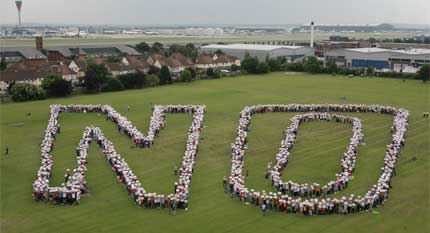 Some thoughts on no:
- Yes is easy, no is hard.
- Sometimes slower is faster.
- Yes, and here’s what it will take:
- The best choose what they’ll not do.
- Judge people on what they say no to.
- Work and resources are a matched pair.
- Define the work you’ll do and do just that.
- Adding scope is easy, but taking it out is hard.
- Map yes to a project plan based on work content.
- Challenge yourself to challenge your thinking on no.
- Saying yes to something means saying no to something else.
- The best have chosen wrong before, that’s why they’re the best.
- It’s better to take one bite and swallow than take three and choke.
Posted in Authentic, Constraints, Culture, Fear, Level 5 Courage, Positivity |
Tags: Trust-based approach |
2 Comments »
 Mike Shipulski