Posts Tagged ‘Fear’
Difficult Discussions Are The Most Important Discussions
 July 23rd, 2014
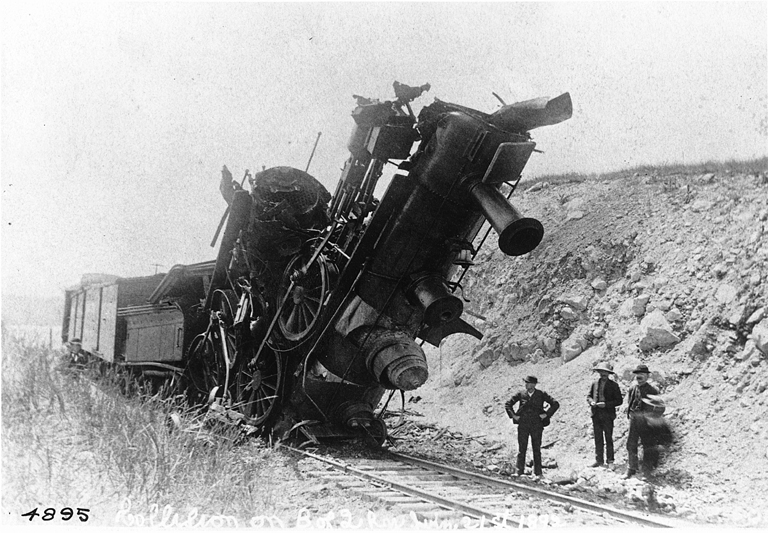 When the train is getting ready to pull out of the station, and you know in your heart the destination isn’t right, what do you do? If you still had time to talk to the conductor, would you? What would you say? If your railroad is so proud of getting to the destination on time it cannot not muster the courage to second guess the well-worn time table, is all hope lost?
The trouble with thinking the destination isn’t right is that it’s an opinion. Your opinion may be backed by years of experience, good intuition, and a kind heart, but it’s still an opinion. And the rule with opinions – if there’s one, there are others. And as such, there’s never consensus on the next destination.
But even as the coal is being shoveled into the firebox and the boiler pressure is almost there, there’s still time to take action. If the train hasn’t left the station, there’s still time. Don’t let the building momentum stop you from doing what must be done. Yes, there’s the sunk cost of lining everything up and getting ready to go, but, no, that doesn’t justify a journey down the wrong track. Find the conductor and bend her ear. Be clear, be truthful, and be passionate. Tell her you’re not sure it’s the wrong destination, but you’re sure enough to pull the pressure relieve valve and take some time to think more about what’s about to happen.
No one wants to step in front of a moving train. It’s no fun for anyone, and dangerous for the brave soul standing in the tracks. And it’s a failure of sorts if it comes to that. The best way to prevent a train from heading down the wrong track is candid discussions about the facts and clarity around why the journey should happen. But we need to do a better job at having those tough discussions earlier in the process.
Unfortunately in business today, the foul underbelly of alignment blocks the difficult decisions that should happen. We’ve mapped disagreement to foul play and amoral behavior, and our organizations make it clear that supporting the right answer, right from the get-go, is the right answer. The result is premature alignment and unwarranted alignment without thoughtful, effective debate on the merits. For some reason, it’s no longer okay to disagree.
Difficult discussions are difficult. And prolonging them only makes them more difficult. In fact, that’s sometimes a tactic – push off the tough conversations until the momentum rolls over all intensions to have them.
Hold onto the fact that your company wants the tough conversations to have them. In the short term, things are more stressful, but in the long term thing are more profitable. Remember, though sometimes bureaucracy makes it difficult, you are paid to add your thinking into the mix. And keep in mind you have a valuable perspective that deserves to be valued.
When the train is leaving the station, it’s the easiest time to recognize the tough discussions need to happen but it’s the most difficult time to have them. Earlier in the project it’s easier to have them and far more difficult to recognize they should happen.
Going forward, modify your existing processes to cut through inappropriate momentum building. And better still, use your knowledge of how your organization works to create mechanisms to trigger difficult conversations and prevent premature alignment.
 Posted in Authentic, Fear, Feelings, Seeing Things As They Are |
  Tags: Fear, Trust-based approach |
  No Comments »
Put Yourself Out There
June 4th, 2014
 Put yourself out there. Let it hang out. Give it a try. Just do it. The reality is few do it, and fewer do it often. But why?
In a word, fear. But it cuts much deeper than a word. Here’s a top down progression:
What will they think of your idea? If you summon the courage to say it out loud, your fear is they won’t like it, or they’ll think it’s stupid. But it goes deeper.
What with they think of you? If they think your idea is stupid, your fear is they’ll think you’re stupid. But so what?
How will it conflict with what you think of you? If they think you’re stupid, your fear is it will conflict with what you think of you. Now we’re on to it – full circle.
What do you think of you? It all comes down to your self-image – what you think is it and how you think it will stand up against the outside forces trying to pull it apart. The key is “what you think” and “how you think”. Like all cases, perception is reality; and when it comes to judging ourselves, we judge far too harshly. Our severe self-criticism deflates us far below the waterline of reality, and we see ourselves far shallower than our actions decree.
You’re stronger and more capable than you let yourself think. But no words can help with that; for that, only action will do. Summon the courage to act and take action. Just do it. And to calm yourself before you jump, hold onto this one fact – others’ criticism has never killed anyone. Stung, yes. Killed, no. Plain and simple, you won’t die if you put yourself out there. And even the worst bee stings subside with a little ice.
I’m not sure why we’re so willing to abdicate responsibility for what we think of ourselves, but we do. So where you may have abdicated responsibility in the past, in the now it’s time to take responsibility. It’s time to take responsibility and act on your own behalf.
Fear is real, and you should acknowledge it. But also acknowledge you give fear its power. Feel the fear, be afraid. But don’t succumb to the power you give it.
Put yourself out there. Do it tomorrow. You won’t die. And I bet you’ll surprise others.
But I’m sure you’ll surprise yourself more.
Posted in Fear, How To, Level 5 Courage, Negativity, Risk, Seeing Things As They Are |
Tags: Fear |
No Comments »
The Dumb-Ass Filter
August 25th, 2010
 Companies pursue lots of ideas; some turn out well and some badly. Since we can’t tell with 100% certainty if an idea will work, bad ones are a cost of doing business. And it makes sense to tolerate them. The cost of a few bad ones is well worth the upside of a game-changer. It’s like the VC model.
However, there’s a class that must be avoided at all costs: the dumb-ass idea – an idea we should know will not work before we try it. It’s not a bad idea, it’s beyond stupid, it’s deadly.
A dumb-ass idea violates fundamentals.
What’s so scary is today’s ready, fire, aim pace makes us more susceptible than ever. Our dumb-ass antibodies need strengthening. We need an immunization, a filter to discern if we’re respecting the fundamentals. We need a dumb-ass filter.
To immunize ourselves it’s helpful to understand how these ideas come to be. Here are some mutant strains:
Local optimization – We improve part of the system at the expense of the overall system. Chasing low cost labor is a good example where labor savings are dwarfed by increased costs of logistics, training, quality, and support.
A cloudy lens – We come up with an idea based on incomplete, biased, or inappropriate data. A good example is financial data which captures cost in a most artificial way. Overhead calculation is the poster child.
Cause and effect – We don’t know which is which; we confuse symptom with root cause and correlation with causation. Expect the unexpected with this mix up.
Scaling – We assume success in the lab is scalable to success across the globe. Everything does not scale, and less scales cost effectively.
Fear – We want to go fast because our competition is already there; we want to go slow because were afraid to fail.
What’s the best dumb-ass filter? It’s a formal and simple definition of the fundamentals. Use one page thinking – fundamentals one page, lots of pictures and few words. There’s no escape.
How to go about it? Settle yourself. Catch your breath. Let your pulse slow. Then, create a one pager (pictures, pictures, pictures) that defines the fundamentals and run it by someone you trust, someone without a vested interest, someone who has learned from their own dumb-ass thinking. (Those folks can spot it at twenty paces.) Defend it to them. Defend it to yourself. Run yourself through the gauntlet.
What are the fundamentals? Do they apply in this situation? How do you know? Answer these and you’re on your way to self-inoculation.
Posted in Fundementals, Imagination, One Page Thinking |
Tags: Cloudy Lens, Dumb-ass, Fear, Local Optimization |
2 Comments »
 Mike Shipulski