Posts Tagged ‘Creativity’
Solving Intractable Problems
 July 15th, 2015
 Immediately after there’s an elegant solution to a previously intractable problem, the solution is obvious to others. But, just before the solution those same folks said it was impossible to solve. I don’t know if there’s a name for this phenomenon, but it certainly causes hart burn for those brave enough to take on the toughest problems.
Intractable problems are so fundamental they are no longer seen as problems. Over the years experts simply accept these problems as constraints that must be complied with. Just as the laws of physics can’t be broken, experts behave as if these self-made constraints are iron-clad and believe these self-build walls define the viable design space. To experts, there is only viable design space or bust.
A long time ago these problems were intractable, but now they are not. Today there are new materials, new analysis techniques, new understanding of physics, new measurement systems and new business models.. But, they won’t be solved. When problems go unchallenged and constrain design space they weave themselves into the fabric of how things are done and they disappear. No one will solve them until they are seen for what they are.
It takes time to slow down and look deeply at what’s really going on. But, today’s frantic pace, unnatural fascination with productivity and confusion of activity with progress make it almost impossible to slow down enough to see things as they are. It takes a calm, centered person to spot a fundamental problem masquerading as standard work and best practice. And once seen for what they are it takes a courageous person to call things as they are. It’s a steep emotional battle to convince others their butts have been wet all these years because they’ve been sitting in a mud puddle.
Once they see the mud puddle for what it is, they must then believe it’s actually possible to stand up and walk out of the puddle toward previously non-viable design space where there are dry towels and a change of clothes. But when your butt has always been wet, it’s difficult to imagine having a dry one.
It’s difficult to slow down to see things as they are and it’s difficult to re-map the territory. But it’s important. As continuous improvement reaches the limit of diminishing returns, there are no other options. It’s time to solve the intractable problems.
Image credit – Steven Depolo
 Posted in Assumptions, Clarity, Fundementals, Problems, Seeing Things As They Are, Technology |
  Tags: Competitiveness, Creativity, Problems, Understanding Physics |
  No Comments »
Don’t worry about the words, worry about the work.
June 10th, 2015
 Doing anything for the first time is difficult. It goes with the territory. Instead of seeing the associated anxiety as unwanted and unpleasant, maybe you can use it as an indicator of importance. In that way, if you don’t feel anxious you know you’re doing what you’ve done before.
Innovation, as a word, has been over used (and misused). Some have used the word to repackage the same old thing and make it fresh again, but more commonly people doing good work attach the word innovation to their work when it’s not. Just because you improved something doesn’t mean it’s innovation. This is the confusion made by the lean and Six Sigma movements – continuous improvement is not innovation. The trouble with saying that out loud is people feel the distinction diminishes the importance of continuous improvement. Continuous improvement is no less important than innovation, and no more. You need them both – like shoes and socks. But problems arise when continuous improvement is done in the name of innovation and innovation is done at the expense of continuous improvement – in both cases it’s shoes, no socks.
Coming up with an acid test for innovation is challenging. Innovation is a know-it-when-you-see-it thing that’s difficult to describe in clear language. It’s situational, contextual and there’s no prescription. [One big failure mode with innovation is copying someone else’s best practice. With innovation, cutting and pasting one company’s recipe into another company’s context does not work.] But prescriptions and recipes aside, it can be important to know when it’s innovation and when it isn’t.
If the work creates the foundation that secures your company’s growth goals, don’t worry about what to call it, just do it. If that work doesn’t require something radically new and different, all-the-better. But you likely set growth goals that were achievable regardless of the work you did. But still, there’s no need to get hung up on the label you attach to the work. If the work helps you sell to customers you could not sell to before, call it what you will, but do more of it. If the work creates a whole new market, what you call it does not matter. Just hurry up and do it again.
If your CEO is worried about the long term survivability of your company, don’t fuss over labelling your work with the right word, do something different. If you have to lower your price to compete, don’t assign another name to the work, do different work. If your new product is the same as your old product, don’t argue if it’s the result of continuous improvement or discontinuous improvement. Just do something different next time.
Labelling your work with the right word is not the most important thing. It’s far more important to ask yourself – Five years from now, if the company is offering a similar product to a similar set of customers, what will it be like to work at the company? Said another way, arguing about who is doing innovation and who is not gets in the way of doing the work needed to keep the company solvent.
If the work scares you, that’s a good indication it’s meaningful. And meaningful is good. If it scares you because it may not work, you’re definitely trying something new. And that’s good. But it’s even better if the work scares you because it just might come to be. If that’s the case, your body recognizes the work could dismantle a foundational element of your business – it either invalidates your business model or displaces a fundamental technology. Regardless of the specifics, anxiety is a good surrogate for importance.
In some cases, it can be important what you call the work. But far more important than getting the name right is doing the right work. If you want to argue about something, argue if the work is meaningful. And once a decision is reached, act accordingly. And if you want to have a debate, debate the importance of the work, then do the important work as fast as you can.
Do the important work at the expense of arguing about the words.
Posted in Fear, Fundementals, How To, Innovation, Top Line Growth |
Tags: Creativity |
No Comments »
The People Business
April 29th, 2015

Things don’t happen on their own, people make them happen.
With all the new communication technologies and collaboration platforms it’s easy to forget that what really matters is people. If people don’t trust each other, even the best collaboration platforms will fall flat, and if they don’t respect each other, they won’t communicate – even with the best technology.
Companies put stock in best practices like they’re the most important things, but they’re not. Because of this unnatural love affair, we’re blinded to the fact people are what make best practices best. People create them, people run them, and people improve them. Without people there can be no best practices, but on the flip-side, people can get along just fine without best practices. (That says something, doesn’t it?) Best practices are fine when processes are transactional, but few processes are 100% transactional to the core, and the most important processes are judgement-based. In a foot race between best practices and good judgement, I’ll take people and their judgment – every day.
Without a forcing function, there can be no progress, and people are the forcing function. To be clear, people aren’t the object of the forcing function, they are the forcing function. When people decide to commit to a cause, the cause becomes a reality. The new reality is a result – a result of people choosing for themselves to invest their emotional energy. People cannot be forced to apply their life force, they must choose for themselves. Even with today’s “accountable to outcomes” culture, the power of personal choice is still carries the day, though sometimes it’s forced underground. When pushed too hard, under the cover of best practice, people choose to work the rule until the clouds of accountability blow over.
When there’s something new to do, processes don’t do it – people do. When it’s time for some magical innovation, best practices don’t save the day – people do. Set the conditions for people to step up and they will; set the conditions for them to make a difference and they will. Use best practices if you must, but hold onto the fact that whatever business you’re in, you’re in the people business.
Image credit – Vicki & Chuck Rogers
Posted in Culture, Decisions, Feelings, Level 5 Courage, Meaning |
Tags: Creativity, Trust-based approach |
No Comments »
Strategic Planning is Dead.
April 22nd, 2015
 Things are no longer predictable, and it’s time to start behaving that way.
In the olden days (the early 2000s) the pace of change was slow enough that for most the next big thing was the same old thing, just twisted and massaged to look like the next big thing. But that’s not the case today. Today’s pace is exponential, and it’s time to behave that way. The next big thing has yet to be imagined, but with unimaginable computing power, smart phones, sensors on everything and a couple billion new innovators joining the web, it should be available on Alibaba and Amazon a week from next Thursday. And in three weeks, you’ll be able to buy a 3D printer for $199 and go into business making the next big thing out of your garage. Or, you can grasp tightly onto your success and ride it into the ground.
To move things forward, the first thing to do is to blow up the strategic planning process and sweep the pieces into the trash bin of a bygone era. And, the next thing to do is make sure the scythe of continuous improvement is busy cutting waste out of the manufacturing process so it cannot be misapplied to the process of re-imagining the strategic planning process. (Contrary to believe, fundamental problems of ineffectiveness cannot be solved with waste reduction.)
First, the process must be renamed. I’m not sure what to call it, but I am sure it should not have “planning” in the name – the rate of change is too steep for planning. “Strategic adapting” is a better name, but the actual behavior is more akin to probe, sense, respond. The logical question then – what to probe?
[First, for the risk minimization community, probing is not looking back at the problems of the past and mitigating risks that no longer apply.]
Probing is forward looking, and it’s most valuable to probe (purposefully investigate) fertile territory. And the most fertile ground is defined by your success. Here’s why. Though the future cannot be predicted, what can be predicted is your most profitable business will attract the most attention from the billion, or so, new innovators looking to disrupt things. They will probe your business model and take it apart piece-by-piece, so that’s exactly what you must do. You must probe-sense-respond until you obsolete your best work. If that’s uncomfortable, it should be. What should be more uncomfortable is the certainty that your cash cow will be dismantled. If someone will do it, it might as well be you that does it on your own terms.
Over the next year the most important work you can do is to create the new technology that will cause your most profitable business to collapse under its own weight. It doesn’t matter what you call it – strategic planning, strategic adapting, securing the future profitability of the company – what matters is you do it.
Today’s biggest risk is our blindness to the immense risk of keeping things as they are. Everything changes, everything’s impermanent – especially the things that create huge profits. Your most profitable businesses are magnates to the iron filings of disruption. And it’s best to behave that way.
Image credit – woodleywonderworks
Posted in Clarity, Fear, How To, Innovation, Intellectual Intertia, New Thinking, Risk, Seeing Things As They Are, The Future |
Tags: Competitiveness, Creativity, Fear, Success |
No Comments »
Systematic Innovation
March 18th, 2015
 Innovation is a journey, and it starts from where you are. With a systematic approach, the right information systems are in place and are continuously observed, decision makers use the information to continually orient their thinking to make better and faster decisions, actions are well executed, and outcomes of those actions are fed back into the observation system for the next round of orientation. With this method, the organization continually learns as it executes – its thinking is continually informed by its environment and the results of its actions.
To put one of these innovation systems in place, the first step is to define the group that will make the decisions. Let’s call them the Decision Group, or DG for short. (By the way, this is the same group that regularly orients itself with the information steams.) And the theme of the decisions is how to deploy the organization’s resources. The decision group (DG) should be diverse so it can see things from multiple perspectives.
The DG uses the company’s mission and growth objectives as their guiding principles to set growth goals for the innovation work, and those goals are clearly placed within the context of the company’s mission.
The first action is to orient the DG in the past. Resources are allocated to analyze the product launches over the past ten years and determine the lines of ideality (themes of goodness, from the customers’ perspective). These lines define the traditional ideality (traditional themes of goodness provided by your products) are then correlated with historical profitability by sales region to evaluate their importance. If new technology projects provide value along these traditional lines, the projects are continuous improvement projects and the objective is market share gain. If they provide extreme value along traditional lines, the projects are of the dis-continuous improvement flavor and their objective is to grow the market. If the technology projects provide value along different lines and will be sold to a different customer base, the projects could be disruptive and could create new markets.
The next step is to put in place externally focused information streams which are used for continuous observation and continual orientation. An example list includes: global and regional economic factors, mergers/acquisitions/partnerships, legal changes, regulatory changes, geopolitical issues, competitors’ stock price and quarterly updates, and their new products and patents. It’s important to format the output for easy visualization and to make collection automatic.
Then, internally focused information streams are put in place that capture results from the actions of the project team and deliver them, as inputs, for observation and orientation. Here’s an example list: experimental results (technology and market-centric), analytical results (technical and market), social media experiments, new concepts from ideation sessions (IBEs), invention disclosures, patent filings, acquisition results, product commercialization results and resulting profits. These information streams indicate the level of progress of the technology projects and are used with the external information streams to ground the DG’s orientation in the achievements of the projects.
All this infrastructure, process, and analysis is put in place to help the DG make good (and fast) decisions about how to allocate resources. To make good decisions, the group continually observes the information streams and continually orients themselves in the reality of the environment and status of the projects. At this high level, the group decides not how the project work is done, rather what projects are done. Because all projects share the same resource pool, new and existing projects are evaluated against each other. For ongoing work the DG’s choice is – stop, continue, or modify (more or less resources); and for new work it’s – start, wait, or never again talk about the project.
Once the resource decision is made and communicated to the project teams, the project teams (who have their own decision groups) are judged on how well the work is executed (defined by the observed results) and how quickly the work is done (defined by the time to deliver results to the observation center.)
This innovation system is different because it is a double learning loop. The first one is easy to see – results of the actions (e.g., experimental results) are fed back into the observation center so the DG can learn. The second loop is a bit more subtle and complex. Because the group continuously re-orients itself, it always observes information from a different perspective and always sees things differently. In that way, the same data, if observed at different times, would be analyzed and synthesized differently and the DG would make different decisions with the same data. That’s wild.
The pace of this double learning loop defines the pace of learning which governs the pace of innovation. When new information from the streams (internal and external) arrive automatically and without delay (and in a format that can be internalized quickly), the DG doesn’t have to request information and wait for it. When the DG makes the resource-project decisions it’s always oriented within the context of latest information, and they don’t have to wait to analyze and synthesize with each other. And when they’re all on the same page all the time, decisions don’t have to wait for consensus because it already has. And when the group has authority to allocate resources and chooses among well-defined projects with clear linkage to company profitability, decisions and actions happen quickly. All this leads to faster and better innovation.
There’s a hierarchical set of these double learning loops, and I’ve described only the one at the highest level. Each project is a double learning loop with its own group of deciders, information streams, observation centers, orientation work and actions. These lower level loops are guided by the mission of the company, goals of the innovation work, and the scope of their projects. And below project loops are lower-level loops that handle more specific work. The loops are fastest at the lowest levels and slowest at the highest, but they feed each other with information both up the hierarchy and down.
The beauty of this loop-based innovation system is its flexibility and adaptability. The external environment is always changing and so are the projects and the people running them. Innovation systems that employ tight command and control don’t work because they can’t keep up with the pace of change, both internally and externally. This system of double loops provides guidance for the teams and sufficient latitude and discretion so they can get the work done in the best way.
The most powerful element, however, is the almost “living” quality of the system. Over its life, through the work itself, the system learns and improves. There’s an organic, survival of the fittest feel to the system, an evolutionary pulse, that would make even Darwin proud.
But, really, it’s Colonel John Boyd who should be proud because he invented all this. And he called it the OODA loop. Here’s his story – Boyd: The Fighter Pilot Who Changed the Art of War.
Where possible, I have used Boyd’s words directly, and give him all the credit. Here is a list of his words: observe, orient, decide, act, analyze-synthesize, double loop, speed, organic, survival of the fittest, evolution.
Image attribution – U.S. Government [public domain]. by wikimedia commons.

Posted in Fundementals, How To, Innovation, Seeing Things As They Are |
Tags: Creativity, OODA loop, Trust-based approach |
No Comments »
Innovation is a Choice
February 18th, 2015
 A body in motion tends to stay in motion, unless it’s perturbed by an external force. And, it’s the same with people – we keep doing what we’re doing until there’s a reason we cannot. If it worked, there’s no external force to create changes, so we do more of what worked. If it didn’t work, while that should result in an external force strong enough to create change, often it doesn’t and we try more of what didn’t work, but try it harder. Though the scenarios are different, in both the external force is insufficient to create new behavior.
In order to know which camp you’re in, it’s important to know how we decide between what worked and what didn’t (or between working and not working). To decide, we compare outcomes to expectations, and if outcomes are more favorable than our expectations, it worked; if less favorable, it didn’t. It’s strange, but true – what we expect delineates what worked from what didn’t and what’s good enough from what isn’t. In that way, it’s our choice.
Whether our business model is working, isn’t working, or hasn’t worked, what we think and do about it is our choice. What that means is, regardless of the magnitude of the external force, we decide if it’s large enough to do our work differently or do different work. And because innovation starts with different, what that means is innovation is a choice – our choice.
Really, though, external forces don’t create new behavior, internal forces do. We watch the culture around us and sense the external forces it creates on us, then we look inside and choose to apply the real force behind innovation – our intrinsic motivation. If we’re motivated by holding on to what we have, we’ll spend little of our life force on innovation. If we’re motivated by a healthy dissatisfaction with the status quo, we’ll empty our tank in the name of innovation.
Who is tasked with innovation at your company is an important choice, because while the tools and methods of innovation can be taught, a person’s intrinsic motivation, a fundamental forcing function of innovation, cannot.
Image credit – Ed Yourdon
Battle Success With No-To-Yes
January 14th, 2015
 Everyone says they want innovation, but they don’t – they want the results of innovation.
Innovation is about bringing to life things that are novel, useful and successful. Novel and useful are nice, but successful pays the bills. Novel means new, and new means fear; useful means customers must find value in the newness we create, and that’s scary. No one likes fear, and, if possible, we’d skip novel and useful altogether, but we cannot. Success isn’t a thing in itself, success is a result of something, and that something is novelty and usefulness.
Companies want success and they want it with as little work and risk as possible, and they do that with a focus on efficiency – do more with less and stock price increases. With efficiency it’s all about getting more out of what you have – don’t buy new machines or tools, get more out of what you have. And to reduce risk it’s all about reducing newness – do more of what you did, and do it more efficiently. We’ve unnaturally mapped success with the same old tricks done in the same old way to do more of the same. And that’s a problem because, eventually, sameness runs out of gas.
Innovation starts with different, but past tense success locks us into future tense sameness. And that’s the rub with success – success breeds sameness and sameness blocks innovation. It’s a strange duality – success is the carrot for innovation and also its deterrent. To manage this strange duality, don’t limit success; limit how much it limits you.
The key to busting out of the shackles of your success is doing more things that are different, and the best way to do that is with no-to-yes.
If your product can’t do something then you change it so it can, that’s no-to-yes. By definition, no-to-yes creates novelty, creates new design space and provides the means to enter (or create) new markets. Here’s how to do it.
Scan all the products in your industry and identify the product that can operate with the smallest inputs. (For example, the cell phone that can run on the smallest battery.) Below this input level there are no products that can function – you’ve identified green field design space which you can have all to yourself. Now, use the industry-low input to create a design constraint. To do this, divide the input by two – this is the no-to-yes threshold. Before you do you the work, your product cannot operate with this small input (no), but after your hard work, it can (yes). By definition the new product will be novel.
Do the same thing for outputs. Scan all the products in your industry to find the smallest output. (For example, the automobile with the smallest engine.) Divide the output by two and this is your no-to-yes threshold. Before you design the new car it does not have an engine smaller than the threshold (no), and after the hard work, it does (yes). By definition, the new car will be novel.
A strange thing happens when inputs and outputs are reduced – it becomes clear existing technologies don’t cut it, and new, smaller, lower cost technologies become viable. The no-to-yes threshold (the constraint) breaks the shackles of success and guides thinking in a new directions.
Once the prototypes are built, the work shifts to finding a market the novel concept can satisfy. The good news is you’re armed with prototypes that do things nothing else can do, and the bad news is your existing customers won’t like the prototypes so you’ll have to seek out new customers. (And, really, that’s not so bad because those new customers are the early adopters of the new market you just created.)
No-to-yes thinking is powerful, and though I described how it’s used with products, it’s equally powerful for services, business models and systems.
If you want innovation (and its results), use no-to-yes thinking to find the limits and work outside them.
Posted in Fear, How To, Imagination, Intellectual Intertia, Technology |
Tags: Competitiveness, Creativity, less-with-far-less, no-to-yes, Problem Definition |
4 Comments »
Innovation Through Preparation
December 31st, 2014
 Innovation is about new; innovation is about different; innovation is about “never been done before”; and innovation is about preparation.
Though preparation seems to contradict the free-thinking nature of innovation, it doesn’t. In fact, where brainstorming diverts attention, the right innovation preparation focuses it; where brainstorming seeks more ideas, preparation seeks fewer and more creative ones; where brainstorming does not constrain, effective innovation preparation does exactly that.
Ideas are the sexy part of innovation; commercialization is the profitable part; and preparation is the most important part. Before developing creative, novel ideas, there must be a customer of those ideas, someone that, once created, will run with them. The tell-tale sign of the true customer is they have a problem if the innovation (commercialization) doesn’t happen. Usually, their problem is they won’t make their growth goals or won’t get their bonus without the innovation work. From a preparation standpoint, the first step is to define the customer of the yet-to-be created disruptive concepts.
The most effective way I know to create novel concepts is the IBE (Innovation Burst Event), where a small team gets together for a day to solve some focused design challenges and create novel design concepts. But before that can happen, the innovation preparation work must happen. This work is done in the Focus phase. The questions and discussion below defines the preparation work for a successful IBE.
1. Why is it so important to do this innovation work?
What defines the need for the innovation work? The answer tells the IBE team why they’re in the room and why their work is important. Usually, the “why” is a growth goal at the business unit level or projects in the strategic plan that are missing the necessary sizzle. If you can’t come up with a slide or two with growth goals or new projects, the need for innovation is only emotional. If you have the slides, these will be used to kick off the IBE.
2. Who is the customer of the novel concepts?
Who will choose which concepts will be converted into working prototypes? Who will convert the prototypes into new products? Who will launch the new products? Who has the authority to allocate the necessary resources? These questions define the customers of the new concepts. Once defined, the customers become part of the IBE team. The customers kick off the IBE and explain why the innovation work is important and what they’ll do with the concepts once created. The customers must attend the IBE report-out and decide which concepts they’ll convert to working prototypes and patents.
Now, so the IBE will generate the right concepts, the more detailed preparation work can begin. This work is led by marketing. Here are the questions to scope and guide the IBE.
3. How will the innovative new product be used?
How will the innovative product be used in new way? This question is best answered with a hand sketch of the customer using the new product in a new way, but a short written description (30 words, or so) will do in a pinch. The answer gives the IBE team a good understanding, from a customer perspective, what new things the product must do.
What are the new elements of the design that enable the new functionality or performance? The answer focuses the IBE on the new design elements needed to make real the new product function in the new way.
What are the valuable customer outcomes (VCOs) enabled by the innovative new product? The answer grounds the IBE team in the fundamental reason why the customer will buy the new product. Again, this is answered from the customer perspective.
4. How will the new innovative new product be marketed and sold?
What is the tag line for the new product? The answer defines, at the highest level, what the new product is all about. This shapes the mindset of the IBE team and points them in the right direction.
What is the major benefit of the new product? The answer to this question defines what your marketing says in their marketing/sales literature. When the IBE team knows this, you can be sure the new concepts support the marketing language.
5. By whom will the innovative new product be used?
In which geography does the end user live? There’s a big difference between developed markets and developing markets. The answer to the question sets the context for the new concepts, specifically around infrastructure constraints.
What is their ability to pay? Pocketbooks are different across the globe, and the customer’s ability to pay guides the IBE team toward concepts that fit the right pocket book.
What is the literacy level of the end customer? If the customer can read, the IBE team creates concepts that take advantage of that ability. If the customer cannot read, the IBE team creates concepts that are far different.
6. How will the innovative new product change the competitive landscape?
Who will be angry when the new product hits the market? The answer defines the competition. It gives broad context for the IBE team and builds emotional energy around displacing adversaries.
Why will they be angry? With the answer to this one, the IBE team has good perspective on the flavor of pain and displeasure created by the concepts. Again, it shapes the perspective of the IBE team. And, it educates the marketing/sales work needed to address competitors’ countermeasures.
Who will benefit when the new product hits the market? This defines new partners and supporters that can be part of the new solutions or participants in a new business model or sales process.
What will customer throw away, reuse, or recycle? This question defines the level of disruption. If the new products cause your existing customers to throw away the products of your existing customers, it’s a pure market share play. The level of disruption is low and the level of disruption of the concepts should also be low. On the other end of the spectrum, if the new products are sold to new customers who won’t throw anything away, you creating a whole new market, which is the ultimate disruption, and the concepts must be highly disruptive. Either way, the IBE team’s perspective is aligned with the level appropriate level of disruption, and so are the new concepts.
Answering all these questions before the creative works seems like a lot of front-loaded preparation work, and it is. But, it’s also the most important thing you can do to make sure the concept work, technology work, patent work, and commercialization work gives your customers what they need and delivers on your company’s growth objectives.
Image credit — ccdoh1.
Posted in Constraints, How To, Innovation, Technology |
Tags: Creativity, Engineering Mindset, IBE, less-with-far-less |
No Comments »
Don’t boost innovation, burst it.
November 19th, 2014
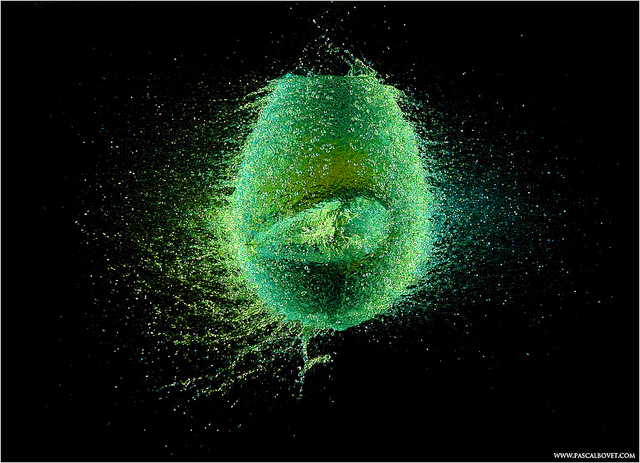 The most difficult part of innovation is starting, and the best way to start is the Innovation Burst Event, or IBE. The IBE is a short, focused event with three objectives: to learn innovation methods, to provide hands-on experience, and to generate actual results. In short, the IBE is a great way to get started.
There are a couple flavors of IBEs, but the most common is a single day even where a small, diverse group gets together to investigate some bounded design space and to create novel concepts. At the start, a respected company leader explains to the working group the importance of the day’s work, how it fits with company objectives, and sets expectations there will be a report out at the end of the day to review the results. During the event, the working group is given several design challenges, and using innovation tools/methods, creates new concepts and builds “thinking prototypes.” The IBE ends with a report out to company leaders, where the working group identifies patentable concepts and concepts worthy of follow-on work. Company leaders listen to the group’s recommendations and shape the go-forward actions.
The key to success is preparation. To prepare, interesting design space is identified using multiple inputs: company growth objectives, new market development, the state of the technology, competitive landscape and important projects that could benefit from new technology. And once the design space is identified, the right working group is selected. It’s best to keep the group small yet diverse, with several important business functions represented. In order to change the thinking, the IBE is held at location different than where the day-to-day work is done – at an off-site location. And good food is provided to help the working group feel the IBE is a bit special.
The most difficult and most important part of preparation is choosing the right design space. Since the selection process starts with your business objectives, the design space will be in line with company priorities, but it requires dialing in. The first step is to define the operational mechanism for the growth objective. Do you want a new product or process? A new market or business model? The next step is to choose if you want to radically improve what you have (discontinuous improvement) or obsolete your best work (disruption). Next, the current state is defined (knowing the starting point is more important than the destination) – Is the technology mature? What is the completion up to? What is the economy like in the region of interest? Then, with all that information, several important lines of evolution are chosen. From there, design challenges are created to exercise the design space. Now it’s time for the IBE.
The foundation of the IBE is the build-to-think approach and its building blocks are the design challenges. The working group is given a short presentation on an innovation tool, and then they immediately use the tool on a design challenge. The group is given a short description of the design challenge (which is specifically constructed to force the group from familiar thinking), and the group is given an unreasonably short time, maybe 15-20 minutes, to create solutions and build thinking prototypes. (The severe time limit is one of the methods to generate bursts of creativity.) The thinking prototype can be a story board, or a crude representation constructed with materials on hand – e.g., masking tape, paper, cardboard. The group then describes the idea behind the prototype and the problem it solves. A mobile phone is used to capture the thinking and the video is used at the report out session. The process is repeated one or two times, based on time constraints and nature of the design challenges.
About an hour before the report out, the working group organizes and rationalizes the new concepts and ranks them against impact and effort. They then recommend one or two concepts worthy of follow on work and pull together high level thoughts on next steps. And, they choose one or two concept that may be patentable. The selected concepts, the group’s recommendations, and their high level plans are presented at the report out.
At the report out, company leaders listen to the working group’s thoughts and give feedback. Their response to the group’s work is crucial. With right speech, the report out is an effective mechanism for leaders to create a healthy innovation culture. When new behaviors and new thinking are praised, the culture of innovation moves toward the praise. In that way, the desired culture can be built IBE by IBE and new behaviors become everyday behaviors.
Innovation is a lot more than Innovation Burst Events, but they’re certainly a central element. After the report out, the IBE’s output (novel concepts) must be funneled into follow on projects which must be planned, staffed, and executed. And then, as the new concepts converge on commercialization, and the intellectual comes on line, the focus of the work migrates to the factory and the sales force.
The IBE is designed to break through the three most common innovation blockers – no time to do innovation; lack of knowledge of how do innovation (though that one’s often unsaid); and pie-in-the-sky, brainstorming innovation is a waste of time. To address the time issue, the IBE is short – just one day. To address the knowledge gap, the training is part of the event. And to address the pie-in-the-sky – at the end of the day there is tangible output, and that output is directly in line with the company’s growth objectives.
It’s emotionally challenging to do work that destroys your business model and obsoletes your best products, but that’s how it is with innovation. But for motivation, think about this – if your business model is going away, it’s best if you make it go away, rather than your competition. But your competition does end up changing the game and taking your business, I know how they’ll do it – with Innovation Burst Events.
Image credit – Pascal Bovet
Posted in Culture, How To, Innovation, Intellectual Intertia, Problems, Technology, The Future, TRIZ |
Tags: Creativity, less-with-far-less, Problem Definition, Understanding Physics |
2 Comments »
What’s your innovation intention?
November 5th, 2014
 If you want to run a brainstorming session to generate a long list of ideas, I’m out. Brainstorming takes the edge off, rounds off the interesting corners and rubs off any texture. If you want me to go away for a while and come back with an idea that can dismantle our business model, I’m in.
If you can use words to explain it, don’t bother – anything worth its salt can’t be explained with PowerPoint. If you need to make a prototype so others can understand, you’ve got my attention.
If you have to ask my permission before you test out an idea that could really make a difference, I don’t want you on my team. If you show me a pile of rubble that was your experiment and explain how, if it actually worked, it could change the game, I’ll run air cover, break the rules, and jump in front of the bullets so you can run your next experiments, whatever they are.
If you load me up to with so many projects I can’t do several I want, you’ll get fewer of yours. If you give me some discretion and a little slack to use it, you’ll get magic.
If, before the first iteration is even drawn up, you ask me how much it will cost, I will tell you what you want to hear. If, after it’s running in the lab and we agree you’ll launch it if I build it, I won’t stop working until it meets your cost target.
If there’s total agreement it’s a great idea, it’s not a great idea, and I’m out. If the idea is squashed because it threatens our largest, most profitable business, I’m in going to make it happen before our competitors do.
If twice you tell me no, yet don’t give me a good reason, I’ll try twice as hard to make a functional prototype and show your boss.
To do innovation, real no-kidding innovation, requires a different mindset both to do the in-the-trenches work and to lead it. Innovation isn’t about following the process and fitting in, it’s about following your instincts and letting it hang out. It’s about connecting the un-connectable using the most divergent thinking. And contrary to belief, it’s not in-the-head work, it’s a full body adventure.
Innovation isn’t about the mainstream, it’s about the fringes. And it’s the same for the people that do the work. But to be clear, it’s not what it may look like at the surface. It’s not divergence for divergence’s sake and it’s not wasting time by investigating the unjustified and the unreasonable. It’s about unique people generating value in unique ways. And at the core it’s all guided by their deep intention to build a resilient, lasting business.
image credit: Chris Martin.
Posted in Authentic, Independence, Innovation, Intellectual Intertia, Level 5 Courage, Technology |
Tags: Competitiveness, Creativity, Trust-based approach |
No Comments »
Innovating from a Woman’s Perspective
October 8th, 2014
Innovation is about selling different products and services to different customers. Different means growth because you’re not yet selling the different products and you’re not yet selling to the different customers.
If you can learn to see your customers differently, you’ll create new products that are different; and if you can learn to see your products and services differently, you’ll create new customers that are different.
Innovation is all about connecting the unconnected, and that’s what’s behind the push for diversity within innovation teams. A diverse group brings more things to connect and more perspectives to see connections.
And it’s best to innovate where there’s little to no competition. If you’re the only one developing new products for those new customers or your the only one creating a whole new community of customers, you’ll be more successful – your products have only to compete with products that don’t exist.
In almost every industry and market there’s a huge community of new customers just waiting for products and services that fit them – women. Women have ever more say over family finances, ever more buying power and, thankfully, ever more influence over our society. If you want to sell new and different products, you should learn how to innovate for women.
I’m not talking about the 1950’s-like worldview where men innovate and sell new dish detergent and vacuum cleaners to women. I’m talking about all products and all markets. What does a cordless drill look like when it’s designed for women? I don’t know because I’m a man. (The only thing I do know is it’s not the same old drill wrapped in pink. That’s just patronizing.
Plain and simple, women know best how to innovate for women.
The most important way to increase the diversity of your innovation teams is to add more women. Women can see unmet needs to which I, as a man, am blind. Women can connect things that I cannot. Women have an unique worldview that, as a man, I cannot fully appreciate.
If you really want a competitive advantage, replace some of your innovation leaders with women. And if you want to accelerate the transformation, your Chief Innovation Officer should be a woman.
There’s been a strong effort to teach STEAM/STEM to our girls and young women, and that’s good. But it’s time to create the climate where our girls and young women see themselves as the innovators of our future.
Image credit – Judepics.
 Mike Shipulski