Archive for the ‘How To’ Category
Celebrating 5 Years of Writing
 October 1st, 2014
 Today is a celebration.
I have written a blog post every Wednesday evening for the last five years. No guest blogs, no ghost writer, no repeat blogs, and no editor. Just me.
The main theme last year was around doing new. Though I used the word innovation too many times, I provided real examples and grounded observations on what to do and why. There are many tools, processes, and philosophies around innovation – too many to cover fully even over a year or two of blogs – but there are two things that apply to all of us.
Innovation is context specific. Whatever you do going forward is strongly shaped by what you did to make the present what it is. And because every company’s history is different, every company’s go-forward activities will be different. Yes, become knowledgeable about best practices, but use only the ones that fit and don’t use them as-is – twist them to match the curves of your company. Yes, understand what other companies have done, but don’t copy them.
Innovation is all about people. If you can get people to try new things, you’re well on your way. And to get them to try new things, figure out why they’re afraid and do the small things, the everyday things, that make is safe to try.
My goal for year six – another year of meaningful writing.
Thanks for reading.
Mike
Image credit – woodleywonderworks.
Customer Value – the Crowned Jewel of Innovation
September 24th, 2014

Innovation results in things that are novel, useful, and successful. These things can be products, services, data, information, or business models, but regardless of the flavor, they’re all different from what’s been done before.
And when things are different, they’re new; and that means we don’t know how to do them. We don’t know how to start; don’t know how to measure; don’t know how they’ll be received; don’t know if they’ll be successful.
In the commercial domain, successful means customers buy your products and pay for your services. When customers value your new stuff more than they value their money, they pay; and when they pay it’s success. But first things first – before there can be success, before there can be innovation, there must be customer value. With innovation, customer value is front and center.
How do you come up with ideas that may have customer value? There’s a goldmine of ideas out there, with some veins better than others, and any dowsing you can use to pan the high grade ore is time well spent. There are two tools of choice: one that channels the voice of the customer and a second that channels the voice of the technology.
Your technology has evolved over time and has developed a trajectory which you can track. (Innovation On Demand, Fey and Riven.) But at the highest level, as a stand-in for technology, it’s best to track the trajectory of your products – how they’ve improved over time. You can evaluate how your products improved over multiple lines of evolution, and each line will help you to channel the future from a different perspective.
The voice of your customers is the second divining rod of choice. What they say about you, your company, and your products can help you glean what could be. But this isn’t the same as VOC. This is direct, unfiltered, continuous real time capture of self-signified micro stories. This is VOC without the soothsaying, this is direct connection with the customer. (Sensemaker.)
There are two nuggets to pan for: limiting cant’s and purposeful misuse. You seek out groups of customer stories where customers complain about things your product cannot do and how those cant’s limit them. These limiting cant’s are ripe for innovation since your customers already want them. Purposeful misuse is when the radical fringe of your customer base purposely uses your product in a way that’s different than you hoped. These customers have already looked into the future for you.
Do these ideas have customer value? The next step is to evaluate the value of your diamonds in the rough. The main point here is only customers can tell you if you’ve hit the mother lode. But, since your ideas are different than anything they’ve experienced, in order assay the ideas you’ve got to show them. You’ve got to make minimum viable prototypes and let them use their loop to judge the potential cut, color, clarity, and carat. As a prospector, it’s best to evaluate multiple raw gemstones in parallel, and whatever customers say, even if you disagree, the learning is better than gold.
How can we deliver on the customer value? With your innovations in the rough – ideas you know have customer value – it’s time to figure out what it will take to convert your pyrite prototypes into 24 carat products. There are missing elements to be identified and fundamental constraints to be overcome and backplane of the transmutation is problem definition. Done right, the technology development work is a series of well-defined problems with clear definitions of success. From the cleaving, blocking and cutting of technology development the work moves to the polishing of product development and commercialization.
Innovation can’t be fully defined with a three question framework. But, as long as customer value is the crowned jewel of your innovation work, most everything else will fall into place.
 Posted in How To, Innovation, Technology, TRIZ, VOC |
  Tags: Problem Definition, Understanding Physics |
  No Comments »
Prototypes Are The Best Way To Innovate
September 3rd, 2014
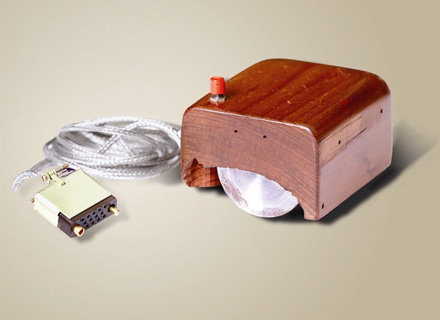 If you’re serious about innovation, you must learn, as second nature, to convert your ideas into prototypes.
Funny thing about ideas is they’re never fully formed – they morph and twist as you talk about them, and as long as you keep talking they keep changing. Evolution of your ideas is good, but in the conversation domain they never get defined well enough (down to the nuts-and-bolts level) for others (and you) to know what you’re really talking about. Converting your ideas into prototypes puts an end to all the nonsense.
Job 1 of the prototype is to help you flesh out your idea – to help you understand what it’s all about. Using whatever you have on hand, create a physical embodiment of your idea. The idea is to build until you can’t, to build until you identify a question you can’t answer. Then, with learning objective in hand, go figure out what you need to know, and then resume building. If you get to a place where your prototype fully captures the essence of your idea, it’s time to move to Job 2. To be clear, the prototype’s job is to communicate the idea – it’s symbolic of your idea – and it’s definitely not a fully functional prototype.
Job 2 of the prototype is to help others understand your idea. There’s a simple constraint in this phase – you cannot use words – you cannot speak – to describe your prototype. It must speak for itself. You can respond to questions, but that’s it. So with your rough and tumble prototype in hand, set up a meeting and simply plop the prototype in front of your critics (coworkers) and watch and listen. With your hand over your mouth, watch for how they interact with the prototype and listen to their questions. They won’t interact with it the way you expect, so learn from that. And, write down their questions and answer them if you can. Their questions help you see your idea from different perspectives, to see it more completely. And for the questions you cannot answer, they the next set of learning objectives. Go away, learn and modify your prototype accordingly (or build a different one altogether). Repeat the learning loop until the group has a common understanding of the idea and a list of questions that only a customer can answer.
Job 3 is to help customers understand your idea. At this stage it’s best if the prototype is at least partially functional, but it’s okay if it “represents” the idea in clear way. The requirement is prototype is complete enough for the customer can form an opinion. Job 3 is a lot like Job 2, except replace coworker with customer. Same constraint – no verbal explanation of the prototype, but you can certainly answer their direction questions (usually best answered with a clarifying question of your own such as “Why do you ask?”) Capture how they interact with the prototype and their questions (video is the best here). Take the data back to headquarters, and decide if you want to build 100 more prototypes to get a broader set of opinions; build 1000 more and do a small regional launch; or scrap it.
Building a prototype is the fastest, most effective way to communicate an idea. And it’s the best way to learn. The act of building forces you to make dozens of small decisions to questions you didn’t know you had to answer and the physical nature the prototype gives a three dimensional expression of the idea. There may be disagreement on the value of the idea the prototype stands for, but there will be no ambiguity about the idea.
If you’re not building prototypes early and often, you’re not doing innovation. It’s that simple.
Ratcheting Toward Problems of a Lesser Degree
August 27th, 2014

Here’s how innovation goes:
(Words uttered. // Internal thoughts.)
That won’t work. Yes, this is a novel idea, but it won’t work. You’re a heretic. Don’t bring that up again. // Wow, that scares me, and I can’t go there.
Yes, the first experiment seemed to work, but the test protocol was wrong, and the results don’t mean much. And, by the way, you’re nuts. // Wow. I didn’t believe that thing would ever get off the ground.
Yes, you modified the test protocol as I suggested, but that was only one test and there are lots of far more stressful protocols that surely cannot be overcome. // Wow. They listened to me and changed the protocol as I suggested, and it actually worked!
Yes, the prototype seemed to do okay on the new battery of tests, but there’s no market for that thing. // I thought they were kidding when they said they’d run all the tests I suggested, but they really took my input seriously. And, I can’t believe it, but it worked. This thing may have legs.
Yes, the end users liked the prototypes, but the sample size was small and some of them don’t buy any of our exiting products. I think we should make these two changes and take it to more end users. // This could be exciting, and I want to be part of this.
Yes, they liked the prototypes better once my changes were incorporated, but the cost is too high. // Sweet! They liked my design! I hope we can reduce the cost.
I made some design changes that reduce the cost and my design is viable from a cost standpoint, but manufacturing has other priorities and can’t work on it. // I’m glad I was able to reduce the cost, and I sure hope we can free up manufacting resources to launch my product.
Wow, it was difficult to get manufacturing to knuckle down, but I did it, and my product will make a big difference for the company. // Thanks for securing resources for me, and I’m glad you did the early concept work when I was too afraid.
Yes, my product has been a huge commercial success, and it all strarted with this crazy idea I had. You remember, right? // Thank you for not giving up on me. I know it was your idea. I know I was a stick-in-the-mud. I was scared. And thanks for kindly and effectively teaching me how to change my thinking. Maybe we can do it again sometime.
________________
There’s nothing wrong with this process; in fact, everything is right about it because that’s what people do. We’ve taught them to avoid risk at all costs, and even still, they manage to walk gingerly toward new thinking.
I think it’s important to learn to see the small shifts in attitude as progress, to see the downgrade from an impossible problem to a really big problem as progress.
Instead of grabbing the throat of radical innovation and disrupting yourself, I suggest a waterfall approach of a stepwise ratchet toward problems of a lesser degree. This way you can claim small victories right from the start, and help make it safe to try new things. And from there, you can stack them one on top of another to build your great pyramid of disruption.
And don’t forget to praise the sorceres and heretics who bravely advance their business model-busting ideas without the safety net of approval.
Posted in Culture, Fear, How To, Innovation, New Thinking, Seeing Things As They Are, Technology |
Tags: Engineering Mindset, Problems, Trust-based approach |
No Comments »
How to Make Big Data Far More Powerful
July 30th, 2014
 Big Data is powerful – measure what people do on the web, summarize the patterns, and use the information for good. These data sets are so powerful because they’re bigger than big; there’s little bias since the data collection is automatic; and the analysis is automated. There’s huge potential in the knowledge of what people click, what pages they land on, and what place the jump from.
It’s magical to think about what can be accomplished with the landing pages and click-through rates for any demographic you choose. Here are some examples:
- This is the type of content our demographic of value (DOV) lands on, and if we create more content like this we’ll get more from them to land where we want.
- These are the pages our DOV jump from, and if we advertise there more of our DOV will see our products.
- This is the geographic location of our DOV when they land on our website, and if we build out our sales capacity in these locations we’ll sell more.
- This is the time slot when our DOV is most active on their smart phones, and if we tweet more during that time we’ll reach more of them.
But just as there’s immense power knowing the actions of your DOV (what they click on), there are huge assumptions on what it all means. Here are two big ones:
- All clicks are created equal.
- When more see our content, more will do what we want.
Here is an example of three members (A, B, C) of your demographic of interest who take the same measurable action but with different meaning behind it:
Member A, after four drinks, speeds home recklessly; loses control of the car; crashes into your house; and parks the car in your living room.
Member B, after grocery shopping, drives home at the speed limit; the front wheel falls off due to a mechanical problem; loses control of the car; crashes into your house; and parks the car in your living room.
Member C, after volunteering at a well-respected non-profit agency, drives home in a torrential rain 15 miles per hour below the speed limit; a child on a bicycle bolts into the lane without warning and C swerves to miss the child; loses control of the car; crashes into your house; and parks the car in your living room.
All three did the same thing – crashed into your house – but the intent, the why, is different. Same click, but not equal. And when you put your content in front of them, regardless of what you want them to do, A, B, and C will respond differently. Same DOV, but different intentions behind their actions.
Big Data, with its focus on the whats, is powerful, but can be made stereoscopic with the addition of a second lens that can see the whys. Problem is, the whys aren’t captured in a clean, binary way – not transactional but conversational – and are subject to interpretation biases where the integers of the whats are not.
With people, action is preceded by intent, and intent is set by thoughts, feelings, history, and context. And the best way to understand all that is through their stories. If you collect and analyze customer stories you’ll better understand their predispositions and can better hypothesize and test how they’ll respond.
In the Big Data sense, Nirvana for stories is a huge sample size collected quickly with little effort, analysis without biases, and direct access to the stories themselves.
New data streams are needed to collect the whys in a low overhead way, and new methods are needed to analyze them quickly and without biases. And a new perspective is needed to see not only the amazing power of Big Data (the whats), but the immense potential of seeing the what’s with one eye and the whys with the other.
Keep counting the whats with traditional Big Data work – there’s real value there. But also keep one eye on the horizon for new ways to collect and analyze the whys (customer stories) in a Big Data way.
Collection and analysis of customer stories, if the sample size is big enough and biases small enough, is the best way I know to look through the fog and understand emerging customer needs and emerging markets.
If you can figure out how to do it, it will definitely be worth the effort.
Posted in Complexity, How To, Innovation, Meaning, Seeing Things As They Are |
Tags: Big Data, Competitiveness |
No Comments »
Innovation’s Mantra – Sell New Products To New Customers
July 16th, 2014
 There are three types of innovation: innovation that creates jobs, innovation that’s job neutral, and innovation that reduces jobs.
Innovation that reduces jobs is by far the most common. This innovation improves the efficiency of things that already exist – the mantra: do the same, but with less. No increase in sales, just fewer people employed.
Innovation that’s job neutral is less common. This innovation improves what you sell today so the customer will buy the new one instead of the old one. It’s a trade – instead of buying the old one they buy the new one. No increase in sales, same number of people employed.
Innovation that creates jobs is uncommon. This innovation radically changes what you sell today and moves it from expensive and complicated to affordable and accessible. Sell more, employ more.
Clay Christensen calls it Disruptive Innovation; Vijay Govindarajan calls it Reverse Innovation; and I call it Less-With-Far-Less.
The idea is the product that is sold to a relatively small customer base (due to its cost) is transformed into something new with far broader applicability (due to its hyper-low cost). Clay says to “look down” to see the new technologies that do less but have a super low cost structure which reduces the barrier to entry. And because more people can afford it, more people buy it. And these aren’t the folks that buy your existing products. They’re new customers.
Vijay says growth over the next decades will come from the developing world who today cannot afford the developed world’s product. But, when the price comes down (down by a factor of 10 then down by a factor of 100), you sell many more. And these folks, too, are new customers.
I say the design and marketing communities must get over their unnatural fascination with “more” thinking. To sell to new customers the best strategy is increase the number of people who can afford your product. And the best way to do that is to radically reduce the cost signature at the expense of features and function. If you can give ground a bit on the thing that makes your product successful, there is huge opportunity to reduce cost – think 80% less cost and 20% less function. Again, you sell new product to new customers.
Here’s a thought experiment to help put you in the right mental context: Create a plan to form a new business unit that cannot sell to your existing customers, must sell a product that does less (20%) and costs far less (80%), and must sell it in the developing world. Now, create a list of small projects to test new technologies with radically lower cost structures, likely from other industries. The constraint on the projects – you must be able to squeeze them into your existing workload and get them done with your existing budget and people. It doesn’t matter how long the projects take, but the investment must be below the radar.
The funny thing is, if you actually run a couple small projects (or even just one) to identify those new technologies, for short money you’ve started your journey to selling new products to new customers.
Posted in CEO, Fear, How To, Imagination, Innovation, Manufacturing Competitiveness, Risk, Robust Economy, The Future, Top Line Growth |
Tags: Creativity, less-with-far-less |
No Comments »
Marketing’s Holy Grail – Emerging Customer Needs
July 9th, 2014
 The Holy Grail of marketing is to identify emerging customer needs before anyone else and satisfy them to create new markets. It has been a long and fruitless slog as emerging needs have proven themselves elusive. And once candidates are identified, it’s a challenge to agree which are the game-changers and which are the ghosts. There are too many opinions and too few facts. But there’s treasure at the end of the rainbow and the quest continues.
Emerging things are just coming to be, just starting, so they appy to just a small subset of customers; and emerging things are new and different, so they’re unfamiliar. Unfamiliar plus small same size equals elusive.
I don’t believe in emerging customer needs, I believe in emergent customer behavior.
Emergent behavior is based on actions taken (past tense) and is objectively verifiable. Yes or no, did the customer use the product in a new way? Yes or no, did the customer make the product do something it wasn’t supposed to? Did they use it in a new industry? Did they modify the product on their own? Did they combine it with something altogether unrelated? No argument.
When you ask a customer how to improve your product, their answers aren’t all that important to them. But when a customer takes initiative and action, when they do something new and different with your product, it’s important to them. And even when just a few rouge customers take similar action, it’s worth understanding why they did it – there’s a good chance there’s treasure at the end of that rainbow.
With traditional VOC methods, it has been cost prohibitive to visit enough customers to learn about a handful at the fringes doing the same crazy new thing with your product. Also, with traditional VOCs, these “outliers” are thrown out because they’re, well, they’re outliers. But emergent behavior comes from these very outliers. New information streams and new ways to visualize them are needed to meet these challenges.
For these new information streams, think VOC without the travel; VOC without leading the witness; VOC where the cost of capturing their stories is so low there are so many stories captured that it’s possible to collect a handful of outliers doing what could be the seed for the next new market.
To reduce the cost of acquisition, stories are entered using an app on a smart phone; to let emergent themes emerge, customers code their own stories with a common, non-biasing set of attributes; and to see patterns and outliers, the coded stories are displayed visually.
In the past, the mechanisms to collect and process these information streams did not exist. But they do now.
I hope you haven’t given up on the possibility of understanding what your customers will want in the near future, because it’s now possible.
I urge you to check out SenseMaker.
Posted in Complexity, How To, Innovation, Intellectual Intertia, Seeing Things As They Are, The Future, Top Line Growth, Uncategorized, VOC |
Tags: Competitiveness, SenseMaker, Survey Results |
1 Comment »
Experiment With Your People Systems
June 11th, 2014
 It’s pretty clear that innovation is the way to go. There’s endless creation of new technologies, new materials, and new processes so innovation can create new things to sell. And there are multiple toolsets and philosophies to get it done, but it’s difficult.
When doing new there’s no experience, no predictions, no certainty. But innovation is no dummy and has come up with a way to overcome the uncertainty. It builds knowledge of systems through testing – build it, test it, measure it, fix it. Not easy, but doable. And what makes it all possible is the repeatable response of things like steel, motors, pumps, software, hard drives. Push on them repeatably and their response is repeatable; stress them in a predictable way and their response is predictable; break them in a controlled way and the failure mode can be exercised.
Once there’s a coherent hypothesis that has the potential to make magic, innovation builds it in the lab, creates a measurement system to evaluate goodness, and tests it. After the good idea, innovation is about converting the idea into a hypothesis – a prediction of what will happen and why – and testing them early and often. And once they work every-day-all-day and make into production, the factory measures them relentlessly to make sure the goodness is shipped with every unit, and the data is religiously plotted with control charts.
The next evolution of innovation will come from systematically improving people systems. There are some roadblocks but they can be overcome. In reality, they already have been overcome it’s just that no one realizes it.
People systems are more difficult because their responses are not repeatable – where steel bends repeatably for a given stress, people do not. Give a last minute deliverable to someone in a good mood, and the work gets done; give that same deliverable to the same person on a bad day, and you get a lot of yelling. And because bad moods beget bad moods, people modify each other’s behavior. And when that non-repeatable, one-person-modifying-another response scales up to the team level, business unit, company, and supply chain, you have a complex adaptive system – a system that cannot be predicted. But just as innovation of airliners and automobiles uses testing to build knowledge out of uncertainty, testing can do the same for people systems.
To start, assumptions about how people systems would respond to new input must be hardened into formal hypotheses. And for the killer hypotheses that hang together, an experiment is defined; a small target population is identified; a measurement system created; a baseline measurement is taken; and the experiment is run. Data is then collected, statistical analyses are made, and it’s clear if the hypothesis is validated or not. If validated, the solution is rolled out and the people system is improved. And in a control chart sense, the measurement system is transferred to the whole system and is left to run continuously to make sure the goodness doesn’t go away. If it’s invalidated, another hypothesis is generated and the process is repeated. (It’s actually better to test multiple hypotheses in parallel.)
In the past, this approach was impossible because the measurement system did not exist. What was needed was a simple, mobile data acquisition system for “people data”, a method to automatically index the data, and a method to quickly process and display the results. The experimental methods were clear, but there was no response for the experiments. Now there is.
People systems are governed by what people think and feel, and the stories they tell are the surrogates for their thoughts and feelings. When an experiment is conducted on a people system, the stories are the “people data” that is collected, quantified, and analyzed. The stories are the response to the experiment.
It is now possible to run an experiment where a sample population uses a smart phone and an app to collect stories (text, voice, pictures), index them, and automatically send them to a server where some software groups the stories and displays them in a way to see patterns (groups of commonly indexed stories). All this is done in real time. And, by clicking on a data point, the program brings up the story associated with that data point.
Here’s how it works. The app is loaded, people tell their stories on their phone, and a baseline is established (a baseline story pattern). Inputs or constraints are changed for the target population and new stories are collected. If the patterns change in a desirable way (statistical analysis is possible), the new inputs and constraints are rolled out. If the stories change in an undesirable way, the target population reverts back to standard conditions and the next hypothesis is tested.
Unbiased, real time, continuous information streams to make sense of your people systems is now possible. Real time, direct connection to your employees and your customers is a reality, and the implications are staggering.
Thank you Dave Snowden.
Posted in A/B Data, Complexity, Culture, How To, Innovation, New Thinking, Seeing Things As They Are |
Tags: Competitiveness |
No Comments »
Put Yourself Out There
June 4th, 2014
 Put yourself out there. Let it hang out. Give it a try. Just do it. The reality is few do it, and fewer do it often. But why?
In a word, fear. But it cuts much deeper than a word. Here’s a top down progression:
What will they think of your idea? If you summon the courage to say it out loud, your fear is they won’t like it, or they’ll think it’s stupid. But it goes deeper.
What with they think of you? If they think your idea is stupid, your fear is they’ll think you’re stupid. But so what?
How will it conflict with what you think of you? If they think you’re stupid, your fear is it will conflict with what you think of you. Now we’re on to it – full circle.
What do you think of you? It all comes down to your self-image – what you think is it and how you think it will stand up against the outside forces trying to pull it apart. The key is “what you think” and “how you think”. Like all cases, perception is reality; and when it comes to judging ourselves, we judge far too harshly. Our severe self-criticism deflates us far below the waterline of reality, and we see ourselves far shallower than our actions decree.
You’re stronger and more capable than you let yourself think. But no words can help with that; for that, only action will do. Summon the courage to act and take action. Just do it. And to calm yourself before you jump, hold onto this one fact – others’ criticism has never killed anyone. Stung, yes. Killed, no. Plain and simple, you won’t die if you put yourself out there. And even the worst bee stings subside with a little ice.
I’m not sure why we’re so willing to abdicate responsibility for what we think of ourselves, but we do. So where you may have abdicated responsibility in the past, in the now it’s time to take responsibility. It’s time to take responsibility and act on your own behalf.
Fear is real, and you should acknowledge it. But also acknowledge you give fear its power. Feel the fear, be afraid. But don’t succumb to the power you give it.
Put yourself out there. Do it tomorrow. You won’t die. And I bet you’ll surprise others.
But I’m sure you’ll surprise yourself more.
Posted in Fear, How To, Level 5 Courage, Negativity, Risk, Seeing Things As They Are |
Tags: Fear |
No Comments »
The Illusion of Planning
May 21st, 2014
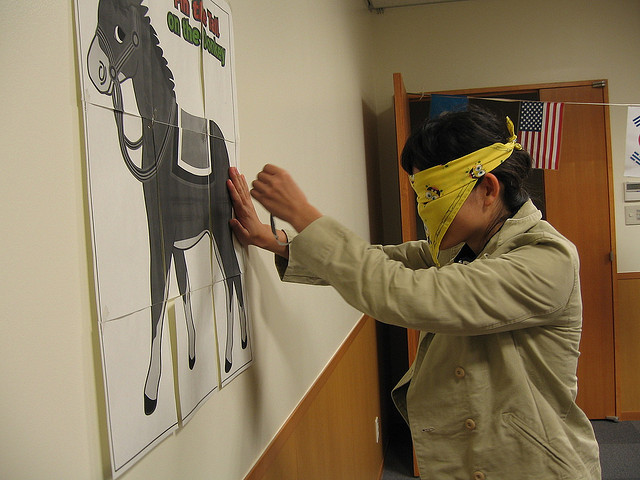
Planning is important work, but it’s non-value added work. Short and sweet – planning is waste.
Lean has taught us waste should be reduced, and the best way to reduce waste from planning is to spend less time planning. (I feel silly writing that.) Lean has taught us to reduce batch size, and the best way to reduce massive batch size of the annual planning marathon is to break it into smaller sessions. (I feel silly writing that too.)
Unreasonable time constraints increase creativity. To create next year’s plan, allocate just one for the whole thing. (Use a countdown timer.) And, because batch size must be reduced, repeat the process monthly. Twelve hours of the most productive planning ever, and countless planning hours converted into value added work.
Defining the future state and closing the gap is not the way to go. The way to go is to define the current state (where you are today) and define how to move forward. Use these two simple rules to guide you:
- Do more of what worked.
- Do less of what didn’t.
Here’s an example process:
The constraint – no new hires. (It’s most likely the case, so start there.)
Make a list of all the projects you’re working on. Decide which to stop right now (the STOP projects) and which you’ll finish by the end of the month (the COMPLETED projects). The remaining projects are the CONTINUE projects, and, since they’re aptly named, you should continue them next month. Then, count the number of STOP and COMPLETED projects – that’s the number of START projects you can start next month.
If the sum of STOP and COMPLETED is zero, ask if you can hire anyone this month. If the answer is no, see you next month.
If the sum is one, figure out what worked well, figure out how to build on it, and define the START project. Resources for the START project should be the same as the STOP or COMPLETED project.
If the sum is two, repeat.
Now ask if you can hire anyone this month. If the answer is no, you’re done. If the answer is yes, define how many you can hire.
With your number in hand, and building on what worked well, figure out the right START project. Resources must be limited by the number of new hires, and the project can’t start until the new hire is hired. (I feel silly writing that, but it must be written.) Or, if a START project can’t be started, use the new resource to pile on to an important CONTINUE project.
You’re done for the month, so send your updated plan to your boss and get back to work.
Next month, repeat.
The process will evolve nicely since you’ll refine it twelve times per year.
Ultimately, planning comes down to using your judgment to choose the next project based on the resources you’re given. The annual planning process is truly that simple, it’s just doesn’t look that way because it’s spread over so many months. So, if the company tells its leaders how many resources they have, and trusts them to use good judgment, yearly planning can be accomplished in twelve hours per year (literally). And since the plan is updated monthly, there’s no opportunity for emergency re-planning, and it will always be in line with reality.
Less waste and improved quality – isn’t that what lean taught us?
Posted in Decisions, Fundementals, How To, Lean, Seeing Things As They Are, The Future |
Tags: Planning |
No Comments »
The Power Of Pizza
April 23rd, 2014

When you want to recognize people for their wonderful work, dollar-for-dollar, the best value on the planet is pizza.
Research shows monetary rewards aren’t all that rewarding, and the thinking carries with pizza – you can buy bargain brand, wood-fired, free-range, vegan, or designer, the power of pizza is independent of pedigree. The power of pizza is about the forethought and intention to make the celebration happen. You must realize that people made the extra effort; you must decide you want to tell them you appreciate their work; you must figure out the leaders of the folks that did the work so you can let them know their people did a great job and that you’re buying them pizza; you must schedule the venue (the venue doesn’t actually matter); send out the invitation; order the pizza; and host the celebration. With pizza, you spend your time on behalf of their behavior, and that’s special.
Here are the rules of pizza:
Rule 1 – Buy 50% more pizza than is reasonable. They didn’t skimp on their effort, so don’t skimp on the pizza. When you buy extra pizza, you tell people they matter; you tell them they’re worth it; you tell them that no one will go hungry on your watch. One good outcome – they take the extra pizza back to the office, their coworkers smell it, and ask where they got it. Now, they get to tell the story of how, out of the blue, they were invited to a pizza party to recognize their excellent performance. But the best possible outcome is the extra pizza is taken home and given to the kids. The kids get pizza, and the proud parent gets to tell the story of their special lunch. Leftover pizza has real power.
Rule 2 – Buy a small salad. For those that want to celebrate yet watch their waste line, salad says you thought of them. But don’t buy a big salad because even the most vigilant salad-eaters celebrate with pizza. (See rule 1.)
Rule 3 – There is a natural hierarchy of drinks, and higher is better. At the top are beer and wine (no need to explain); next is fully caffeinated, full calorie soda; next is diet soda; next is flavored seltzer (it’s the bubbles that matter). If you’re considering anything less than seltzer, don’t.
Rule 4 – Keep the agenda simple. Here’s a good template: 1. Thank you for your amazing work. 2. What kind of pizza do you want?
Rule 5 – Use pizza sparingly. It’s power is inversely proportional to frequency.
People don’t want compensation for their extra special work, they want recognition. And pizza could be the purest form of recognition – simple, straightforward, and tangible.
In reality, pizza has nothing to do with pizza, and has everything to do with honest, heartfelt recognition of exceptional work.
Image credit – Jeff Kubina.
 Mike Shipulski