Archive for the ‘Feelings’ Category
The People Business
 June 20th, 2012
 Regardless of industry, product, or country, we’re in the people business.
Got a problem? Problems are solved by people, and our first word is usually – who. Who has fixed something like this before? Who can make the problem go away? Who has the chops to pull it off? Our first thought is about people.
Want something done? Work doesn’t do itself, people do work. Whether we want a wrench turned or a project run, our first thought is about people.
Need help? People help people. First thought – people.
Our businesses run on people. Factory workers are people, suppliers are people, leaders are people, and so are most managers. Day-to-day we are neighborhoods that make stuff and families that provide services. (Some of us spend more time with our coworkers than our families.)
But lately, in the name of productivity, there’s an unnatural shift from people-thinking to machine-thinking.
Productivity is good, and we all need it. To get it, we standardize our work; we define step-wise business processes to mechanize; we create scripted approaches to drive out variability. All perfectly good machine-thinking, but we must be careful not to tip into a Frederick Taylor frenzy.
People are best at some things, and machines at others – we all know this. But we’ve got to keep it in front of us. Mechanize things that machines do best, and free up people to do more people-work – that’s the ticket. But we spend far more corporate bandwidth mechanizing work than people-izing.
People-work is governed by choice, feelings, relationships, and creativity. Even the best six sigma squad can’t mechanize that, nor should they try. But what if we invested in improving our people-work like we’ve invested in improving our machine-work? What if we allocated time for our people to improve their ability to decide? What if we had a sea of highly trained creativity experts (people) to help our people create? What if we taught our people how to foster deep personal relationships? Productivity squared.
We’ve got to remember that we’re in the people business and we always will be – relationships, choice, decisions, and feelings cannot be taken out of our work. And we’ve got to learn how to improve our people-work.
Improving people-work is different than improving machine-work (that’s for a different post), but the first tool in the toolbox is trust.
Beliefs Govern Ideas
May 16th, 2012
 Some ideas are so powerful they change you. More precisely, some ideas are so powerful you change your beliefs to fit them.
These powerful ideas come in two strains: those that already align with your beliefs and those that contradict.
The first strain works subtly. While you think on the idea, your beliefs test it for safety. (They work in the background without your knowledge.) And if the idea passes the sniff test, and your beliefs feel safe, they let the subconscious sniffing morph into conscious realization – the idea fits your beliefs. The result: You now better understand your beliefs and you blossom, grow, and amplify yourself.
The second strain is subtle as a train wreck – a full frontal assault on your beliefs. This strain contradicts our beliefs and creates an emotional response – fear, anger, stress. And because these ideas threaten our beliefs, our beliefs reject them for safety’s sake. It’s like an autoimmune system for ideas.
But this autoimmune system has a back door. While it rejects most of the idea, for unknown reasons it passes a wisp to our belief system for sniffing. Like a vaccine, it wants to strengthen our beliefs against the strain. And in most cases, it works. But in rare cases, through deep introspection, our beliefs self-mutate and align with the previously contradicting idea. The result: You change yourself fundamentally.
Truth is, ideas are not about ideas; ideas are about beliefs. Our beliefs give life to ideas, or kill them. But we give ideas too much responsibility, and take too little. Truth is, we can change what we think and feel about ideas.
More powerfully, we can change what we think and feel about our beliefs, but only if we believe we can.
 Posted in Assumptions, Authentic, Fear, Feelings, Level 5 Courage, Seeing Things As They Are |
  Tags: Beliefs, Ideas |
  2 Comments »
Work The Rule
May 2nd, 2012
 If the rule makes things take too long, do you follow it or shortcut it?
If the reason for the rule is no longer, do you follow it or declare it unreasonable?
If you don’t understand the rule do you work to understand it, or conveniently trespass?
If you don’t follow the rule, does that say something about the rule, or you?
When is a rule a rule and when is it shackles?
When it comes to law, physics, and safety, a rule is a rule.
If you’re limited by the rule, is it bad? (Isn’t far worse if you don’t realize it?)
What if the solution demands unruliness?
If you don’t follow rules, is it okay to make them?
What if a culture is so strong it rules out most everything, except following the rules?
What if a culture is so strong it demands you make the rules?
When it comes to rules, there’s only one rule – You decide.
I will hold a Workshop on Systematic DFMA Deployment on June 13 in RI. (See bottom of linked page.) I look forward to meeting you in person.
Posted in Culture, Fear, Feelings, Intellectual Intertia, Problems, Risk |
Tags: Rules |
1 Comment »
Trust is better than control.
December 7th, 2011
 Although it’s more important than ever, trust is in short supply. With everyone doing three jobs, there’s really no time for anything but a trust-based approach. Yet we’re blocked by the fear that trust means loss of control. But that’s backward.
Trust is a funny thing. If you have it, you don’t need it. If you don’t have it, you need it. If you have it, it’s clear what to do – just behave like you should be trusted. If you don’t have it, it’s less clear what to do. But you should do the same thing – behave like you should be trusted. Either way, whether you have it or not, behave like you should be trusted.
Trust is only given after you’ve behaved like you should be trusted. It’s paid in arrears. And people that should be trusted make choices. Whether it’s an approach, a methodology, a technology, or a design, they choose. People that should be trusted make decisions with incomplete data and have a bias for action. They figure out the right thing to do, then do it. Then they present results – in arrears.
I can’t choose – I don’t have permission. To that I say you’ve chosen not to choose. Of course you don’t have permission. Like trust, it’s paid in arrears. You don’t get permission until you demonstrate you don’t need it. If you had permission, the work would not be worth your time. You should do the work you should have permission to do. No permission is the same as no trust. Restating, I can’t choose – I don’t have trust. To that I say you’ve chosen not to choose.
There’s a misperception that minimizing trust minimizes risk. With our control mechanisms we try to design out reliance on trust – standardized templates, standardized process, consensus-based decision making. But it always comes down to trust. In the end, the subject matter experts decide. They decide how to fill out the templates, decided how to follow the process, and decide how consensus decisions are made. The subject matter experts choose the technical approach, the topology, the materials and geometries, and the design details. Maybe not the what, but they certainly choose the how.
Instead of trying to control, it’s more effective to trust up front – to acknowledge and behave like trust is always part of the equation. With trust there is less bureaucracy, less overhead, more productivity, better work, and even magic. With trust there is a personal connection to the work. With trust there is engagement. And with trust there is more control.
But it’s not really control. When subject matter experts are trusted, they seek input from project leaders. They know their input has value so they ask for context and make decisions that fit. Instead of a herd of cats, they’re a swarm of bees. Paradoxically, with a trust-based approach you amplify the good parts of control without the control parts. It’s better than control. It’s where ideas, thoughts and feelings are shared openly and respectfully; it’s where there’s learning through disagreement; it’s where the best business decisions are made; it’s where trust is the foundation. It’s a trust-based approach.
Posted in Authentic, Culture, Fear, Feelings, Level 5 Courage, Risk |
Tags: Trust-based approach |
5 Comments »
Imagine your next innovation
September 21st, 2011
 Situation A
- The economy has picked up, but your sales have dropped off.
- Competitors’ products work better than yours.
- Competitors’ product launches are more frequent than yours.
- The number of competitors is increasing.
- The sales team is angry – they cannot sell against competitors.
- The product roadmap is more of the same.
The situation is clear – you’re behind your competitors, and they are accelerating. The action plan is clear – leapfrog your competitors.
Declare failure with the more-of-the-same product roadmap, and imagine a new one. The new one must leapfrog your competitors (though they’re accelerating). Imagine a new product roadmap that’s so radical it’s borderline ridiculous, that’s so outrageous you’re afraid to present it. (A sign it’s right on-the-mark.) Imagine one you have little to no idea how to do. Now, take the best of the ridiculous product roadmap and replace the oldest parts of the old one. Create a nice hybrid, and make it happen.
Situation A is tough because there is stress around the company’s future, and it’s easy because there’s a clear reason to innovate – company survival.
a
Situation B
- The economy has dropped off, but your sales have picked up.
- Your products work better than your competitors’.
- Your product launches are more frequent than your competitors’.
- There the number of competitors is decreasing.
- The sales team is happy – they can sell against competitors.
- The product roadmap is more of the same.
The situation is clear – you’re ahead of your competitors, and they are accelerating. The action plan is clear – leapfrog yourself.
Declare failure with the more-of-the-same product roadmap, and imagine a new one. The new one must leapfrog yourself (though you’re accelerating). Imagine a new product roadmap that’s so radical it’s borderline ridiculous, that’s so outrageous you’re afraid to present it. (A sign it’s right on-the-mark.) Imagine one you have little to no idea how to do. Now, take the best of the ridiculous product roadmap and replace the oldest parts of the old one. Create a nice hybrid, and make it happen.
Situation B is easy because there is no stress around the company’s future, and it’s difficult because there is no clear reason to innovate.
There’s no reason to argue which situation you’re in, no need to argue which is more difficult. Either way, leapfrog something.
Posted in Fear, Feelings, Imagination, Innovation, Level 5 Courage, Positivity, Product Development, The Future |
Tags: Manufacturing Competitveness |
1 Comment »
The Abundance Mindset
August 10th, 2011
 We’re too busy. All of us. Too busy. And we better get used to it: too busy is the rule. But how to make too busy feel good? How to make yourself feel good? How to make the work better?
Pretend there is abundance; plenty for all; assume an abundance mindset.
There’s a subtle but powerful shift with the abundance mindset. Here’s the transition:
me to we
talk to listen
verify to trust
fear to confidence
comply to embrace
compete to collaborate
next month to next week
can’t to could, could to can
no to maybe, maybe to how
The abundance mindset is not about doing more; it’s about what we do and how we do. With the abundance mindset everyone feels better, our choices are better, and our work is better.
Lincoln said “Happiness is a choice.” I think it’s the same with abundance. We’ll always be too busy, but, if we choose, there will always be an abundance of thoughtfulness, caring, and mutual respect.
Posted in Authentic, Culture, Feelings, Meaning, Positivity |
Tags: Trust-based approach |
6 Comments »
It’s all about judgement.
July 6th, 2011
 It’s high tide for innovation – innovate, innovate, innovate. Do it now; bring together the experts; hold an off-site brainstorm session; generate 106 ideas. Fast and easy; anyone can do that. Now the hard part: choose the projects to work on. Say no to most and yes to a few. Choose and execute.
To choose we use processes to rank and prioritize; we assign scores 1-5 on multiple dimensions and multiply. Highest is best, pull the trigger, and go. Right? (Only if it was that easy.) Not how it goes.
After the first round of scoring we hold a never-ending series of debates over the rankings; we replace 5s with 3s and re-run the numbers; we replace 1s with 5s and re-re-run. We crank on Excel like the numbers are real, like 5 is really 5. Face it – the scores are arbitrary, dimensionless numbers, quasi-variables data based on judgment. Face it – we manipulate the numbers until the prioritization fits our judgment.
Clearly this is a game of judgment. There’s no data for new products, new technologies, and new markets (because they don’t exist), and the data you have doesn’t fit. (That’s why they call it new.) No market – the objective is to create it; no technology – same objective, yet we cloak our judgment in self-invented, quasi-variables data, and the masquerade doesn’t feel good. It would be a whole lot better if we openly acknowledged it’s judgment-based – smoother, faster, and more fun.
Instead of the 1-3-5 shuffle, try a story-based approach. Place the idea in the context of past, present, and future; tell a tale of evolution: the market used to be like this with a fundamental of that; it moved this way because of the other, I think. By natural extension (or better yet, unnatural), my judgment is the new market could be like this… (If you say will, that’s closeted 1-3-5 behavior.) While it’s the most probable market in my judgment, there is range of possible markets…
Tell a story through analogy: a similar technology started this way, which was based on a fundamental of that, and evolved to something like the other. By natural evolution (use TRIZ) my technical judgment is the technology could follow a similar line of evolution like this…. However, there are a range of possible evolutionary directions that it could follow, kind of like this or that.
And what’s the market size? As you know, we don’t sell any now. (No kidding we don’t sell any, we haven’t created the technology and the market does not exist. That’s what the project is about.) Some better questions: what could the market be? Judgment required. What could the technology be? Judgment. If the technology works, is the market sitting there under the dirt just waiting to be discovered? Judgment.
Like the archeologist, we must translate the hieroglyphs, analyze the old maps, and interpret the dead scrolls. We must use our instinct, experience, and judgment to choose where to dig.
Like it or not, it’s a judgment game, so make your best judgment, and dig like hell.
Posted in Feelings, Imagination, Innovation, Magic, New Thinking, Product Development, Technology |
Tags: Engineering Mindset, Product Design |
No Comments »
Mental Walls
March 30th, 2011
 Mental walls are more powerful than physical ones.
With physical walls you know where they start and end and know if you can bust them down. With mental walls, you’re not sure.
With physical walls you know they exist – that they’re real. With mental walls, you’re not sure.
With physical walls you can blame someone for bad workmanship. With mental walls, you’re the workman.
The only way to tell a real wall from a mental one is to to take a run at it, but even then, you’re never really sure.
Posted in Constraints, Fear, Feelings, Imagination, Level 5 Courage, Seeing Things As They Are |
No Comments »
Declare Success
February 23rd, 2011
 All projects are successful; it’s just a matter of choosing what to declare. Here are some good choices:
- Success – We know when a project is too big. Going forward, let’s do smaller ones.
- Success – We know we can run too many projects concurrently. Going forward, let’s do fewer and get more done.
- Success – We know we can’t make that in-house. Going forward, let’s find a suppler with world class capability.
- Success – We know the consequences of going too quickly. Going forward, let’s take our time and get it right.
- Success – We know what customers won’t buy. Going forward, let’s know if they’ll buy it before we make it.
- Success – We know the consequences of going too slowly. Going forward, let’s be more efficient and launch sooner.
- Success – We know when quality levels are too low. Going forward, let’s launch with higher quality.
- Success – We know we can’t outsource that. Going forward, let’s make it in-house.
- Success – We know the attributes of a bad project manager. Going forward, let’s hire one that knows how to run projects.
Celebrate the learning, incorporate it in your go-forward plan, and go forward. Success.
Posted in Culture, Fear, Feelings, Manufacturing Competitiveness, Positivity, Product Development |
1 Comment »
The Gravity of Intrinsic Motivation
February 16th, 2011
 Work can be exceptionally profitable, work can dovetail perfectly with strategy, and work can make perfect business sense. Though these attributes seem powerful, they’re insufficient for work to carry the day. But there’s a far more powerful force out there, a force that virtually guarantees that work will take on a life of it’s own, that work will go viral. That force? Intrinsic motivation.
Work must be meaningful. The team, or you, must have a personal reason, a vested reason, an intrinsic reason why the work should happen. Otherwise, it’s a crap shoot. Otherwise, it takes massive effort and powerful control mechanisms to roll work up hill. What a waste. The energy spent on pushing should be spent on the work. Imagine if pushing energy was converted to advancing-the-work energy.
With intrinsic motivation, work accelerates down hill. Intrinsic motivation is the gravity that pull on work, builds momentum, and steam-rolls those in the way. (Although intrinsic motivation has been known to clear the way of those who can help.) Intrinsic motivation flows work over and around rocks, tirelessly smooths sharp edges, and uproots sticks-in-the mud. (You know who I’m talking about.)
Do you and your work have intrinsic motivation? I certainly hope so. How do you tell? Here’s how:
Question: Why do you want this work to happen?
Answers – missing intrinsic motivation:
- Because my boss told me to do it.
- I don’t really care if the work happens or not.
- I’m just here for the free doughnuts.
Answers – with intrinsic motivation:
- Because it’s important to me.
- Because it will benefit my kids.
- That’s a stupid question. You don’t know? I’m glad you’re not on the team. Get out of my way.
Intrinsic motivation makes a big difference, it changes the game. It’s like the difference between pushing against gravity and rolling down hill with a tail wind. You should know if you have it. If you don’t you should be ready to push like hell for a long time.
Acid test — does your work cause you to pole vault out of bed? If not, find new work.
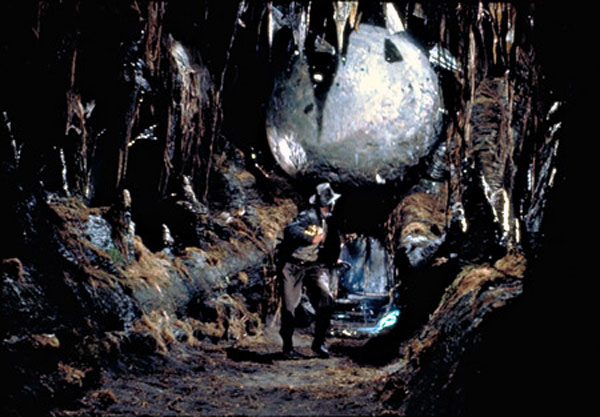
For more on intrinsic motivation, here’s a video link — Indiana Jones and the boulder of intrinsic motivation.
For daily tweets, find me at Twitter — @MikeShipulski
Confusion of facts with feelings
February 2nd, 2011
 Facts and feelings are different. Both are real, but facts are verifiable and feelings are not. Feelings are all about, well, feelings and facts are all about actions, events, and things that happened. But even with those differences, we still confuse them. And the consequences? We’re misunderstood and judged and, if the feelings are deep enough, we’re detoured to the off ramp of irreconcilable differences.
But there’s a more interesting twist. Facts and feelings interact quite differently when looking back (past) versus looking forward (future).
When looking to the past, feelings modify facts and facts modify feelings. When feelings modify facts, events are colored, amped up, or muted, sequence is distorted. When facts do the bending, we become happy, sad, angry, or scared. The facts don’t really change (they don’t give a damn about feelings), but facts change our feelings, feelings change us, and we change the facts. It’s a natural coupling to acknowledge and work within.
When looking to the future, feelings dominate – feelings control our actions. In that way, feelings control what will happen, what will be. And the most dominant of all is fear. Fear stops us in our tracks, walls off possibilities, pulls us into inaction, and helps us mute ourselves. Fear restricts and limits.
We all want to broaden our possibilities, to free up the design space that is our lives. The self-help crew tells us to overcome our fears. That’s total bullshit. Fear is much too powerful for a full frontal attack. Fear is not overcome; it leaves when it’s good and ready. You don’t decide, it does. We must learn to live with fear.
Fear’s power is its ability to masquerade as reality. (How can it be reality if we’re afraid of a future that has not happened yet?) And what is fear afraid of? Fear is afraid to be seen as it is – as a feeling. And what are we supposed to do with feelings? Feel them. To live with fear we must acknowledge it. We must write it down, look at, and feel it. And then tread water with it while we create our future.
 Mike Shipulski