Archive for the ‘Authentic’ Category
Thoughts on Vacation
 July 25th, 2012
 Some thoughts on vacation:
Take fewer longer vacations at the expense of shorter ones.
Work hard, but on something else.
On route to your destination, throw your cell phone from a moving vehicle.
Forget about your work so you can do it better when you return.
Don’t check in at work – that undoes all the relaxation.
Vacation with kids, and take your cues from them.
 Posted in Authentic, Meaning, Positivity, Seeing Things As They Are |
  Tags: Vacation |
  No Comments »
Untapped Power of Self
May 23rd, 2012
 As a subject matter expert (SME), you have more power than you think, and certainly more than you demonstrate.
As an SME, you have special knowledge. Looking back, you know what worked, what didn’t, and why; looking forward, you know what should work, what shouldn’t, and why. There’s power in your special knowledge, but you underestimate it and don’t use it to move the needle.
As an SME, without your special knowledge there are no new products, no new technologies, and no new markets. Without it, it’s same-old, same-old until the competition outguns you. It’s time you realize your importance and behave that way.
As an SME, when you and your SME friends gang together, your company must listen. Your gang knows it all. From the system-level stuff to the most detailed detail, you know it. Remember, you invented the technology that powers your products. It’s time you behave that way.
As an SME, with your power comes responsibility – you have an obligation to use your power for good. Figure out what the technology wants, and do that; do the sustainable thing; do the thing that creates jobs; do what’s good for the economy; sit yourself in the future, look back, and do what you think is right.
As an SME, I’m calling you out. I trust you, now it’s time to trust yourself. And it’s time for you to behave that way.
Posted in Authentic, Fear, Level 5 Courage, Positivity, Product Development, Seeing Things As They Are |
Tags: Jedi |
4 Comments »
Beliefs Govern Ideas
May 16th, 2012
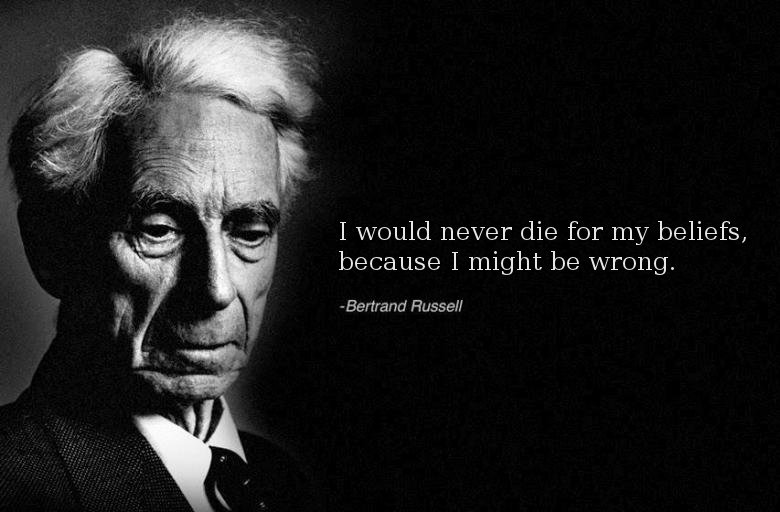 Some ideas are so powerful they change you. More precisely, some ideas are so powerful you change your beliefs to fit them.
These powerful ideas come in two strains: those that already align with your beliefs and those that contradict.
The first strain works subtly. While you think on the idea, your beliefs test it for safety. (They work in the background without your knowledge.) And if the idea passes the sniff test, and your beliefs feel safe, they let the subconscious sniffing morph into conscious realization – the idea fits your beliefs. The result: You now better understand your beliefs and you blossom, grow, and amplify yourself.
The second strain is subtle as a train wreck – a full frontal assault on your beliefs. This strain contradicts our beliefs and creates an emotional response – fear, anger, stress. And because these ideas threaten our beliefs, our beliefs reject them for safety’s sake. It’s like an autoimmune system for ideas.
But this autoimmune system has a back door. While it rejects most of the idea, for unknown reasons it passes a wisp to our belief system for sniffing. Like a vaccine, it wants to strengthen our beliefs against the strain. And in most cases, it works. But in rare cases, through deep introspection, our beliefs self-mutate and align with the previously contradicting idea. The result: You change yourself fundamentally.
Truth is, ideas are not about ideas; ideas are about beliefs. Our beliefs give life to ideas, or kill them. But we give ideas too much responsibility, and take too little. Truth is, we can change what we think and feel about ideas.
More powerfully, we can change what we think and feel about our beliefs, but only if we believe we can.
Posted in Assumptions, Authentic, Fear, Feelings, Level 5 Courage, Seeing Things As They Are |
Tags: Beliefs, Ideas |
2 Comments »
Choose Your Path
April 11th, 2012
 There are only three things you can do:
1. Do what you’re told. This is fine once in a while, but not fine if you’re also told how.
2. Do what you’re not told. This is the normal state of things – good leaders let good people choose.
3. Do what you’re told not to. This is rarified air, but don’t rule it out.
Win Hearts and Minds
March 28th, 2012
 As an engineering leader you have the biggest profit lever in the company. You lead the engineering teams, and the engineering teams design the products. You can shape their work, you can help them raise their game, and you can help them change their thinking. But if you don’t win their hearts and minds, you have nothing.
Engineers must see your intentions are good, you must say what you do and do what you say, and you must be in it for the long haul. And over time, as they trust, the profit lever grows into effectiveness. But if you don’t earn their trust, you have nothing.
But even with trust, you must be light on the tiller. Engineers don’t like change (we’re risk reducing beings), but change is a must. But go too quickly, and you’ll go too slowly. You must balance praise of success with praise of new thinking and create a standing-on-the-shoulders-of-giants mindset. But this is a challenge because they are the giants – you’re asking them to stand on their own shoulders.
How do you know they’re ready for new thinking? They’re ready when they’re willing to obsolete their best work and to change their work to make it happen. Strangely, they don’t need to believe it’s possible – they only need to believe in you.
Now the tough part: There’s a lot of new thinking out there. Which to choose?
Whatever the new thinking, it must make sense at a visceral level, and it must be simple. (But not simplistic.) Don’t worry if you don’t yet have your new thinking; it will come. As a seed, here are my top three new thinkings:
Define the problem. This one cuts across everything we do, yet most underwhelm it. To get there, ask your engineers to define their problems on one page. (Not five, one.) Ask them to use sketches, cartoons, block diagram, arrows, and simple nouns and verbs. When they explain the problem on one page, they understand the problem. When they need two, they don’t.
Test to failure. This one’s subtle but powerful. Test to define product limits, and don’t stop until it breaks. No failure, no learning. To get there, resurrect the venerable test-break-fix cycle and do it until you run out of time (product launch.) Break the old product, test-break-fix the new product until it’s better.
Simplify the product. This is where the money is. Product complexity drives organizational complexity – simplify the product and simply everything. To get there, set a goal for 50% part count reduction, train on Design for Assembly (DFA), and ask engineering for part count data at every design review.
I challenge you to challenge yourself: I challenge you to define new thinking; I challenge you to help them with it; I challenge you to win their hearts and minds.
Posted in Authentic, Culture, Design Engineers, DFA, How To, Level 5 Courage |
Tags: Design for Assembly, Engineering Mindset, Trust-based approach |
2 Comments »
Can’t Say NO
February 22nd, 2012
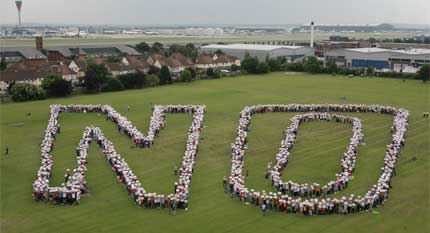 Some thoughts on no:
- Yes is easy, no is hard.
- Sometimes slower is faster.
- Yes, and here’s what it will take:
- The best choose what they’ll not do.
- Judge people on what they say no to.
- Work and resources are a matched pair.
- Define the work you’ll do and do just that.
- Adding scope is easy, but taking it out is hard.
- Map yes to a project plan based on work content.
- Challenge yourself to challenge your thinking on no.
- Saying yes to something means saying no to something else.
- The best have chosen wrong before, that’s why they’re the best.
- It’s better to take one bite and swallow than take three and choke.
Posted in Authentic, Constraints, Culture, Fear, Level 5 Courage, Positivity |
Tags: Trust-based approach |
2 Comments »
When It’s Time For a New Cowpath
February 1st, 2012
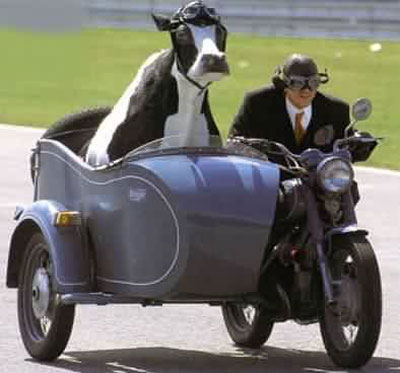 Doing new things doesn’t take a long time. What takes a long time is seeing things as they are. Getting ready takes time, not doing new. Awareness of assumptions, your assumptions, others’ assumptions, the company’s – that’s critical path.
An existing design, product, service, or process looks as it does because of assumptions made during long ago for reasons no longer relevant (if they ever were). Design elements blindly carried forward, design approaches deemed gospel, scripted service policies that no longer make sense, awkward process steps proceduralized and rev controlled – all artifacts of old, unchallenged assumptions. And as they grow roots, assumptions blossom into constraints. Fertile design space blocked, new technologies squelched, new approaches laughed out of town – all in the name of constraints founded on wilted assumptions. And the most successful assumptions have the deepest roots and create the deepest grooves of behavior.
Cows do the same thing every day. They wake up at the same time (regardless of daylight savings), get milked at the same time, and walk the same path. They walk in such a repeatable way, they make cowpaths – neat grooves walked into the landscape – curiously curved paths with pre-made decisions. No cow worth her salt walks outside the cowpath. No need. Cows like to save their energy for making milk at the expense of making decisions. If it was the right path yesterday, it’s right today.
But how to tell when old assumptions limit more than they guide? How to tell when it’s time to step out of the groove? How to tell a perfectly good cowpath from one that leads to a dry watering hole? When is it time to step back and create new history? Long ago the first cow had to make a choice, and she did. She could have gone any which way, and she did. She made the path we follow today.
With blind acceptance of assumptions, we wither into bankruptcy, and with constant second-guessing we stall progress. We must strike a balance. We must hold healthy respect for what has worked and healthy disrespect for the status-quo. We must use forked-tongue thinking to pull from both ends. In a yin-yang way, we must acknowledge how we got here, and push for new thinking to create the future.
Posted in Authentic, Fear, Imagination, New Thinking, Seeing Things As They Are |
Tags: Understanding Physics |
No Comments »
Have fun at work.
January 4th, 2012
 Fun is no longer part of the business equation. Our focus on productivity, quality, and cost has killed it. Killed it dead. Vital few, return on investment, Gantt charts, project plans, and criminal number one – PowerPoint. I can’t stand it.
What happens when you try to have a little fun at work? People look at you funny. They say: What’s wrong with you? Look! You’re smiling, you must be sick. (I hope you’re not contagious.) Don’t put us at ease, or we may be creative, be innovative, or invent something.
We’ve got it backward. Fun is the best way to improve productivity (and feel good doing it), the best way to improve work quality (excitement and engagement in the work), and the best way to reduce costs (and feel good doing it.) Fun is the best way to make money.
When we have fun we’re happy. When we’re happy we are healthy and engaged. When we’re healthy we come to work (and do a good job.) And when we’re engaged everything is better.
Maybe fun isn’t what’s important. Maybe it’s all the stuff that results from fun. Maybe you should find out for yourself. Maybe you should have some fun and see what happens.
Trust is better than control.
December 7th, 2011
 Although it’s more important than ever, trust is in short supply. With everyone doing three jobs, there’s really no time for anything but a trust-based approach. Yet we’re blocked by the fear that trust means loss of control. But that’s backward.
Trust is a funny thing. If you have it, you don’t need it. If you don’t have it, you need it. If you have it, it’s clear what to do – just behave like you should be trusted. If you don’t have it, it’s less clear what to do. But you should do the same thing – behave like you should be trusted. Either way, whether you have it or not, behave like you should be trusted.
Trust is only given after you’ve behaved like you should be trusted. It’s paid in arrears. And people that should be trusted make choices. Whether it’s an approach, a methodology, a technology, or a design, they choose. People that should be trusted make decisions with incomplete data and have a bias for action. They figure out the right thing to do, then do it. Then they present results – in arrears.
I can’t choose – I don’t have permission. To that I say you’ve chosen not to choose. Of course you don’t have permission. Like trust, it’s paid in arrears. You don’t get permission until you demonstrate you don’t need it. If you had permission, the work would not be worth your time. You should do the work you should have permission to do. No permission is the same as no trust. Restating, I can’t choose – I don’t have trust. To that I say you’ve chosen not to choose.
There’s a misperception that minimizing trust minimizes risk. With our control mechanisms we try to design out reliance on trust – standardized templates, standardized process, consensus-based decision making. But it always comes down to trust. In the end, the subject matter experts decide. They decide how to fill out the templates, decided how to follow the process, and decide how consensus decisions are made. The subject matter experts choose the technical approach, the topology, the materials and geometries, and the design details. Maybe not the what, but they certainly choose the how.
Instead of trying to control, it’s more effective to trust up front – to acknowledge and behave like trust is always part of the equation. With trust there is less bureaucracy, less overhead, more productivity, better work, and even magic. With trust there is a personal connection to the work. With trust there is engagement. And with trust there is more control.
But it’s not really control. When subject matter experts are trusted, they seek input from project leaders. They know their input has value so they ask for context and make decisions that fit. Instead of a herd of cats, they’re a swarm of bees. Paradoxically, with a trust-based approach you amplify the good parts of control without the control parts. It’s better than control. It’s where ideas, thoughts and feelings are shared openly and respectfully; it’s where there’s learning through disagreement; it’s where the best business decisions are made; it’s where trust is the foundation. It’s a trust-based approach.
Posted in Authentic, Culture, Fear, Feelings, Level 5 Courage, Risk |
Tags: Trust-based approach |
5 Comments »
Out Of Gas
November 2nd, 2011
 You know you’re out of gas when:
- You answer email punctually instead of doing work.
- You trade short term bliss for long term misery.
- You accept an impossible deadline.
- You sit through witless meetings.
- You comply with groupthink.
- You condone bad behavior.
- You placate your boss.
- You write a short post with a bulletized list — because it’s easier.
Amplify The Social Benefits of Your Products
October 26th, 2011
To do g ood for the planet and make lots of money (or the other way around), I think companies should shift from an economic framework to a social one. Green products are a good example. Facts are facts: today, as we define cost, green products cost more; burning fossil fuel is the lowest cost way to produce electricity and move stuff around (people, products, raw material). Green products are more expensive and do less, yet they sell. But the economic benefits don’t sell, the social ones do. Lower performance and higher costs of green products should be viewed not as weaknesses, but as strengths.
Green technologies are immature and expensive, but there’s no questions they’re the future. Green products will create new markets, and companies that create new markets will dominate them. The first sales of expensive green products are made by those who can afford them; they put their money where their mouths are and pay more for less to make a social statement. In that way, the shortcoming of the product amplifies the social statement. It’s clear the product was purchased for the good of others, not solely for the goodness of the product itself. The sentiment goes like this: This product is more expensive, but I think the planet is worth my investment. I’m going to buy, and feel good doing it.
The Prius is a good example. While its environmental benefits can be debated, it clearly does not drive as well as other cars (handling, acceleration, breaking). Yet people buy them. People buy them because that funny shape is mapped to a social statement: I care about the environment. Prius generates a signal: I care enough about the planet to put my money where my mouth is. It’s a social statement. I propose companies use a similar social framework to create new markets with green products that do less, cost more, and overtly signal their undeniable social benefit. (To be clear, the product should undeniably make the planet happy.)
The company that creates a new market owns it. (At least it’s theirs to lose). Early sales impregnate the brand with the green product’s important social statement, and the new market becomes the brand and its social statement. And more than that, early sales enable the company to work out the bugs, allow the technology to mature, and yield lower costs. Lower costs enable a cost effective market build-out.
Don’t shy away from performance gaps of green technologies, embrace them; acknowledge them to amplify the social benefit. Don’t shy away from a high price, embrace it; acknowledge the investment to amplify the social benefit. Be truthful about performance gaps, price it high, and proudly do good for the planet.
Posted in Authentic, Green, How To, Intellectual Intertia, Level 5 Courage, Technology |
2 Comments »
 Mike Shipulski