Archive for January, 2026
It’s All About Your Questions
 January 28th, 2026
 When you know the answer, do you ask the question to test others?
When you know the answer, do you ask the question to help others think differently?
When you know the answer, do you keep quiet because it’s not the right time for a question?
When you know the answer, do you ask the question even though it’s not the right time for a question?
What does that say about you?
When you think you know the answer, do you ask the question to seek the right answer?
When you think you know the answer, do you ask the question and risk looking like you don’t know?
When you think you know the answer, do you keep quiet for reasons you don’t understand?
What does that say about you?
When you don’t know the answer, do you ask in public to solicit diverse perspectives?
When you don’t know the answer, do you ask someone you trust in private?
When you don’t know the answer, do you throw away the question?
What does that say about you?
When you’re asked a question that doesn’t need to be answered yet, do you ask, “Do we need to know that yet?”
When you’re asked a question that cannot be answered yet, do you ask, “Can we know that yet?”
When you’re asked a question that is too costly to answer, do you ask, “Do we have enough time and money to know that?”
Do you have the courage to ask those three questions?
What does that say about you?
Image credit – Tambako The Jaguar
Small Improvements Are Beautiful
January 21st, 2026
 When the cost of the experiment is small, the downside of its potential failure is also small.
Small improvements cost little and can be implemented quickly.
Small improvements make a difference.
If the transformational improvement never sees the light of day because it costs too much to implement, its realized value is less than the smallest improvement that was implemented.
When a small experiment does not go as planned, the learning can be significant (and fast).
Small experiments are funded by small investments that don’t require approval. Don’t seek approval. Run the experiment.
The second small improvement stands on the shoulders of the first one
If the improvement is never implemented, it’s not an improvement.
Small improvements can be tested under the radar. When they work well, give the credit to someone who deserves it. When they go poorly, try something else.
Like ants, small improvements gang up to make a real difference.
Once a small improvement is implemented, it stays implemented. Like a one-way ratchet, there’s no backsliding.
Small improvements add up over time, but only if you bring them to life.
When it comes to improvements, small is beautiful.
Image credit — Jim Roberts – Papa I’m only a little sparrow
 Posted in Fundementals, How To |
  Tags: Lessons Learned, Manufacturing Competitveness, Success |
  No Comments »
Do you have what it takes?
January 14th, 2026
 When there’s no light, no one can see.
When no one can see, what do you do?
Can you be a source of light?
Do you care enough to do that?
When there’s too much input, focus is difficult.
When there’s a shortfall of focus, what do you do?
Can you dampen things and bring focus?
Do you have the emotional energy for that?
When there’s too much emotional stress, people become scattered.
When scattering comes, what do you do?
Can you pull people together?
Do you take responsibility and do that?
When the old recipe no longer works, people pucker.
When there is puckering, what do you do?
Can you recognize the pucker and plot a new course?
Do you bring the energy for that?
When there is support and guidance, people do great work.
When they did great work, did you play a role?
When they did great work, did you tell them?
Do you have the mojo to do it again?
When there is air cover and protection, people take risks.
When they took a risk, did you create the causes and conditions?
When they took a risk, did you praise them in public?
Do you have what it takes to praise in public?
When there is a teacher and time to learn, everything gets better.
When they learned, were you the teacher?
When they learned, did you create the opportunity for them to demonstrate their learning?
Do you have what it takes to teach and create the causes and conditions for learning to come more easily?
Image credit — Darren Flinders, Flamborough Lighthouse
Projects generate progress.
January 7th, 2026
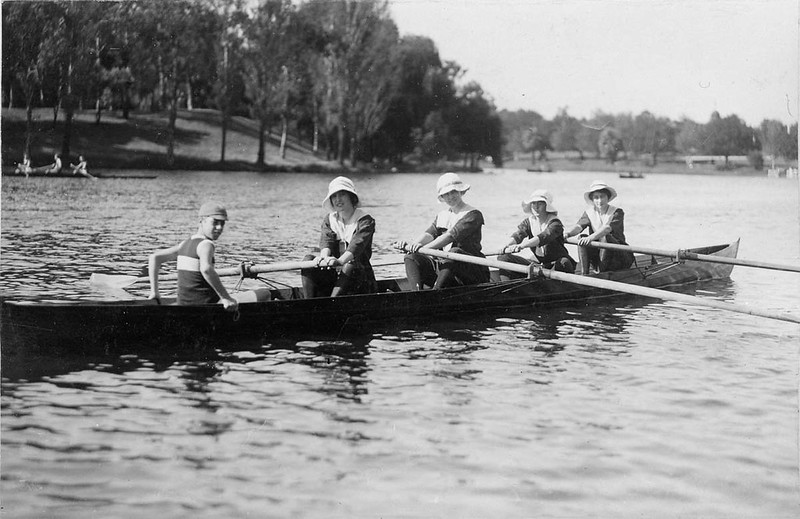 Companies make progress through projects.
Projects have objectives that are defined by the company’s growth or improvement objectives.
Projects have quantifiable goals that are, hopefully, time-bound.
Projects require resources, and those resources limit the number of projects that are completed.
Projects are run with the resources allocated, not with the resources we want to allocate.
Projects have timelines that are governed by the work content, novelty, and resources.
Project timelines cannot violate the governing constraints of work content, novelty, and resources.
Projects have project managers, or they’re not projects.
Projects can be accelerated by eliminating waiting. To find the waiting, look for the work queued up in front of the bottleneck resources. Those resources are usually resources that support multiple projects (shared resources). When it comes to waiting, shared resources are almost always the culprit.
Projects have a critical path. A one-day delay (waiting) on the critical path delays project completion by a day. That’s how you know it’s the critical path.
If you don’t know the project’s critical path, you don’t know much.
When it comes to projects, effectiveness is far more important than efficiency, yet we fixate on efficiency. Would you rather run the wrong project efficiently (ineffective) or run the right project inefficiently (effective)?
Regardless of the business you’re in, it’s all about the projects.
Image credit — State Library of South Australia
 Mike Shipulski